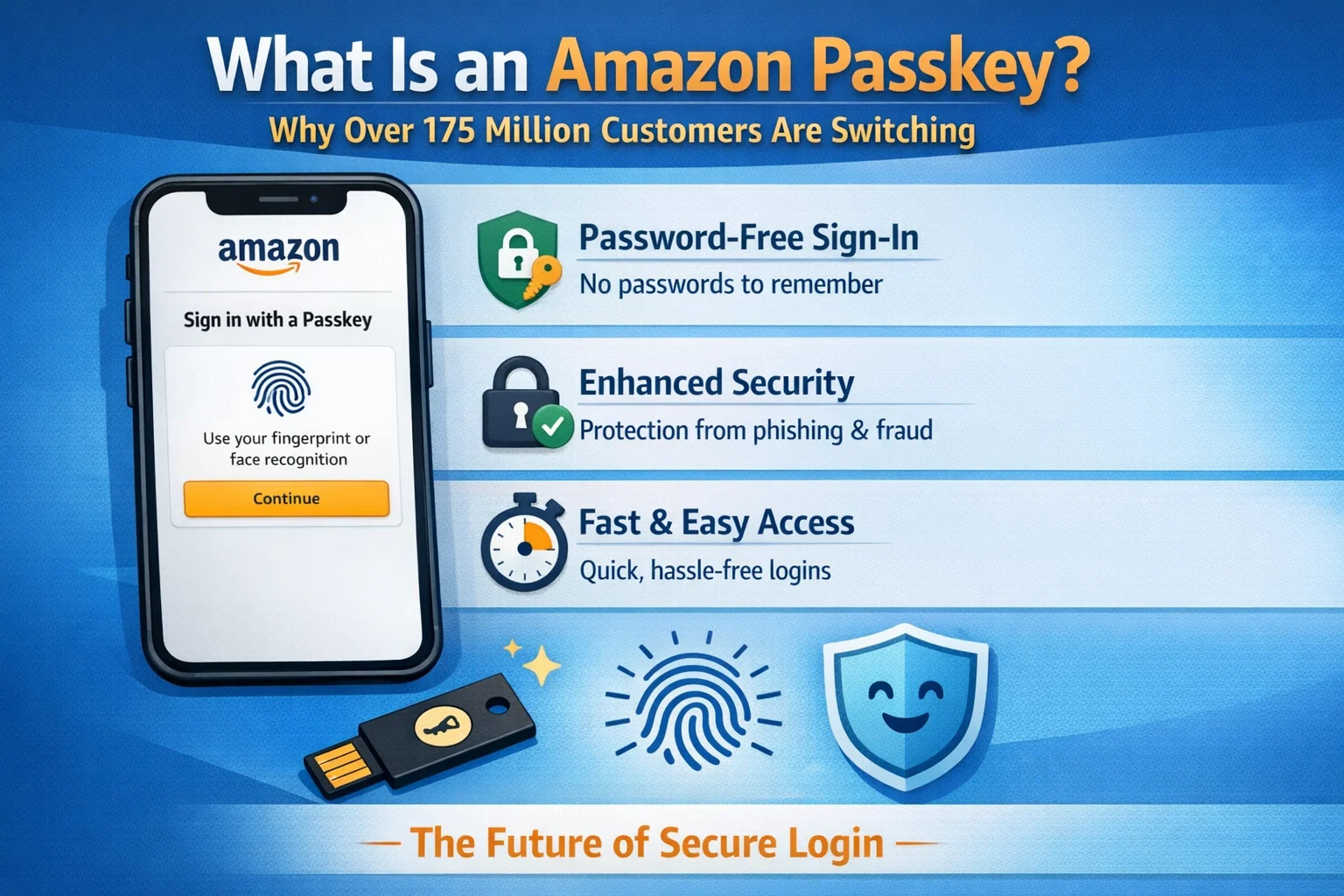
If you’ve ever felt frustrated wrestling with forgotten passwords or worried about online security while shopping on Amazon, you’re not alone. What is an Amazon Passkey? It’s a modern, passwordless way to sign into your Amazon account using the same simple methods you already use to unlock your phone or tablet—like your face, fingerprint, or device PIN. This innovative feature replaces the hassle of typing in complex passwords with a quick, biometric-based login that feels as natural as unlocking your screen.
Amazon introduced passkeys to make your shopping experience both safer and smoother, and millions of customers have already switched over because it just works better in everyday life. Whether you’re browsing deals on your laptop during a coffee break or grabbing essentials on your phone while commuting, an Amazon Passkey streamlines everything without compromising protection. It leverages cutting-edge technology to verify it’s really you, right on your device, so you can focus on finding what you love instead of remembering credentials.
In simple terms, what is an Amazon Passkey comes down to convenience meeting serious security. No more resetting passwords after a data scare or juggling sticky notes with login details. It’s designed for real people living busy lives, and once you try it, going back to old-school passwords feels like stepping back in time. This guide will walk you through everything you need to know, from the basics to advanced tips, so you can decide if it’s the right upgrade for your Amazon adventures.
The Evolution of Online Authentication: From Passwords to Passkeys
Online security has come a long way since the early days of the internet when a simple password was enough to keep things safe. Back then, we created accounts with basic logins, but as cyber threats grew smarter and more frequent, passwords started showing their weaknesses. People reused them across sites, wrote them down, or picked easy ones like “123456” that hackers could crack in seconds. What is an Amazon Passkey represents the next big leap in this evolution, moving us toward a world where logging in feels effortless and far more protected.
Passkeys emerged from industry-wide efforts by groups like the FIDO Alliance to create authentication that’s resistant to common attacks. Amazon, always ahead of the curve when it comes to customer experience, jumped on board early to offer this option. Instead of relying on something you know (a password), it uses something you have (your device) combined with something you are (your biometrics). This shift isn’t just trendy—it’s a response to the reality that traditional passwords contribute to billions in losses from breaches and fraud every year.
Think about how many times you’ve typed in your Amazon password only to get locked out or prompted for extra verification. With passkeys, those days are fading fast. The technology builds on public-key cryptography, where your device holds a private key that never leaves it, while Amazon stores a matching public key. This setup makes it incredibly tough for outsiders to impersonate you, even if they somehow snag data from a breach. As more services adopt similar methods, we’re seeing a broader movement toward passwordless logins that prioritize both security and usability.
Breaking Down the Technology Behind Amazon Passkeys
At its core, what is an Amazon Passkey relies on advanced cryptography that’s surprisingly straightforward in practice. When you set one up, your device generates a unique pair of keys—one public and one private. The public key gets sent to Amazon’s servers, but the private one stays securely locked on your phone, tablet, or computer. During login, your device proves it holds the private key by responding to a challenge from Amazon, all without ever sending sensitive data over the internet.
This process happens in the background using standards like WebAuthn, which ensures compatibility across major platforms. Your biometric data, such as fingerprints or face scans, never gets shared with Amazon—it’s handled entirely by your device’s secure enclave. That means even if Amazon faced a hypothetical data issue, your passkey information stays protected end-to-end. It’s a far cry from passwords that sit vulnerable on servers waiting to be stolen.
The beauty lies in how it ties authentication to your specific device and biometrics. Hackers can’t phish you for a passkey because it won’t work on fake sites; the keys are bound to the real Amazon domain. Plus, since it’s synced through trusted providers like your Apple ID or Google account, you get seamless access across your gadgets without extra setup hassles. This technical foundation makes Amazon Passkey not just secure but future-proof as threats continue to evolve.
Why Amazon Embraced Passkeys for Better Customer Experience
Amazon didn’t add passkeys just because the tech was cool—they did it to solve real pain points for shoppers worldwide. Customers were tired of password fatigue, and security teams knew passwords were a weak link in the chain. By introducing Amazon Passkey, the company aimed to deliver logins that are six times faster while slashing risks from phishing and breaches. It’s all about making your time on the site more enjoyable and trustworthy.
Dave Treadwell, senior vice president of ecommerce at Amazon, captured it perfectly: “This is about giving customers ease-of-use and security simultaneously in their Amazon experience. While passwords will still be around in the foreseeable future, this is an exciting step in the right direction. We are thrilled to be an early adopter of this new authentication method, helping to realize our vision for a more secure, passwordless internet.”
This move aligns with Amazon’s customer-first philosophy. Over 175 million users have already adopted passkeys, proving it resonates. It reduces support tickets for forgotten passwords and builds confidence that your account stays safe even during high-stakes shopping like Prime Day. In a competitive market, features like this set Amazon apart, showing they invest in tech that actually improves daily life rather than adding complexity.
Step-by-Step Guide to Setting Up Your Amazon Passkey
Getting started with your Amazon Passkey is refreshingly simple and takes just a couple of minutes. Head over to your Amazon account on a supported browser or the shopping app. Navigate to the Login and Security section, where you’ll spot the Passkeys option ready and waiting. Click or tap to set it up, and the system will guide you through creating the key using your device’s built-in authentication.
Once you confirm, your passkey gets stored securely with your chosen provider, such as iCloud for Apple users or Google for Android folks. You’ll authenticate once with your face, fingerprint, or PIN, and that’s it—no more memorizing or resetting. If you’re on desktop, you might scan a quick QR code with your phone to link everything smoothly. The whole process feels intuitive, like setting up a new app feature rather than jumping through security hoops.
After setup, test it out by logging out and back in. You’ll see the option to sign in with your passkey right there, prompting you for that familiar unlock method. It’s designed to work on iOS 16 or later, Android 9+, Windows 11, and modern browsers, so most people can dive right in without upgrades. If something feels off, Amazon’s help resources walk you through tweaks, ensuring you feel confident from the first try.
Amazon Passkey on Desktop Computers: A Seamless Experience
Using an Amazon Passkey on your desktop brings a level of convenience that makes browsing feel effortless. Whether you’re on a Windows PC or Mac, the login flow integrates directly with your browser, pulling up the passkey prompt automatically when you visit Amazon. No typing, no copy-pasting—just a quick biometric check or PIN entry, and you’re in shopping mode.
This desktop support shines for those long sessions comparing products or managing wish lists. It eliminates the annoyance of password managers autofilling the wrong details or security warnings popping up. Plus, since the passkey ties to your device, it adds an extra layer of protection even on shared computers, as long as you own the machine and follow best practices like adding it only to trusted setups.
Many users report that once they switch, they forget passwords ever existed for Amazon. The system handles cross-browser quirks gracefully, though sticking to the latest versions of Chrome, Safari, or Edge ensures the smoothest ride. It’s a small change that transforms how you interact with one of the world’s biggest retailers every single day.
Mastering Amazon Passkey Login on Mobile Devices
Mobile is where Amazon Passkey truly flexes its muscles, since most shopping happens on the go these days. In the Amazon Shopping app on iPhone or Android, the passkey becomes your default login once set up, greeting you with a simple Face ID, Touch ID, or PIN prompt. It’s lightning-fast, letting you check orders or snag deals without fumbling for credentials while juggling coffee or kids.
Setup on mobile mirrors the desktop but feels even more natural because your phone already knows your biometrics inside out. Open the app, head to your account settings, and enable the passkey right from your profile. The app then stores it locally or syncs it via your cloud provider, so switching between your phone and tablet is automatic.
This mobile optimization means fewer interruptions during quick cart adds or price checks. It also cuts down on those frustrating “forgot password” loops that kill momentum. With Amazon Passkey, your phone becomes the key to your entire account, making shopping as secure and simple as checking your notifications.
Syncing Your Amazon Passkey Across Multiple Gadgets
One of the smartest aspects of an Amazon Passkey is how effortlessly it travels with you across devices. Once created and linked to your passkey provider—like Apple ID or Google account—it syncs automatically to all connected gadgets. Sign in on your laptop, and the same key works on your tablet without extra steps, thanks to the cloud-based sharing that’s built right in.
If you’re jumping to a brand-new device or one using a different provider, Amazon makes it easy to add another passkey. Just visit your account settings, select edit next to Passkeys, and follow the prompts to set up a fresh one. For temporary access on someone else’s machine, you can use a handy QR code scan from your phone, keeping everything secure with Bluetooth verification.
This multi-device flexibility means your Amazon experience stays consistent whether you’re at home, work, or traveling. It respects your privacy by limiting one primary passkey per provider while allowing additions as needed. The result? Total freedom without sacrificing that rock-solid protection what is an Amazon Passkey promises.
Amazon Passkey Versus Traditional Passwords: A Detailed Comparison
When you stack an Amazon Passkey against old-fashioned passwords, the differences jump out immediately in both convenience and strength. Passwords demand you create, remember, and update them constantly, often leading to weak choices or reuse that opens doors to trouble. Passkeys skip all that by living on your device and activating through biometrics you already use daily.
To illustrate clearly, here’s a side-by-side look:
| Aspect | Traditional Passwords | Amazon Passkey |
|---|---|---|
| Ease of Use | Requires typing and memorization | Biometric or PIN unlock, no typing needed |
| Security Level | Vulnerable to phishing, guessing, and breaches | Phishing-resistant with device-bound cryptography |
| Data Storage | Stored on servers, at risk in hacks | Private key stays on your device only |
| Recovery Process | Reset via email or support | Syncs via provider or QR code for quick access |
| Speed | Slower with autofill issues | Up to six times faster login |
| Phishing Protection | Easy to trick users into sharing | Domain-specific, won’t work on fake sites |
This comparison highlights why so many are making the switch—passkeys win on nearly every front while feeling less like a chore.
The Unmatched Security Advantages of Using an Amazon Passkey
Security stands out as the biggest win when exploring what is an Amazon Passkey. Unlike passwords that can be leaked in massive breaches or phished through clever emails, passkeys rely on cryptography that keeps your private key locked away on your device. Even if a hacker compromises Amazon’s systems, they get nothing useful because the critical piece never leaves your hardware.
Phishing attacks lose their power here too. A fake Amazon site can’t request your passkey because the keys are tied specifically to the legitimate domain. Biometrics add another barrier, requiring physical presence and your unlock method. Amazon ensures end-to-end encryption, so your fingerprint or face data stays private and never reaches their servers.
For families or shared accounts, this means peace of mind knowing access requires the actual device plus your unique authentication. It’s a proactive defense that aligns with modern threats, reducing risks from credential stuffing or brute-force attempts that plague password-based systems. Users often feel more confident browsing and buying, knowing their cart, orders, and payment details stay locked down tighter than ever.
Addressing Common Concerns: Potential Drawbacks of Amazon Passkeys
While Amazon Passkey offers tremendous upsides, it’s fair to address a few common worries head-on. Some folks wonder about losing a device—does that lock them out? Thankfully, no. You can still fall back to your Amazon password anytime, and setting up a new passkey on a replacement device is straightforward through your provider sync or manual addition.
Browser compatibility pops up occasionally, especially on older systems, but sticking to updated software resolves most issues quickly. Not every Amazon marketplace supports it identically yet, so international shoppers might need a quick extra setup when switching sites. These are growing pains rather than deal-breakers, and Amazon continues refining the experience based on user feedback.
Another valid point is the learning curve for non-techies, but the setup flows so intuitively that most people master it faster than expected. Overall, the drawbacks are minor compared to the gains, and simple workarounds keep everything accessible without frustration.
Expert Tips to Get the Most Out of Your Amazon Passkey
To truly maximize your Amazon Passkey, start by enabling it on all your regular devices right away for that seamless sync. Keep your operating system and browser current, as updates often improve compatibility and add subtle enhancements. If you travel frequently, test the QR code method on a spare device so you’re prepared for any situation.
Pair it with other smart habits like reviewing your login history regularly in account settings. Consider adding a security key as backup for ultimate protection if you’re extra cautious. And don’t forget to explore how passkeys work with related services like Audible, where the same tech is expanding.
Engage with Amazon’s notifications—they’ll gently remind you to complete setup if you haven’t yet. These small steps turn a good feature into an indispensable part of your routine, making every login feel secure and swift.
How Amazon Passkey Fits Into the Broader Passwordless Revolution
What is an Amazon Passkey isn’t happening in isolation—it’s part of a massive industry shift toward passwordless authentication. Companies from Google to Microsoft are all embracing similar tech, creating a future where remembering dozens of passwords becomes a relic of the past. Amazon’s implementation stands out for its tight integration with shopping, but the principles apply universally across apps and sites.
This revolution stems from years of collaboration on standards that prioritize user experience without skimping on safety. As adoption grows, expect even more services to follow, potentially making passkeys the default everywhere. For Amazon shoppers, it means staying ahead of the curve while enjoying immediate benefits today.
The momentum feels exciting because it addresses long-standing frustrations in one elegant package. By choosing an Amazon Passkey, you’re participating in a broader change that makes the internet safer and more user-friendly for everyone.
Real-Life Scenarios: When Amazon Passkey Shines Brightest
Picture this: It’s Black Friday, deals are flying, and you’re racing to check out before stock runs out. With an Amazon Passkey, you breeze through login using a quick face scan—no frantic password hunt derailing your momentum. Or imagine managing subscriptions on your commute; a simple PIN unlocks everything instantly, keeping your day stress-free.
Families love it too, as parents can shop securely without worrying about kids glimpsing passwords. Travelers appreciate the cross-device sync when hopping between hotel Wi-Fi and airport lounges. Even in those “what if” moments like a lost phone, the fallback options ensure continuity without panic.
These everyday wins add up, turning routine tasks into something delightful. Users often share how it reduced anxiety around account security, letting them focus on the joy of discovery rather than defense.
Troubleshooting Your Amazon Passkey Setup and Usage
Even the best features occasionally need a quick fix, and Amazon Passkey is no exception. If the option doesn’t appear, double-check your device meets the minimum requirements and that you’re using a supported browser or the latest app version. Clearing cache or restarting can resolve stubborn glitches in seconds.
For sync issues across devices, verify your passkey provider account is signed in everywhere. QR code logins work best with Bluetooth on and a steady connection—small tweaks that make a big difference. If you accidentally remove a passkey, simply add it back through account settings without losing access.
Amazon’s support pages offer tailored guidance, but most problems stem from outdated software or temporary network hiccups. With a bit of patience, you’ll be back to effortless logins in no time, reinforcing why this feature feels so reliable overall.
conclusion
embracing what is an Amazon Passkey opens the door to a smarter, safer way of shopping that aligns perfectly with our fast-paced digital lives. It combines top-tier security with unmatched convenience, proving that innovation can truly simplify things without cutting corners. As more people discover its benefits, it’s clear this is more than a trend—it’s the future of how we access our favorite accounts. Give it a try today, and experience the difference for yourself; your future self will thank you for ditching the password struggles once and for all.
FAQ
What is an Amazon Passkey and how does it differ from a regular password?
An Amazon Passkey is a secure, passwordless login method that lets you access your account using your device’s face recognition, fingerprint, or PIN. Unlike traditional passwords that you type in and can be stolen or guessed, a passkey uses cryptography stored on your device itself. This makes it far less vulnerable to phishing or breaches while feeling much quicker in daily use. What is an Amazon Passkey ultimately boils down to a modern upgrade designed for both ease and protection, available on most recent smartphones, tablets, and computers.
How do I set up an Amazon Passkey on my account?
Setting up your Amazon Passkey is straightforward and takes only a few moments. Log into your account, go to Login and Security, and select the option to set up passkeys. Follow the on-screen prompts to authenticate with your device’s biometrics or PIN. Your passkey then saves to your cloud provider for easy syncing. Once complete, you can log in without your old password, though Amazon keeps the password option available as a backup for flexibility.
Can I use my Amazon Passkey on multiple devices?
Yes, absolutely—Amazon Passkey shines when it comes to multi-device support. It syncs automatically through your chosen provider account, so the same key works across your phone, tablet, and computer. For devices not linked to the same provider, you can add an additional passkey directly in your account settings or use a QR code scan for quick, secure access on the go. This keeps your shopping seamless no matter which gadget you’re on.
What happens if I lose the device with my Amazon Passkey?
Losing a device won’t lock you out of your Amazon account thanks to built-in safeguards. You can always sign in using your traditional Amazon password as a fallback. Once you get a new device, simply set up a fresh passkey through your account settings or restore it via your cloud provider sync. The system is designed with these scenarios in mind, ensuring security without leaving you stranded.
Are Amazon Passkeys more secure than passwords and 2FA combined?
In most cases, yes—Amazon Passkeys offer superior protection because they eliminate many vulnerabilities inherent to passwords and even one-time codes. They resist phishing by design, keep private keys on your device, and use strong cryptography that hackers can’t easily exploit remotely. While two-factor authentication adds a layer, passkeys often make it redundant by tying everything to your physical device and biometrics. Millions of users have switched and report feeling noticeably safer during everyday browsing and buying.

