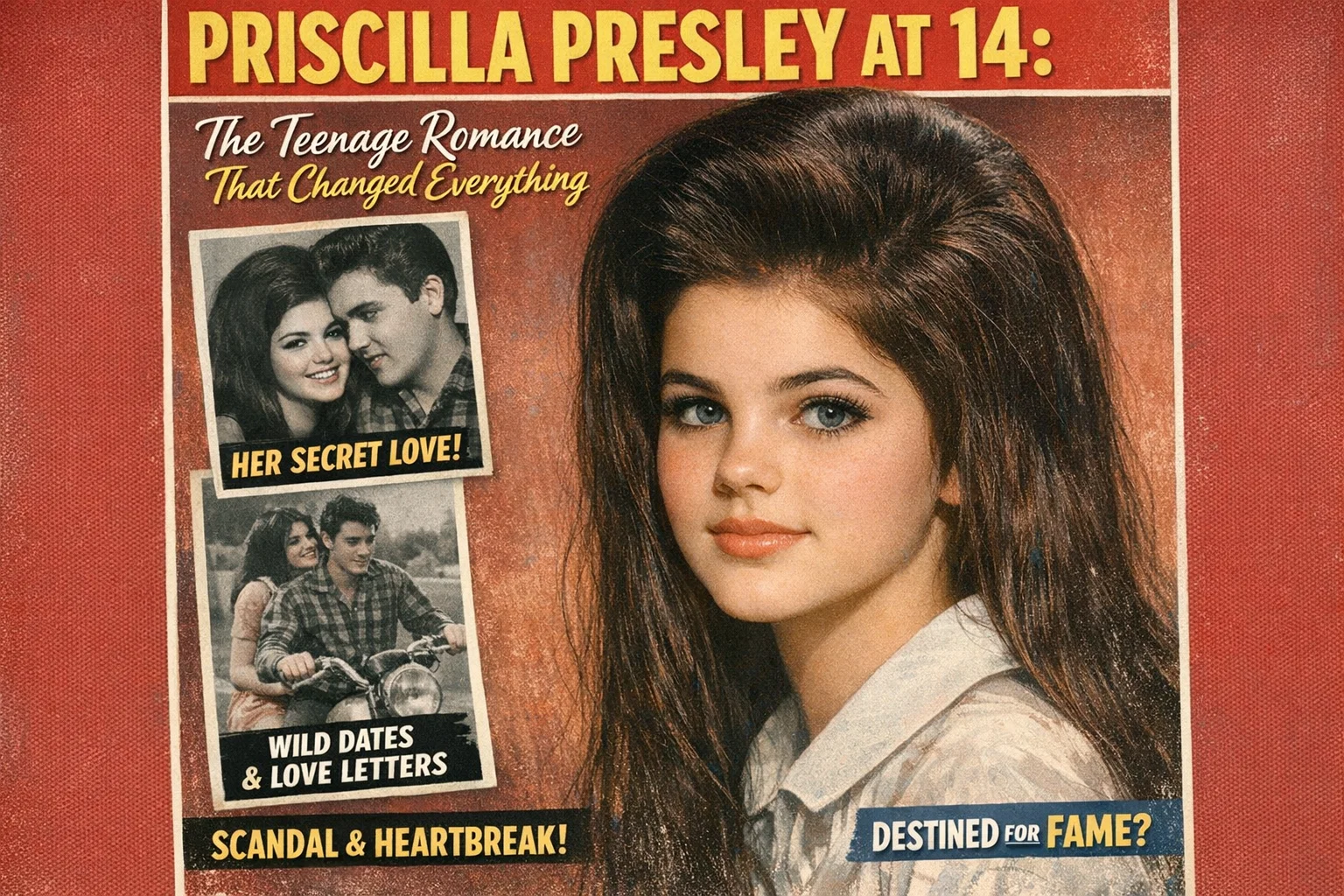
Imagine being just 14 years old, navigating the ups and downs of freshman year in high school, when suddenly the biggest rock star in the world walks into your life. That’s exactly what happened to Priscilla Presley at 14, a shy military brat stationed with her family in West Germany. Her encounter with 24-year-old Elvis Presley in 1959 sparked a relationship that would define her life, fuel endless headlines, and become one of the most talked-about love stories in pop culture history. It wasn’t the flashy Hollywood tale many assume—it was built on late-night talks, parental oversight, and a deep emotional connection that went far beyond the rumors. Priscilla Presley at 14 found herself caught between childhood innocence and an extraordinary destiny, all while Elvis poured his heart out about his fears, his music, and the recent loss of his mother.
What makes the story of Priscilla Presley at 14 so compelling isn’t just the age gap or the fame involved. It’s how an ordinary teenage girl from a military family ended up sharing quiet moments with the King of Rock ‘n’ Roll during his Army days. Their bond formed in the shadow of the Cold War, amid the excitement of American bases overseas and the global frenzy surrounding Elvis. She wasn’t chasing stardom; she was simply a curious freshman who loved his music. Years later, Priscilla herself reflected on those early days with a mix of fondness and clarity, emphasizing that their connection was rooted in trust and conversation rather than anything physical. This chapter of her life set the stage for everything that followed—her move to Graceland, marriage, motherhood, and eventual independence. Today, it continues to spark discussions about young love, celebrity culture, and personal growth in the spotlight.
Priscilla’s Early Years Before Meeting Elvis
Priscilla Ann Wagner entered the world on May 24, 1945, in Brooklyn, New York, just as World War II was winding down and a new era of American optimism was taking shape. Her biological father, a U.S. Navy pilot named James Frederick Wagner, tragically died in a plane crash when she was only six months old. That loss left a quiet void in her early life, one that her mother, Ann, worked hard to fill. Ann soon remarried Paul Beaulieu, a dedicated U.S. Air Force officer from Canada, who adopted Priscilla and gave her the surname that would stick with her. Together, they built a blended family that included five half-siblings, creating a lively but often transient household shaped by military moves across the United States.
Growing up as a military brat meant constant relocations, which made it tough for young Priscilla to put down roots. She described herself as shy and insecure, often eating lunch alone because schools changed too frequently for deep friendships to form. By the mid-1950s, the family had settled briefly in places like Del Valle, Texas, where life had a certain rhythm—school routines, family dinners, and the occasional thrill of her stepfather bringing home an Elvis record from the PX store. That gift at age 11 introduced her to “Blue Suede Shoes” and planted the first seeds of admiration for the rising star. Little did she know that this musical icon would soon become a central figure in her world. These early experiences built resilience in Priscilla, teaching her adaptability and quiet strength that would serve her well when her path crossed with fame.
The Beaulieu family’s frequent moves reflected the broader post-war American military life, where duty called families to new bases and new adventures. Priscilla learned to observe more than speak, absorbing the world around her with a maturity beyond her years. By the time the family prepared for another big transition to West Germany in the late 1950s, she was already carrying a sense that something bigger might be waiting. This foundation of humility and curiosity made her stand out later—not as a pushy fan, but as someone genuine and easy to talk to amid the chaos of celebrity.
Moving to Germany: A New Chapter for a Young Teen
The relocation to Wiesbaden, West Germany, around 1958-1959 marked a huge shift for the entire Beaulieu family. Paul’s Air Force assignment placed them right in the heart of Cold War Europe, where American military presence was a daily reality. The family first stayed at the Helene Hotel before settling into a spacious pre-World War I apartment that, surprisingly, doubled as a brothel on the lower floors—a quirky detail that highlighted the housing shortages of the time. Priscilla, entering her early teens, faced the challenge of adjusting to a foreign country, a new school at H.H. Arnold High, and the cultural mix of American expats and local Germans.
Life on the base offered a blend of familiarity and excitement. The Eagles Club became a hub for servicemen’s families, serving as a spot for meals, entertainment, and social gatherings. Priscilla spent time there with friends, enjoying the sense of community that eased the transition. Yet she remained somewhat reserved, focused on her studies while harboring that inner feeling that her life held something extraordinary. The move coincided with her growing interest in music and fashion, typical for a teenager in the rock ‘n’ roll era, but her days were still filled with typical teen concerns like homework, crushes, and fitting in.
This period in Germany exposed Priscilla to a world larger than her previous stateside experiences. The backdrop of divided Europe, with tensions simmering across the border, added an undercurrent of seriousness to daily life. For a 14-year-old, it meant learning independence while relying on family structure. Her stepfather’s disciplined approach to parenting ensured she stayed grounded, even as the family navigated the practical realities of overseas military living. These formative months prepared her in ways no one could have predicted for the life-altering introduction that was just around the corner.
The Rock ‘n’ Roll Revolution and Elvis Presley’s Army Days
The late 1950s were electric with the rise of rock ‘n’ roll, a genre that shattered conventions and captured the hearts of teenagers everywhere. Elvis Presley had already skyrocketed to fame with hits that blended rhythm and blues, country, and raw energy, becoming a symbol of youthful rebellion. By the time he was drafted into the U.S. Army in 1958, he was a global sensation, but his service grounded him in a way few expected. Stationed in Friedberg, near Bad Nauheim, Germany, Elvis traded the stage lights for military drills, living in a rented house off-base where he could unwind with friends and music.
This phase of Elvis’s life humanized him. Away from the screaming crowds and Hollywood sets, he dealt with the loneliness that fame often brings, especially after losing his beloved mother Gladys in 1958. The Army provided structure, but off-duty hours allowed him to host small gatherings, play piano, and connect with people on a personal level. Priscilla Presley at 14 stepped into this world at just the right moment, offering a fresh perspective that contrasted with the pressures of his celebrity. Elvis’s time in Germany wasn’t about performing for fans—it was about finding normalcy, and their meeting added a layer of genuine companionship.
Rock ‘n’ roll itself was more than music; it represented a cultural shift toward freedom and expression for young people. Teens like Priscilla grew up listening to records that promised excitement and escape. Elvis embodied that promise, yet in person, he revealed vulnerabilities that made him relatable. The era’s military culture, with its emphasis on duty and camaraderie among American forces abroad, created the perfect setting for unlikely connections to form across social lines.
How Priscilla Presley at 14 Ended Up at That Historic Party
It started innocently enough at the Eagles Club in Wiesbaden. Priscilla, then a freshman navigating her new German surroundings, caught the eye of Currie Grant, a U.S. Air Force officer and friend of Elvis. He approached her, asking if she was an Elvis fan—her enthusiastic “Of course, who doesn’t?” sealed the invitation. Grant and his wife offered to chaperone her to a party at Elvis’s rented house in Bad Nauheim two weeks later. After some parental vetting, where they confirmed Grant’s credentials, permission was granted for the 14-year-old to attend.
Priscilla arrived dressed simply yet stylishly, her dark hair and striking features turning heads even before meeting the host. The house buzzed with music and laughter, a far cry from typical teen hangouts. When Currie introduced her to Elvis, the star was immediately intrigued. He asked about her age and school year, chuckling at her response that she was just a freshman. “Why, you’re just a baby,” he reportedly said with a warm laugh. That first night, Elvis played piano and sang, subtly directing his attention her way, though nothing overt happened. It was the beginning of something electric yet innocent.
For Priscilla Presley at 14, this party represented a thrilling departure from everyday life. She felt seen in a way that went beyond her military-brat existence, and the invitation itself felt like destiny unfolding. Parents remained cautious, but the connection was already sparking curiosity on both sides.
The Spark: First Impressions and Instant Connection
Those initial encounters revealed layers to Elvis that the public rarely saw. During one early visit, he invited Priscilla upstairs for a private talk, where he opened up about his mother’s death and his deepest fears. She listened intently, offering comfort that felt natural despite her youth. Before she left, he gave her what she later called her first real kiss, gentle and respectful. “We have plenty of time, Little One,” he assured her, setting a tone of patience and care from the start.
Priscilla Presley at 14 brought a maturity and empathy that resonated with Elvis’s loneliness. He found in her someone who wasn’t starstruck in a superficial way but genuinely engaged. Their conversations flowed easily, covering music, life ambitions, and everyday topics. This emotional alignment, as Priscilla has described in interviews, formed the true foundation of their bond—far from the assumptions people later made.
The spark wasn’t about glamour; it was about mutual understanding in an unlikely setting. Elvis appeared more vulnerable in his military haircut, looking younger and approachable. For her part, Priscilla felt a sense of excitement tempered by the reality of her age and family expectations.
Building Trust: Priscilla’s Parents Meet the King
After a few dates, Priscilla’s stepfather insisted on meeting Elvis in person to lay down ground rules. Elvis showed up in full Army uniform, accompanied by his father, displaying the respect and charm that disarmed the family. Paul Beaulieu outlined clear expectations: proper transportation, curfews, and chaperoned visits. Elvis agreed without hesitation, promising to honor them.
This meeting eased some parental concerns, allowing the relationship to continue under supervision. Priscilla’s parents, while bewildered by the age difference, saw Elvis’s sincerity and commitment to boundaries. It allowed Priscilla Presley at 14 to explore her feelings while staying protected within the family structure.
The trust-building phase highlighted the careful navigation required in such an unusual situation. It showed Elvis’s willingness to adapt, treating the relationship with the seriousness it deserved given her youth.
Late Nights and Deep Conversations in Bad Nauheim
Evenings at Elvis’s house often stretched late, filled with music, laughter, and heartfelt talks. Priscilla would arrive after school, sometimes staying for parties with his inner circle, but always returning home on time. They cuddled, shared stories, and Elvis played songs just for her, including early versions of tracks that would become classics. He treated her with kindness, emphasizing emotional closeness over anything physical.
For Priscilla Presley at 14, these nights offered a window into a world of creativity and vulnerability. Elvis confided his struggles with fame and loss, finding solace in her attentive presence. She, in turn, felt valued and heard, growing through the experience even as her schoolwork occasionally suffered from the distraction.
These moments in Bad Nauheim captured the essence of their early connection—intimate, supportive, and respectful of her age.
Priscilla Presley at 14: Balancing School, Family, and a Secret Romance
Daily life for Priscilla Presley at 14 involved juggling high school at the American base with the thrill of her budding romance. Mornings meant classes and friends, while afternoons and evenings shifted to time with Elvis when possible. Grades dipped slightly as her focus split, but she maintained her studies amid the excitement. Family dinners and sibling interactions kept her grounded, with parents enforcing rules to protect her.
The secret romance added an element of adventure, yet it remained discreet. Priscilla navigated rumors at school and the pressure of keeping things private. Her family’s military discipline helped maintain balance, ensuring the relationship didn’t overshadow her teenage responsibilities.
This balancing act showcased her resilience, proving that even at 14, she could handle extraordinary circumstances with poise.
The Cultural Backdrop of Post-War Germany and American Military Life
Post-war West Germany in 1959 was a place of rebuilding and contrasts—modern American influences clashing with traditional European roots amid Cold War tensions. American bases like those in Wiesbaden provided pockets of home for families, complete with PX stores, clubs, and social events. Rock ‘n’ roll records and Hollywood films filtered through, shaping teen culture overseas just as they did stateside.
Priscilla Presley at 14 experienced this fusion firsthand, where military protocol met youthful energy. The era’s emphasis on conformity and family values influenced how relationships were viewed, making her connection with Elvis both scandalous and carefully managed. Broader societal shifts toward individualism and celebrity worship amplified the story’s appeal when it eventually became public.
This backdrop enriched their story, turning a simple meeting into a symbol of cross-cultural teenage dreams in turbulent times.
Elvis’s Loneliness and How a 14-Year-Old Filled the Void
Elvis, despite his fame, felt profoundly lonely during his Army stint. The death of his mother left a lasting emotional scar, and the structured military life offered little of the creative outlet he craved. Priscilla Presley at 14 entered as a refreshing listener—someone who didn’t demand anything but offered genuine companionship.
He poured out his thoughts to her, finding comfort in her youth and sincerity. As Priscilla later shared, “He was very, very lonely,” and their talks helped bridge that gap. This dynamic highlighted why their bond endured beyond the initial spark.
Her presence provided normalcy and emotional support, allowing Elvis to be himself away from the spotlight.
“People think, ‘Oh, it was sex.’ No, it wasn’t. I never had sex with him. He was very kind, very soft, very loving, but he also respected the fact I was only 14 years old. We were more in line in thought, and that was our relationship.” — Priscilla Presley reflecting on her time with Elvis at 14
Public Perception and Rumors Surrounding Their Early Relationship
Word of the romance inevitably spread on base, sparking rumors and curiosity among peers and even reporters. Priscilla faced questions at school about Elvis and his rumored links to other stars like Nancy Sinatra. Yet the relationship stayed largely private, protected by family rules and Elvis’s discretion.
Public perception mixed fascination with concern over the age difference. For Priscilla Presley at 14, it meant learning to handle scrutiny while staying true to herself. The rumors tested their connection but ultimately strengthened it through distance after Elvis’s departure.
This early media interest foreshadowed the intense spotlight that would follow them for decades.
Life After the Initial Meeting: Letters Across the Ocean
When Elvis left Germany on March 2, 1960, Priscilla was devastated, isolating herself for days. Contact resumed with a surprise 3 a.m. phone call weeks later, leading to sporadic letters and calls that kept their bond alive. She promised to stay “untouched” as he left her, honoring his request rooted in his values.
Priscilla Presley at 14 transitioned into long-distance waiting, continuing school while cherishing the communication. These exchanges built anticipation for future visits, proving their connection could withstand separation.
The letters captured tender moments, sustaining the romance until she could join him stateside years later.
Timeline of Key Events When Priscilla Presley at 14 Met Elvis
| Date | Event | Details |
|---|---|---|
| May 24, 1945 | Priscilla’s Birth | Born in Brooklyn, NY; early life shaped by family moves. |
| 1958-1959 | Family Moves to Wiesbaden, Germany | Adjusts to base life and new school. |
| September 13, 1959 | First Meeting at Bad Nauheim Party | Introduced by Currie Grant; Elvis calls her “just a baby.” |
| Late 1959 | Early Dates and Deep Talks | Frequent visits under parental supervision; shares personal stories. |
| Early 1960 | Parents Meet Elvis | Ground rules established for the relationship. |
| March 2, 1960 | Elvis Departs Germany | Promises exchanged; long-distance contact begins. |
| 1960 Onward | Letters and Calls | Sustains bond across oceans while Priscilla finishes school. |
This table captures the pivotal moments that defined Priscilla Presley at 14 and the start of her journey with Elvis.
Reflections on Priscilla Presley at 14 in Modern Times
Looking back today, the story of Priscilla Presley at 14 invites thoughtful discussion about youth, consent, and celebrity influence. Priscilla has consistently described the respect Elvis showed her age, framing their early bond as emotional rather than exploitative. Modern audiences, influenced by films like Sofia Coppola’s Priscilla, revisit these events with fresh eyes, appreciating the complexity of her experience.
The tale resonates because it humanizes both figures—showing vulnerability alongside glamour. It encourages conversations about healthy boundaries in relationships, regardless of fame or age gaps.
Priscilla’s own growth from that teenage chapter demonstrates strength and agency, inspiring many who face unexpected life turns.
The Legacy of That Fateful Encounter
The encounter between Priscilla Presley at 14 and Elvis left an indelible mark on both their lives and popular culture. It evolved into a marriage in 1967, a daughter in 1968, and eventual divorce in 1973, but the foundation built in Germany endured as a story of first love and transformation. Priscilla went on to carve her own path as an actress, businesswoman, and guardian of Elvis’s legacy, proving that her early experiences fueled rather than defined her.
This legacy reminds us how one chance meeting can alter trajectories. For fans, it symbolizes the magic and challenges of young romance in the public eye. Priscilla Presley at 14 wasn’t just a footnote—she became a central character in one of music’s greatest narratives.
Conclusion
Priscilla Presley at 14 stepped into history with grace, curiosity, and quiet determination, turning an improbable meeting into a lifelong story of love, growth, and resilience. From the military bases of Germany to the gates of Graceland and beyond, her journey highlights the power of genuine connection amid extraordinary circumstances. While the age difference and cultural context spark ongoing debate, Priscilla’s own accounts emphasize respect, emotion, and mutual understanding that shaped her into the iconic figure she is today.
Her story continues to captivate because it blends innocence with ambition, vulnerability with strength. In reflecting on Priscilla Presley at 14, we see not just a teenage romance but a testament to navigating fame, family, and personal identity. It’s a reminder that life’s most unexpected chapters often hold the greatest lessons, inspiring readers to embrace their own paths with the same poise she displayed all those years ago. The King may have worn the crown, but Priscilla’s chapter at 14 proved she was destined for her own kind of royalty.
FAQ
What was Priscilla Presley at 14 like when she first met Elvis Presley?
Priscilla Presley at 14 was a typical yet mature freshman in high school—shy, adaptable, and full of quiet curiosity after years of military family moves. She loved Elvis’s music but wasn’t overly starstruck, approaching their introduction with genuine interest rather than awe. Described as striking with dark hair and a composed demeanor, she balanced schoolwork and family life while navigating the excitement of secret visits. Her ability to listen deeply and offer comfort made her stand out to Elvis, who found in her a confidante during his lonely Army days. Even at that young age, she showed resilience, handling parental rules and the thrill of the romance without losing her sense of self.
How did Priscilla Presley at 14’s parents react to her relationship with Elvis?
Priscilla Presley at 14’s parents were understandably concerned and protective given the ten-year age gap and Elvis’s fame. Her stepfather insisted on meeting Elvis in person after just a few dates, setting strict guidelines like curfews, chaperones, and approved transportation. Once Elvis arrived respectfully in uniform and addressed their worries head-on, they warmed to the idea, seeing his sincerity. They remained involved to safeguard her well-being, allowing the relationship to continue under supervision while emphasizing education and normal teenage routines. This cautious approach helped maintain family stability amid the unusual circumstances.
Did Priscilla Presley at 14 and Elvis have a physical relationship right away?
According to Priscilla herself, no—the relationship when she was Priscilla Presley at 14 was emotional and affectionate but not sexual. Elvis respected her age profoundly, treating her with kindness and patience. They shared kisses, cuddles, and deep conversations, but he made it clear they had “plenty of time” and viewed her as someone special to cherish rather than rush. Priscilla has publicly stated they waited until marriage years later, aligning with his Southern upbringing and values. This boundary helped build trust and allowed their bond to grow on a foundation of mutual respect.
What happened to Priscilla Presley at 14 after Elvis left Germany?
After Elvis departed Germany in March 1960, Priscilla Presley at 14 felt heartbroken and isolated for days, struggling with school and daily life while rumors swirled. Contact resumed via a surprise late-night phone call, leading to letters and occasional calls that kept their connection alive across the ocean. She continued her high school studies in Germany, focusing on family and routines while cherishing the long-distance romance. This period tested her patience but strengthened her resolve, paving the way for future visits to the U.S. and her eventual move to Graceland in 1963 to finish school near him.
Why does the story of Priscilla Presley at 14 still matter today?
The story of Priscilla Presley at 14 remains relevant because it explores timeless themes like young love, celebrity influence, boundaries, and personal growth under public scrutiny. It prompts discussions on consent, maturity, and how fame intersects with everyday life, especially in the era of social media and biopics like Priscilla. Priscilla’s reflections highlight resilience and agency, showing how she transformed that early experience into a fulfilling independent life. For fans and newcomers alike, it humanizes icons, reminding us that even legendary romances start with real, complicated human moments that shape identities long-term.

