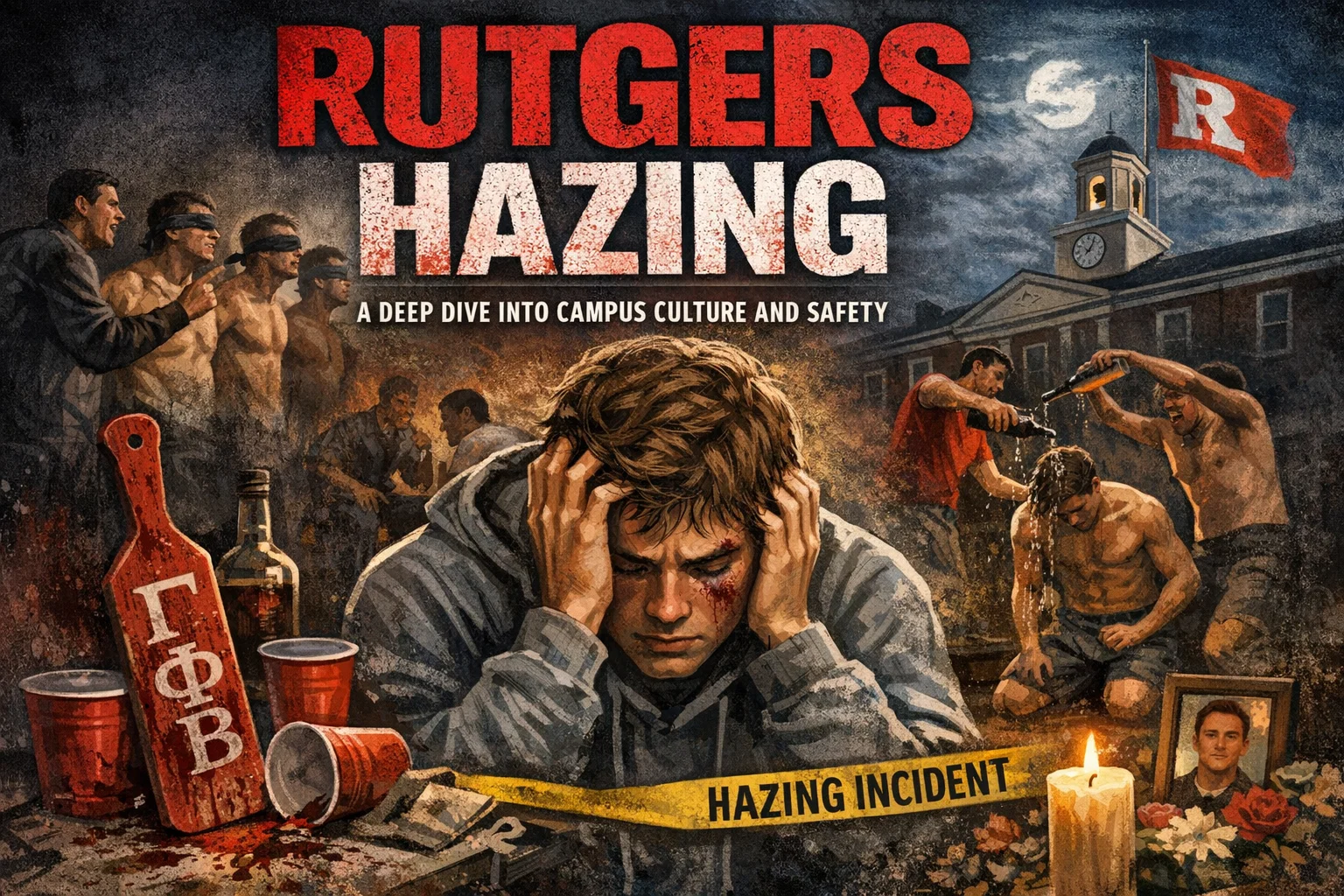
When you think of college life at Rutgers University, images of bustling campuses, spirited football games, and vibrant student organizations might come to mind. But beneath that lively surface, there’s a troubling undercurrent that’s plagued the institution for years—Rutgers hazing. This isn’t just a fleeting problem; it’s a persistent issue that has led to injuries, legal battles, and even permanent changes in how the university operates. As someone who’s followed campus dynamics closely, I can tell you that Rutgers hazing isn’t isolated to one group or era. It weaves through fraternities, sports teams, and other student circles, often hidden until a tragedy brings it to light.
Understanding Rutgers hazing requires peeling back layers of tradition, peer pressure, and institutional oversight. It’s not merely about pranks gone wrong; it’s a systemic challenge that questions the very essence of belonging in college. In this article, we’ll explore the history, the heartbreaking stories, the policies in place, and what can be done to stamp it out for good. Whether you’re a parent sending a kid off to Rutgers, a current student navigating group dynamics, or just curious about campus safety, this dive into Rutgers hazing will arm you with insights to foster healthier environments.
What Exactly is Hazing and Why Does It Happen at Rutgers?
Hazing is essentially any activity expected of someone joining or maintaining membership in a group that humiliates, degrades, abuses, or endangers them, regardless of their willingness to participate. At Rutgers, this can range from forced drinking games to physical endurance tests, often cloaked as “team-building” or “initiation rituals.” Rutgers hazing has been documented in various forms, from emotional manipulation to outright physical harm, and it’s not unique to this school—but the Scarlet Knights’ community has seen its share of spotlight moments that highlight why it’s so insidious.
The psychology behind hazing is fascinating yet disturbing. It often stems from a desire to create bonds through shared adversity, a holdover from military or athletic traditions. At Rutgers, with its large Greek life scene and competitive sports programs, this can escalate quickly. Students might feel pressured to endure Rutgers hazing to prove their loyalty, fearing social exclusion if they bow out. But here’s the kicker: what starts as “harmless fun” can spiral into life-altering consequences, as we’ve seen in multiple cases.
Experts point out that hazing thrives in environments where oversight is lax or where traditions are prioritized over safety. At Rutgers University, despite clear policies against it, incidents persist because reporting can be intimidating. Victims might worry about retaliation or damaging their group’s reputation. This cycle perpetuates Rutgers hazing, making it a topic that demands ongoing attention and reform.
A Historical Overview of Hazing Incidents at Rutgers
Rutgers hazing didn’t start yesterday; it’s rooted in decades of campus culture. Back in the early 2000s, reports surfaced about fraternity pledges being subjected to extreme physical tasks, like prolonged calisthenics or sleep deprivation, which set the stage for more severe cases later on. These early incidents often flew under the radar, dismissed as “boys being boys,” but they laid the groundwork for a pattern that’s hard to ignore today.
Fast forward to the 2010s, and Rutgers hazing gained national attention with cases involving sports teams. For instance, allegations in the basketball program under a former coach highlighted verbal abuse and physical drills that crossed into hazing territory. This era marked a shift, as media scrutiny forced the university to tighten its anti-hazing stance. Yet, despite awareness campaigns, Rutgers hazing continued to bubble up, showing that policy alone isn’t enough without cultural change.
By the 2020s, the issue had evolved but not evaporated. Incidents in Greek organizations became more publicized, with social media amplifying stories that might have stayed hidden before. Rutgers hazing in this period reflects broader societal shifts toward accountability, yet it also underscores persistent challenges in enforcing rules across a sprawling campus.
Notable Rutgers Hazing Incidents That Shook the Campus
One of the most chilling recent examples of Rutgers hazing involved a 19-year-old student at the Alpha Sigma Phi fraternity in 2025. The pledge was critically injured in an incident that allegedly included water and a risk of electrocution during a basement ritual. The national fraternity organization swiftly closed the chapter, expelling involved members and even pursuing legal action against them. This case of Rutgers hazing not only highlighted the physical dangers but also the swift institutional response when things go horribly wrong.
Another standout incident dates back to 2022, when a pledge at Theta Chi suffered severe injuries during a hazing event. Armand Runte, then 19, endured physical abuse that led to a lawsuit against the fraternity and Rutgers itself. This Rutgers hazing episode brought to light how alcohol-fueled rituals can escalate, resulting in hospitalization and long-term trauma. The fallout included suspensions and a renewed focus on prevention, but it also raised questions about why such practices persist.
Beyond these, smaller but no less impactful Rutgers hazing stories emerge from anonymous reports. Students have shared tales of being forced into degrading acts, like public humiliation or financial exploitation, which erode mental health over time. These incidents, while not always making headlines, contribute to a toxic atmosphere that affects the entire student body.
The Physical and Emotional Toll of Rutgers Hazing on Students
The immediate physical risks of Rutgers hazing are obvious—broken bones, dehydration, or in extreme cases, life-threatening injuries like those seen in the Alpha Sigma Phi incident. But the emotional scars run deeper. Victims often grapple with anxiety, depression, or PTSD long after the event, feeling isolated because speaking out could label them as “snitches” in tight-knit groups.
On a broader scale, Rutgers hazing erodes trust in the university community. Students who witness or experience it might question their safety, leading to higher dropout rates or reluctance to join organizations. Parents, too, become wary, scrutinizing Rutgers’ reputation when choosing colleges. The ripple effects touch everyone, from alumni who feel ashamed to faculty who must navigate the aftermath.
Recovery isn’t straightforward. Counseling services at Rutgers help, but stigma around mental health can deter seeking aid. Stories from survivors emphasize resilience, but they also call for better support systems to heal from Rutgers hazing’s wounds.
Rutgers University’s Policies and Responses to Hazing
Rutgers has a zero-tolerance policy on hazing, outlined in the University Code of Student Conduct. It defines hazing broadly, covering physical, emotional, and psychological acts tied to group initiation. Violations can lead to suspensions, expulsions, or even criminal charges, as hazing is illegal in New Jersey. This framework aims to deter Rutgers hazing by making consequences clear and severe.
In response to incidents, Rutgers ramps up education through workshops and orientations. New students learn about recognizing and reporting hazing, with anonymous tip lines available. After the 2025 Alpha Sigma Phi case, the university cooperated with investigations, emphasizing transparency. Yet, critics argue enforcement is inconsistent, with some groups slipping through cracks.
Looking ahead, Rutgers is integrating more tech, like apps for real-time reporting, to combat hazing. Partnerships with national anti-hazing organizations bolster these efforts, showing a commitment to evolving beyond reactive measures.
Legal Ramifications and Accountability in Rutgers Hazing Cases
Legally, Rutgers hazing falls under New Jersey’s anti-hazing laws, which classify it as a disorderly persons offense or worse if injury occurs. In the Theta Chi lawsuit, victims sought damages for negligence, highlighting how universities can be held liable if they fail to prevent foreseeable harm. This sets a precedent for accountability in Rutgers hazing scenarios.
Fraternities face their own legal woes. The Alpha Sigma Phi national body suing its former members in 2026 is a bold move, seeking to recoup costs and deter future incidents. It signals that even within organizations, Rutgers hazing won’t be tolerated without repercussions.
For students, navigating legal options means understanding rights to sue for assault, battery, or emotional distress. High-profile cases encourage more reporting, but the process can be daunting, requiring evidence and witnesses amid group loyalty pressures.
Prevention Strategies: How Rutgers Can Eradicate Hazing
Preventing Rutgers hazing starts with education from day one. Mandatory anti-hazing modules during orientation can shift mindsets, teaching alternatives like positive team-building activities. Empowering bystanders to intervene safely is key, as peer influence often trumps rules.
Collaboration is crucial. Rutgers partners with groups like HazingPrevention.Org to host seminars and campaigns. Encouraging student-led initiatives, where peers design hazing-free events, fosters ownership and reduces resistance.
Monitoring high-risk areas, like Greek life and athletics, through regular audits helps. Rutgers could expand advisor training to spot warning signs early, turning prevention into a campus-wide culture rather than a checkbox.
Student Voices and Quotes on Experiencing Rutgers Hazing
Hearing directly from those affected brings Rutgers hazing to life. One anonymous survivor shared, “It felt like I had to prove myself, but looking back, it was just control disguised as brotherhood.” Such quotes reveal the internal conflict many face, torn between fitting in and self-preservation.
A former fraternity member reflected, “We thought it was tradition, but when someone got hurt, it hit us that Rutgers hazing isn’t worth the risk.” These insights underscore the need for open dialogues to dismantle harmful norms.
Even administrators weigh in. A Rutgers official stated, “Hazing has no place here; we’re committed to a safe, inclusive environment.” Quotes like these humanize the issue, showing collective resolve against Rutgers hazing.
Comparing Rutgers Hazing to Other Universities
To put Rutgers hazing in perspective, let’s look at a table of similar incidents across U.S. campuses:
| University | Notable Incident | Year | Outcome |
|---|---|---|---|
| Rutgers | Alpha Sigma Phi electrocution risk | 2025 | Chapter closed, lawsuits filed |
| Penn State | Beta Theta Pi death from fall | 2017 | University reforms, criminal charges |
| Florida State | Pi Kappa Phi alcohol poisoning | 2017 | Fraternity suspended, awareness campaigns |
| LSU | Phi Delta Theta pledge death | 2017 | Hazing laws strengthened statewide |
| Northwestern | Football team sexual hazing | 2023 | Coach fired, program overhaul |
This comparison shows Rutgers hazing isn’t isolated; it’s part of a national epidemic. Rutgers fares better in swift responses but lags in proactive measures compared to peers like Penn State, which implemented sweeping changes post-tragedy.
Differences arise in enforcement. While Rutgers emphasizes education, others like LSU focus on legal deterrents. Learning from these can help Rutgers refine its approach to hazing prevention.
The Role of Greek Life in Perpetuating Rutgers Hazing
Greek life at Rutgers is a double-edged sword—offering networking and philanthropy, but sometimes harboring Rutgers hazing traditions. Fraternities and sororities often inherit rituals from national chapters, which can include subtle hazing elements disguised as bonding.
Reforming this involves national oversight. After the 2025 incident, Alpha Sigma Phi’s closure exemplified holding locals accountable. Rutgers encourages hazing-free alternatives, like community service drives, to maintain Greek appeal without risks.
Students in Greek organizations can lead change by advocating for inclusive initiations. Shifting from exclusivity to empowerment could redefine Rutgers hazing’s legacy in Greek circles.
Impact on Rutgers’ Reputation and Enrollment
Rutgers hazing scandals tarnish the university’s image, portraying it as unsafe despite its academic prowess. Prospective students might hesitate, especially with media coverage amplifying incidents like the recent fraternity closure.
Enrollment dips could follow if parents prioritize safety. Rutgers counters this with transparency, highlighting anti-hazing successes to rebuild trust. Positive stories, like student-led reforms, help balance the narrative.
Long-term, addressing Rutgers hazing strengthens reputation, attracting quality applicants who value ethical environments over risky traditions.
Parental Guidance: Talking to Kids About Rutgers Hazing
Parents play a pivotal role in preventing Rutgers hazing. Start conversations early, discussing red flags like secretive activities or pressure to conform. Encourage open communication so kids feel safe sharing concerns.
Advise researching groups thoroughly. Questions like “What’s the initiation process?” can reveal potential Rutgers hazing. Remind them that true belonging doesn’t require humiliation.
If an incident occurs, support reporting without judgment. Resources like Rutgers’ counseling can aid recovery, turning a tough talk into empowerment.
The Future of Anti-Hazing Efforts at Rutgers
Looking forward, Rutgers is poised for progress against hazing. Integrating AI for anonymous reporting and expanding peer education programs show innovation. Collaborations with alumni could provide mentorship, breaking cycles.
Challenges remain, like cultural resistance, but momentum builds. By 2030, Rutgers hazing could be a relic if efforts sustain.
Commitment from all—students, staff, and leaders—ensures a safer campus, where growth comes from support, not suffering.
Conclusion
In wrapping up this exploration of Rutgers hazing, it’s clear this issue is more than isolated events—it’s a call to action for cultural shift. From historical patterns to recent tragedies, Rutgers hazing has tested the university’s resolve, but progress through policies and awareness offers hope. By prioritizing safety and inclusion, Rutgers can transform its campus into a model for others. Ultimately, ending Rutgers hazing isn’t just about rules; it’s about fostering communities where every student thrives without fear. Let’s champion that change together.
FAQ
What is the most recent Rutgers hazing incident?
The latest high-profile Rutgers hazing case occurred in 2025 at the Alpha Sigma Phi fraternity, where a 19-year-old pledge was critically injured in a basement ritual involving water and potential electrocution. The national organization closed the chapter, expelled members, and initiated lawsuits, highlighting the severe consequences of such acts. This incident underscores the ongoing risks and the university’s push for stricter enforcement.
Rutgers responded by cooperating with investigations and reinforcing its anti-hazing education. While no criminal charges were filed immediately, the event sparked broader discussions on prevention, showing how one case can drive institutional change.
How does Rutgers define hazing in its policies?
Rutgers defines hazing as any action or situation created intentionally to produce mental or physical discomfort, embarrassment, harassment, or ridicule as part of joining or staying in a group. This includes Rutgers hazing in fraternities, sports, or clubs, covering everything from forced tasks to psychological pressure. The policy aligns with New Jersey law, making it illegal and punishable.
Enforcement involves investigations by the Office of Student Conduct, with penalties ranging from warnings to expulsion. Students are encouraged to report anonymously, ensuring Rutgers hazing is addressed promptly and fairly.
What are the signs a student might be experiencing Rutgers hazing?
Common signs of Rutgers hazing include sudden secrecy about group activities, unexplained injuries, exhaustion from sleep deprivation, or withdrawal from friends and family. Emotional indicators like anxiety or defensiveness when asked about initiations can also signal involvement. Parents and peers should watch for these red flags.
If suspected, approach gently and offer support. Rutgers provides resources like hotlines for guidance, helping intervene before Rutgers hazing escalates into harm.
Can Rutgers hazing lead to legal consequences for participants?
Yes, Rutgers hazing can result in criminal charges under state law, especially if injury or endangerment occurs. In cases like the 2025 incident, participants faced expulsion and civil suits from the fraternity. Victims can pursue personal injury claims too.
The university cooperates with authorities, ensuring accountability. This dual approach—school sanctions and legal action—deters future Rutgers hazing by emphasizing real-world repercussions.
How can students report Rutgers hazing safely?
Students can report Rutgers hazing anonymously through the university’s ethics hotline or online portal, protecting their identity while triggering an investigation. Direct reports to the Dean of Students or police are options for urgent cases.
Rutgers ensures no retaliation, with support services available post-report. This system empowers bystanders and victims to break the silence on Rutgers hazing without fear.
What role do bystanders play in preventing Rutgers hazing?
Bystanders are crucial in stopping Rutgers hazing by speaking up or intervening safely when they witness suspicious activities. Simple actions like questioning rituals or alerting authorities can prevent escalation.
Training programs at Rutgers teach bystander intervention techniques, fostering a community where everyone shares responsibility. This collective vigilance reduces the incidence of Rutgers hazing over time.

