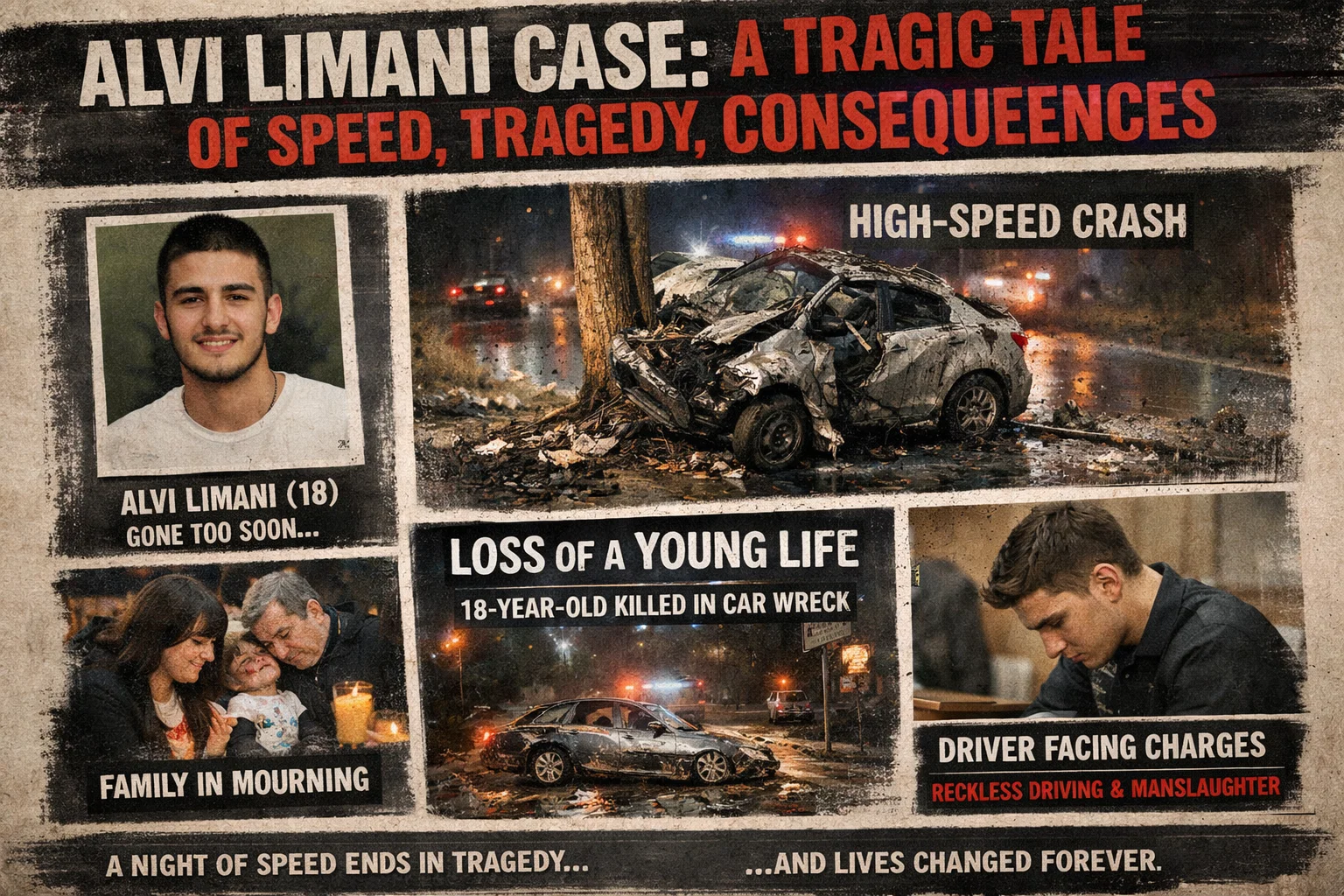
Hey there, if you’re here because you’ve heard the name Alvi Limani Case popping up in headlines, you’re not alone. This story has gripped a lot of people, blending the thrill of high-speed chases with the harsh reality of loss and accountability. Alvi Limani, a 20-year-old from Staten Island, found himself at the center of a devastating incident on the Garden State Parkway that left one person dead and others injured. It’s a reminder of how quickly things can go wrong when recklessness takes the wheel. In this deep dive, we’ll break down what happened, why it matters, and the broader lessons we can all take away.
As someone who’s followed countless stories like this, I can tell you that cases involving young drivers and street racing often highlight bigger issues in our society—like the allure of speed for thrill-seekers and the gaps in road safety. Alvi Limani’s situation isn’t just about one night; it’s about choices, consequences, and how they ripple out to families and communities. We’ll explore the facts without the hype, keeping it real and straightforward so you can form your own thoughts.
The Night That Changed Everything: The Garden State Parkway Crash
Picture this: it’s a warm evening in late June 2025, and the Garden State Parkway is buzzing with traffic. That’s when authorities say Alvi Limani Case, behind the wheel of a BMW X3, allegedly pushed the limits in a high-stakes street race. According to reports, he was racing another BMW, weaving through lanes at speeds topping 112 mph in a 55 mph zone. The result? A catastrophic collision that flipped his vehicle multiple times, ejecting two passengers and leading to one fatality.
The crash happened near mile marker 130 southbound, involving Alvi Limani’s SUV striking a Ford Explorer and then careening into trees. One passenger, 20-year-old Albion Hysenaj from Staten Island, was pronounced dead at Robert Wood Johnson University Hospital. Another, 21-year-old Joseph Donzella, suffered serious injuries. Alvi Limani and his then-girlfriend, Emily Harrington, reportedly fled the scene on foot, leaving the chaos behind. It’s these kinds of split-second decisions that turn a joyride into a nightmare, and they’ve left a community reeling.
Diving deeper, investigators used dash cam footage and the vehicle’s event data recorder to piece together the events. The data showed Alvi Limani accelerating rapidly, hitting those dangerous speeds in seconds. This wasn’t just a fender-bender; it was a multi-vehicle wreck that could have been even worse. Stories like Alvi Limani’s underscore how street racing isn’t victimless—innocent drivers on the parkway that night had their lives disrupted too.
Who is Alvi Limani Case? Background and Profile
Alvi Limani Case, at just 20 years old, hails from Prince’s Bay in Staten Island, a neighborhood known for its quiet streets and family vibes. From what we’ve gathered, he’s a young guy who, like many his age, might have been drawn to the adrenaline of fast cars. But details about his personal life are sparse—public records show him as a non-citizen with Albanian roots, which came into play during his attempted escape. His story starts to unfold more through the lens of this incident, painting a picture of someone who allegedly drove with a suspended license, adding layers to the recklessness claims.
Before this crash, Alvi Limani doesn’t appear in major headlines, suggesting this was a pivotal, life-altering moment. Friends and family have stayed mostly silent, but his mother’s involvement speaks volumes about the family dynamics at play. It’s easy to see Alvi Limani as just another statistic in youth-related accidents, but remembering he’s a person with a backstory helps humanize the tragedy. Was it peer pressure, a love for cars, or something else? We may never know fully, but it’s worth considering how young adults navigate these temptations.
Expanding on that, Alvi Limani’s case echoes many involving young drivers. Statistics show that males aged 15-24 are disproportionately involved in speeding-related fatalities, often due to inexperience or overconfidence. In Alvi Limani’s situation, the suspended license was a red flag that went unheeded, leading to questions about enforcement and prevention.
Charges Filed: Breaking Down the Legal Accusations Against Alvi Limani Case
When the dust settled, Alvi Limani faced a barrage of serious charges that could define his future. Prosecutors hit him with first-degree aggravated manslaughter, second-degree vehicular homicide, and a slew of others like leaving the scene of an accident resulting in death, endangering injured victims, and driving on a suspended license. These aren’t light slaps on the wrist—they carry potential sentences of decades behind bars if convicted.
To put it in perspective, aggravated manslaughter alone is a first-degree crime in New Jersey, punishable by 10-30 years in prison. Alvi Limani Case charges also include tampering with records and hindering, stemming from his post-crash actions. It’s a comprehensive list that reflects how authorities view the incident: not just an accident, but a chain of deliberate choices. Emily Harrington, his passenger, faces lesser but still serious counts like hindering and obstruction.
Let’s not forget the others involved. Jeter Ogando, the alleged other racer, is charged with vehicular homicide and assault by auto. Alvi Limani’s mother, Vilma Vneshta, got third-degree hindering for aiding his escape. This web of accusations shows how one event can ensnare multiple lives.
Here’s a table summarizing the key charges:
| Person Involved | Key Charges | Degree | Potential Penalty |
|---|---|---|---|
| Alvi Limani | Aggravated Manslaughter, Vehicular Homicide, Leaving Scene | First/Second/Third | 10-30 years prison, fines up to $200,000 |
| Emily Harrington | Hindering, Obstruction, Conspiracy | Third/Fourth | Up to 5 years prison, fines |
| Vilma Vneshta | Hindering | Third | Up to 5 years prison |
| Jeter Ogando | Vehicular Homicide, Assault by Auto | Second/Third/Fourth | 5-10 years prison |
This table highlights the severity—Alvi Limani’s charges stand out as the most grave.
The Great Escape: Alvi Limani’s Flight to Miami and Arrest
Days after the crash, Alvi Limani didn’t stick around. Detectives say he bolted to Miami with his mom, Vilma Vneshta, planning to jet off to Albania. They allegedly bought Florida IDs, same-day passports, and tickets to Tirana. But law enforcement caught up, arresting them near Miami on July 17, 2025. Booking photos show Alvi Limani in a neck brace with injuries, and Vneshta looking composed but caught.
This attempted flee adds a dramatic twist to the Alvi Limani saga. Why Albania? Reports note Vneshta’s Albanian heritage and family ties there. It’s a classic case of panic leading to worse decisions—now both face extradition and additional charges. TikTok videos even captured their handcuffed arrival back in New Jersey, turning a private ordeal public.
Reflecting on this, escapes like Alvi Limani’s aren’t uncommon in high-profile cases, but they rarely succeed. They often compound the legal troubles, as seen here with hindering charges. It raises questions about family loyalty versus justice—what would you do in Vneshta’s shoes?
Vehicular Homicide in New Jersey: What the Law Says
In New Jersey, vehicular homicide—often called “death by auto”—is no joke. It’s defined as causing death through reckless driving, and in Alvi Limani’s case, it fits the bill with the alleged racing and suspended license. Under N.J.S.A. 2C:11-5, it’s usually a second-degree crime, carrying 5-10 years in prison and up to $150,000 in fines. But factors like intoxication or racing can bump it to first-degree, with 10-20 years.
The No Early Release Act (NERA) kicks in, meaning convicts like potentially Alvi Limani must serve 85% of their sentence before parole. Add in license revocation for life, and the consequences are lifelong. If school zones or prior DWIs are involved, penalties skyrocket. Alvi Limani’s suspended license already triggers a minimum three-year no-parole stint.
Broadly, New Jersey’s laws aim to deter such behavior. Quotes from experts emphasize this: “Reckless driving turns vehicles into weapons,” says a traffic safety advocate. For Alvi Limani, proving recklessness will be key in court—did he know the risks?
The Perils of Street Racing: Stats, Risks, and Realities
Street racing isn’t just movie glamour; it’s deadly. NHTSA data shows speeding, often tied to racing, killed over 11,000 people in 2023 alone. In urban areas like where Alvi Limani’s crash happened, risks multiply with traffic and pedestrians. One study found 0.21% of fatal U.S. crashes from 1998-2001 involved racing, but that’s hundreds of lives lost.
Why is it so dangerous? Speeds like Alvi Limani’s alleged 112 mph reduce reaction time and amplify impact force. Crashes often involve rollovers, ejections, and multi-car pileups. AAA reports 89% of drivers see aggressive driving as extremely risky, yet it persists. In California, 16 racing-related deaths hit San Diego in 2001, showing the epidemic.
Personal stories drive it home. “Street racing steals futures,” a victim’s family once said. For Alvi Limani, this incident spotlights how one thrill can end in tragedy.
Echoes of Tragedy: Similar Fatal Street Racing Cases Across the US
Alvi Limani’s case isn’t isolated. Remember the 2018 Bayshore crash in Tampa? Teens racing killed a mother and baby; sentences ranged from 6-24 years. Or the 2023 Knoxville drag race that claimed lives—convictions followed swiftly.
In Texas, a street racer got prison for killing three in 2022. Minnesota saw juveniles charged after a fatal race. These cases share themes: young drivers, high speeds, and fleeing. Penalties vary, but trends show tougher stances—San Diego indicted 21 for racing in 2024.
Comparing to Alvi Limani, the escape attempt sets his apart, but the core is the same: preventable loss. “We must crack down,” says a DA in one case.
The Garden State Parkway: A Road with History and Hidden Dangers
The Garden State Parkway, where Alvi Limani’s crash unfolded, is New Jersey’s iconic 172-mile lifeline from Cape May to New York. Built 1946-1957, it blended scenic drives with modern highways, boosting tourism and commutes. But safety? It’s mixed—with over 300 fatalities in recent decades, speed and congestion are culprits.
Originally toll-free in parts, it evolved with widenings and bridge replacements. Yet, sections like mile 130 see frequent wrecks. Alvi Limani’s incident highlights vulnerabilities in high-traffic zones. Upgrades continue, but human error—like racing—undermines them.
Historically, the parkway symbolized progress, but today it’s a cautionary path. “It’s beautiful but demands respect,” a historian notes.
Public Outcry and Media Frenzy Surrounding Alvi Limani
The Alvi Limani story exploded online, with X posts and videos racking up views. One viral clip showed his arrest, sparking debates on parenting and justice. “Mother helps son escape after fatal crash,” headlines screamed, fueling outrage.
Public reaction splits: some sympathize with youth’s mistakes, others demand harsh punishment. Media coverage, from Fox to local outlets, focuses on the drama. Emily Harrington’s lawyer called her a “sweet kid,” adding nuance.
In Staten Island, vigils for Hysenaj contrast with Alvi Limani’s silence. It’s a media storm reflecting societal fears about road safety.
What’s Next for Alvi Limani? Court Battles and Potential Outcomes
As Alvi Limani awaits trial in Middlesex County, the road ahead is tough. Detention hearings loom, with evidence like data recorders stacking against him. Possible pleas or trials could drag on, but convictions seem likely given the charges.
Outcomes? If guilty, Alvi Limani faces 10+ years, plus fines and no license. Appeals might follow, but precedents aren’t kind. For his family, it’s ongoing pain.
Conclusion
Wrapping up, the Alvi Limani case is a stark wake-up call. From the fatal crash to the failed escape, it shows how one reckless act cascades. We’ve seen the human cost, legal weight, and societal risks. Ultimately, preventing such stories means better education, stricter enforcement, and personal responsibility. Alvi Limani’s fate is undecided, but the message is clear: speed kills—slow down.
FAQ
What happened in the Alvi Limani crash?
The Alvi Limani incident involved an alleged street race on the Garden State Parkway, leading to a rollover crash that killed one passenger and injured another. Alvi Limani and a passenger fled the scene.
Who is charged alongside Alvi Limani?
Besides Alvi Limani, his mother Vilma Vneshta faces hindering charges, Emily Harrington obstruction, and Jeter Ogando vehicular homicide.
Why did Alvi Limani try to flee?
Alvi Limani allegedly fled to Miami with his mother to escape to Albania, buying passports and tickets, but was arrested before boarding.
What are the penalties for vehicular homicide in NJ?
For cases like Alvi Limani’s, penalties include 5-20 years prison, fines up to $200,000, and license revocation, with 85% served under NERA.
How common are street racing fatalities?
Street racing contributes to hundreds of deaths yearly; NHTSA links speeding to 29% of fatal crashes, mirroring risks in the Alvi Limani case.
Is the Garden State Parkway safe?
While historic, the parkway has safety upgrades, but incidents like Alvi Limani’s highlight dangers from speeding in high-traffic areas.

