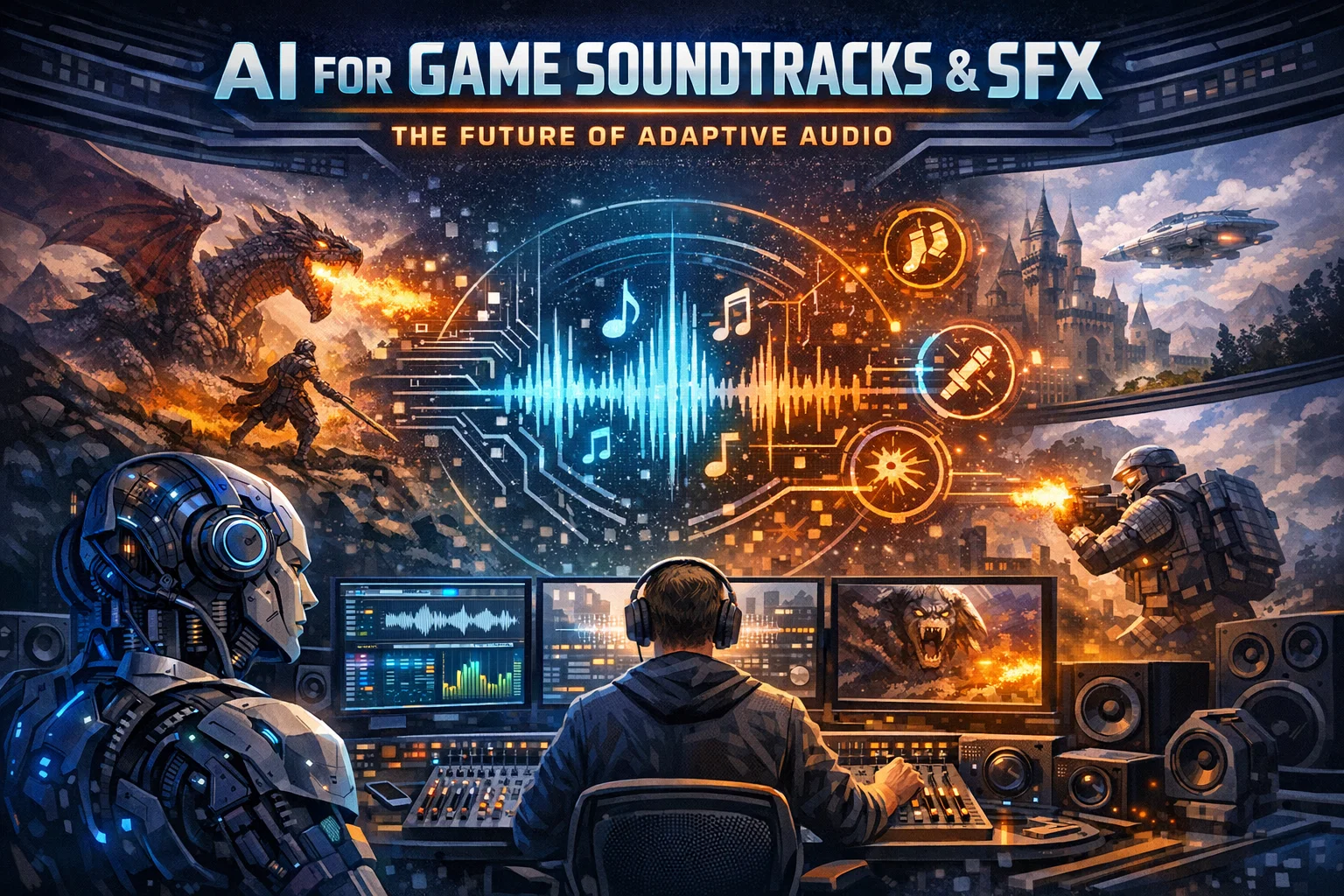
Sound is 50% of the gaming experience, but creating a reactive soundtrack that perfectly matches the intensity of the gameplay is a complex technical challenge. The primary purpose of AI for gaming in the audio sector is to create “procedural music” that evolves in real-time. Instead of looping a single 3-minute track, AI systems can compose new musical variations on the fly, shifting the tempo, instrumentation, and key based on what is happening on screen. If a player enters a dark cave, the music becomes tense and minimalist; if a battle starts, it transitions seamlessly into a high-energy orchestral swell. This ensures that the audio is always a perfect emotional mirror of the player’s journey.
The target audience for adaptive audio tools includes sound designers, indie developers, and composers. For sound designers, AI can automate the creation of thousands of unique “foley” effects—such as footsteps on different surfaces or the sound of various magical spells—ensuring that the world never sounds repetitive. For indie developers, these tools allow for the creation of high-quality, long-form soundtracks without the high cost of hiring an orchestra or purchasing expensive music licenses. AI acts as an “assistant composer” that can generate hundreds of hours of background music that fits the game’s specific style and mood perfectly.
The benefits of AI audio are centered on immersion and emotional resonance. A seamless, reactive soundtrack keeps the player in the “flow state” by preventing the jarring cuts that often happen when a game switches between “exploration” and “combat” music. Secondly, AI can generate “unique” sounds for every interaction, making the world feel tactile and realistic. For example, the sound of a sword hitting a wall can be slightly different every time, depending on the angle and force. This level of detail builds a much more believable digital reality. Furthermore, AI can optimize audio for different speaker setups or headphones in real-time, providing a high-quality spatial experience for every user.
In practice, a composer creates “musical building blocks”—themes, rhythms, and motifs—and the AI uses these blocks to “live-mix” the soundtrack during gameplay. The usage also extends to “text-to-sfx,” where a developer can type “wet leaves crunching under heavy boots” and receive a high-quality audio file instantly. This drastically reduces the time spent on manual sound design. To see how these creative audio capabilities are being applied to other fun AI tools for content creators, you should visit our specialized catalog. AI is turning the game soundtrack into a living, breathing part of the world.