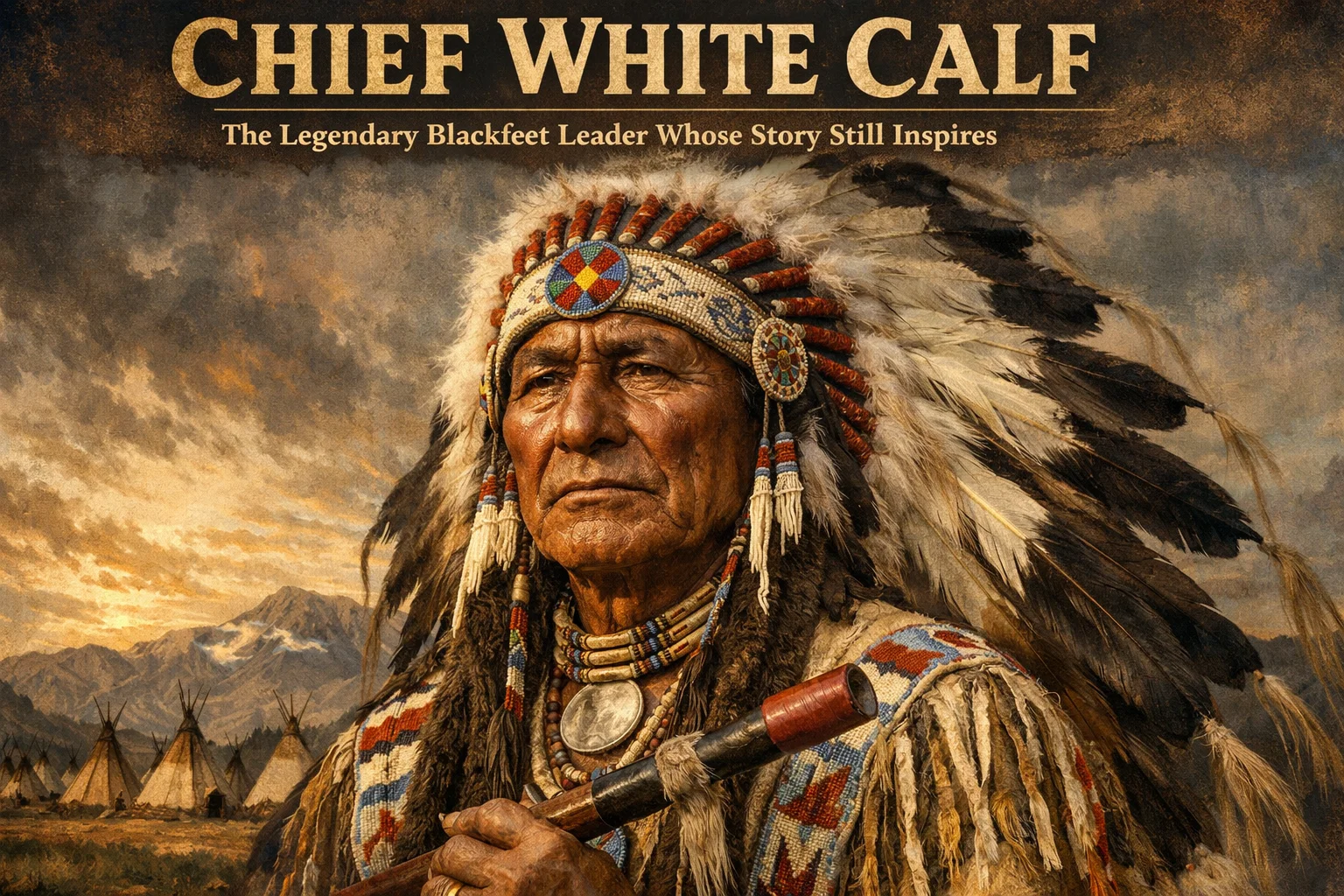
Chief White Calf stands as one of the most captivating figures in Native American history, a man whose presence bridged the old ways of the Blackfeet people with the rapidly changing world of the early 20th century. Born into a time of immense transition on the Montana plains, he rose to become not just a tribal chief but a cultural ambassador who captured the imagination of millions. His striking profile, wise leadership, and tireless advocacy left marks on everything from national parks to everyday pocket change. Even today, his story resonates with anyone interested in resilience, heritage, and the power of one individual to influence broader narratives.
What makes Chief White Calf so compelling is how he navigated challenges with dignity and purpose. He wasn’t just a symbol; he was a real person who posed for tourists, fought for treaty rights in Washington, D.C., and quietly worked to keep Blackfeet traditions alive. His life offers a window into the Blackfeet Nation’s rich past while reminding us of the ongoing conversations around Native representation. Whether you’re a history buff, a traveler dreaming of Glacier National Park, or someone curious about iconic American imagery, diving into his journey feels like uncovering a hidden gem of our shared story.
The Origins of Chief White Calf in Blackfeet History
To truly appreciate Chief White Calf, you have to start with the world he came from—the vast, windswept lands of the Blackfeet Nation in what is now northern Montana. The Piegan Blackfeet, part of the larger Blackfoot Confederacy, had thrived for generations as skilled hunters, warriors, and stewards of the prairie and mountains. Their culture emphasized bravery, community, and a deep spiritual connection to the land, from the buffalo hunts that sustained them to the sacred ceremonies that marked the seasons.
Chief White Calf entered this vibrant yet pressured world in 1872 near Fort Benton, Montana. The region was transforming fast, with settlers, railroads, and government policies reshaping Indigenous life. As the adopted son of the elder Chief White Calf—a respected warrior and treaty negotiator—he grew up learning the old ways while witnessing the new realities. The Blackfeet had signed treaties that promised much but delivered little, leading to loss of lands and resources. Young Two Guns, as he was also known, absorbed lessons in leadership from his father, who fought hard to protect his people’s interests even as external forces closed in.
This early environment shaped him into someone who could speak both to his community and to outsiders. The Blackfeet valued chiefs who were eloquent, courageous, and visionary, qualities he embodied fully. Stories from the era paint a picture of a young man deeply rooted in his heritage, ready to carry forward the mantle when the time came. Understanding this foundation helps explain why he later became such a powerful advocate—his roots ran deep in a culture that prized honor and collective well-being above all else.
The broader Blackfeet history adds layers to his story. From conflicts with neighboring tribes and early encounters with explorers to the reservation era that followed, the people adapted while holding onto core values. Chief White Calf represented continuity in a time of change, a bridge between generations that still holds meaning for descendants and admirers today.
Growing Up in the Changing American West
Life on the Montana frontier in the late 19th century was anything but easy, especially for a Blackfeet youth like Chief White Calf. He came of age amid the decline of the buffalo herds, the arrival of railroads, and the establishment of reservations that confined traditional nomadic life. Yet amid these shifts, he developed a strong sense of identity and purpose that would define his later years.
Daily existence involved learning essential skills—hunting, horsemanship, and the spiritual practices that connected the people to their ancestors. The Blackfeet worldview saw the natural world as alive with spirits, and ceremonies like the Sun Dance reinforced community bonds. As the son of a prominent leader, he observed negotiations with federal agents firsthand, gaining insight into diplomacy and the frustrations of broken promises.
By the time he reached adulthood, the West had transformed dramatically. Fort Benton, once a bustling river port, symbolized the meeting point of cultures. Chief White Calf witnessed both the opportunities, like new trade routes, and the hardships, including disease and land encroachment. These experiences fostered resilience and a pragmatic approach to leadership. He wasn’t one to dwell on the past without action; instead, he looked for ways to honor traditions while engaging the modern world.
His upbringing instilled a quiet confidence that served him well. Friends and observers later described him as dignified and approachable, someone who could charm visitors while never forgetting his responsibilities to the tribe. Growing up in this dynamic era equipped him to become a figure who could represent the Blackfeet not as relics of history but as living participants in America’s story.
Stepping Into Leadership After Tragedy
Tragedy struck the Blackfeet when the elder Chief White Calf passed away in 1903 during a visit to Washington, D.C., as a guest of President Theodore Roosevelt. The loss was profound, leaving a void in leadership at a critical time. It fell to the younger man, then in his early thirties, to step forward as the new chief—often remembered as the last traditional chief of the Piegan Blackfeet.
Assuming this role wasn’t just about title; it meant becoming the voice for his people in dealings with the government and outsiders. Chief White Calf embraced the challenge with determination, drawing on the lessons from his father. He focused on practical matters like treaty enforcement and improving conditions on the reservation, all while maintaining cultural practices that were under pressure from assimilation policies.
His early leadership years involved balancing tradition with adaptation. The Blackfeet faced ongoing issues with resource access and economic opportunities, and he worked to address them thoughtfully. This period solidified his reputation as a steady, respected figure who prioritized his community’s welfare above personal gain.
The transition highlighted his character—humble yet assertive when needed. He earned the respect of both tribal members and those outside the Nation, setting the stage for his broader influence in the decades ahead.
Championing Glacier National Park and Tourism
One of the most visible ways Chief White Calf made his mark was through his work promoting Glacier National Park. In the early 1900s, the Great Northern Railway saw potential in the stunning landscapes of the Rockies as a tourist draw. They enlisted Blackfeet leaders, including him, to help attract visitors by showcasing authentic Native culture alongside the natural wonders.
He became a familiar sight at the park, posing for photographs with tourists in traditional regalia, sharing stories, and highlighting the area’s beauty. This role wasn’t mere performance; it helped generate income for the tribe and raised awareness of Blackfeet presence in their ancestral lands. The park, established in 1910, became a symbol of preservation, and his involvement tied Native heritage directly to its appeal.
Visitors loved the experience—imagine arriving by train to see majestic peaks, pristine lakes, and then meeting a real Blackfeet chief who could recount legends of the mountains. His efforts boosted tourism while subtly educating people about Indigenous stewardship of the land long before modern conservation movements.
Even today, echoes of his work linger in Glacier’s cultural programs. The park’s rugged beauty, from Going-to-the-Sun Road to the grizzly habitats, feels even richer when connected to the man who helped introduce it to the world. His promotional work showed how cultural pride and economic savvy could coexist.
The Mystery of the Indian Head Nickel
Few artifacts spark as much debate as the 1913 Indian Head nickel, and Chief White Calf’s possible connection to it adds intrigue to his legacy. He long claimed that his profile inspired the coin’s obverse design, created by sculptor James Earle Fraser. The handsome, dignified face with braided hair and feathers certainly resembles known portraits of him.
Fraser maintained it was a composite of several Native individuals, including chiefs like Iron Tail and Two Moons. Yet the railway promoters amplified the idea that it was Chief White Calf to draw more attention to Glacier and the Blackfeet. The debate continues among historians and numismatists, with some suggesting government reluctance to credit him due to his growing influence.
Regardless of the exact truth, the association highlights his visibility in popular culture. Millions carried the nickel in their pockets, unknowingly encountering a likeness tied to Blackfeet history. It became another way his image entered everyday American life, symbolizing strength and heritage.
This chapter of his story underscores the blending of Native identity with national symbols during an era when Indigenous voices were often marginalized. It remains a fascinating footnote that invites deeper reflection on representation.
Advocating for His People in Washington, D.C.
Chief White Calf wasn’t afraid to take the fight for justice straight to the nation’s capital. He traveled to Washington multiple times to press for fulfillment of treaty obligations, unpaid funds, and fair treatment. One memorable encounter involved confronting Commissioner John Collier about delayed payments, using a powerful metaphor about empty quivers.
In a striking display, he emptied his pockets and declared that in the old days warriors carried bows and arrows, but now the battle required money—and his quivers were empty. He refused to leave without results, even threatening to stay and sleep in the streets if necessary, echoing his father’s determination. The commissioner eventually relented, issuing the check.
These trips showcased his eloquence and persistence. He mingled with presidents like Calvin Coolidge, who was made an honorary Blackfeet member, and used personal connections to advance tribal causes. His advocacy wasn’t confrontational for its own sake but rooted in a desire for equity and respect.
Such efforts paved the way for later generations, proving that diplomatic engagement could yield real progress. His D.C. visits remain inspirational examples of leadership under pressure.
Preserving Culture Through the Mad Dog Society
Beyond public roles, Chief White Calf quietly led the Mad Dog Society (sometimes called Crazy Dog Society), a group dedicated to safeguarding Blackfeet traditions. In an era when government policies discouraged ceremonies like the Sun Dance, this secret society kept cultural practices alive underground.
Members focused on passing down songs, dances, stories, and spiritual knowledge to ensure the heritage survived. His involvement reflected a deep commitment to identity amid assimilation pressures. One recording of his “Crazy Dog Society Song” even resides in the Smithsonian, a testament to this work.
This behind-the-scenes effort balanced his public persona as a park promoter and advocate. It showed a man who understood that true strength lay in cultural continuity, not just visibility. The society’s legacy continues to influence efforts to revive and celebrate Blackfeet ways today.
The Iconic Image That Captured the World
Photographs of Chief White Calf from the 1920s and 1930s reveal a man of striking presence—beaded clothing, braided hair, and a gaze that conveys both warmth and authority. Images from Glacier National Park and publicity tours made him one of the most photographed Native Americans of his time.
These portraits weren’t staged for exotic appeal alone; they served as bridges, inviting outsiders to appreciate Blackfeet dignity. He posed with tourists, appeared in railway ads, and even joined delegations to events like the 1927 Fair of the Iron Horse in Baltimore.
His image became synonymous with authentic Native leadership. It humanized the Blackfeet in the eyes of many Americans who might otherwise have held stereotypes. That visual legacy endures, influencing how we view Indigenous figures in media and history.
How Chief White Calf Became the Face of the Washington Redskins
In the early 1970s, Blackfeet leader Walter “Blackie” Wetzel selected Chief White Calf’s likeness for the new Washington Redskins logo. The design, featuring the profile with distinctive feathers, debuted on helmets in 1972 and stayed for nearly five decades. Wetzel, a tribal council member and former National Congress of American Indians president, chose it to honor a real person rather than a caricature.
The logo represented pride for many fans and Native supporters at the time. It tied professional football to a specific individual’s story, elevating Chief White Calf’s image nationwide. Players and spectators saw it as a symbol of strength and heritage.
This chapter added another dimension to his fame, placing him in stadiums across the country every Sunday. It demonstrated how one man’s portrait could unite diverse audiences through sports.
The Rise and Fall of a Legendary Logo
The Redskins logo enjoyed widespread popularity until shifting cultural debates led to its retirement in 2020, followed by the team’s name change to the Commanders in 2022. Supporters argued it honored a specific chief rather than generalizing, but protests over terminology prevailed.
The decision sparked mixed reactions, with some viewing it as progress and others as erasure of positive representation. Chief White Calf’s family has publicly called for its return, emphasizing pride in their ancestor’s legacy and noting that fans and many Native voices supported the original imagery.
This evolution reflects broader discussions on sports mascots and identity. The logo’s journey from adoption to removal highlights tensions between history and contemporary sensitivities.
Family Voices: Why the Legacy Matters Today
Descendants of Chief White Calf, including great-nephews like Thomas White Calf, continue to advocate for recognition of his contributions. They express pride in his accomplishments and frustration over what they see as historical oversight in recent decisions.
Family members highlight his role as the most photographed Native leader and stress the importance of telling his full story. Their efforts aim to foster understanding and multiculturalism rather than division. Voices from the Blackfeet Nation underscore that honoring figures like him strengthens community esteem.
These perspectives add a personal, human layer to the narrative, reminding us that legacies involve living relatives who cherish the past.
Understanding Blackfeet Traditions and Chiefly Roles
Blackfeet chiefly roles went beyond politics—they embodied spiritual, military, and social responsibilities. Chiefs like Chief White Calf guided through example, mediating disputes and leading ceremonies. Traditions such as the Sun Dance, vision quests, and oral histories formed the cultural backbone.
He exemplified these ideals while adapting to new circumstances. Exploring Blackfeet customs reveals a sophisticated society with rich artistic, linguistic, and ecological knowledge that continues to thrive.
The Broader Impact on Native American Representation
Chief White Calf’s life influenced how Native Americans appear in popular culture. From coins to parks to sports, his image challenged one-dimensional views, promoting respect and curiosity instead.
His story contributes to ongoing dialogues about authentic representation, showing the value of real individuals over stereotypes. It encourages appreciation for Indigenous contributions across fields.
Lessons from Chief White Calf’s Life for Modern Times
In our fast-paced world, his emphasis on resilience, advocacy, and cultural preservation offers timeless wisdom. Whether facing personal challenges or societal issues, his approach—rooted in dignity and action—provides guidance.
Young leaders today can draw inspiration from his balance of tradition and engagement, applying it to environmental stewardship, community building, and cross-cultural understanding.
Exploring the Landscapes He Loved: Glacier National Park Today
Glacier National Park remains a crown jewel, with its glaciers, wildlife, and trails echoing the landscapes Chief White Calf knew. Visitors can hike the same paths he walked, perhaps imagining his presence amid the peaks.
Modern programs honor Blackfeet connections, offering cultural tours and educational exhibits. The park’s enduring appeal owes much to early promoters like him, blending natural splendor with human stories.
Quote from Chief White Calf (to Commissioner Collier): “In the old days, when we made war on the other tribes, and conquered the land you later took away from us, our warriors carried a bow and two quivers full of arrows. […] But nowadays one can no longer fight with arrows; nowadays one must fight with money, and you can clearly see that the quivers which should hold the money with which to fight for my people are empty.”
Another Insightful Quote on His Approach: He once affirmed his commitment by stating he would stay and fight like his father rather than return empty-handed, underscoring unwavering dedication to his people’s rights.
Timeline of Chief White Calf’s Life
| Year | Key Event |
|---|---|
| 1872 | Born near Fort Benton, Montana, as son/adopted son of elder Chief White Calf |
| 1903 | Elder Chief White Calf dies in Washington, D.C.; he assumes leadership role |
| 1910s | Begins promoting Glacier National Park with Great Northern Railway |
| 1912 | Participates in United States Land Show in Chicago |
| 1913 | Indian Head nickel released; his profile is widely associated with the design |
| 1920s | Leads Mad Dog Society; travels for publicity tours and D.C. advocacy |
| 1927 | Joins delegation to Fair of the Iron Horse and meets President Coolidge |
| 1934 | Passes away at age 63; buried in Browning, Montana |
| 1972 | His image adopted for Washington Redskins logo |
| 2020 | Logo retired amid broader changes |
This table captures the milestones that defined his remarkable path.
Conclusion
Chief White Calf’s life weaves together threads of courage, culture, and connection that continue to enrich our understanding of American history. From the Montana plains to national icons, he embodied the best of Blackfeet leadership—steadfast in advocacy, gracious in representation, and committed to preserving what mattered most. His story isn’t just about the past; it’s a living reminder of resilience and the importance of honoring diverse legacies in a shared society. As we reflect on his contributions to parks, coins, sports, and heritage, we see a man whose influence extends far beyond his time. Whether exploring Glacier’s trails or pondering cultural symbols, his spirit encourages us to value authenticity, dialogue, and pride in our roots. In remembering Chief White Calf, we celebrate not only an individual but the enduring strength of the Blackfeet Nation and the timeless power of one person’s dedication to community and country.
FAQ
Who was Chief White Calf and why is he significant in Blackfeet history?
Chief White Calf, also known as John Two Guns White Calf, was a prominent leader of the Piegan Blackfeet in Montana during the early 20th century. His significance stems from his role as the last traditional chief, his tireless work promoting Glacier National Park, and his advocacy for treaty rights. He bridged cultures by engaging with tourists, government officials, and the public while fiercely protecting Blackfeet heritage through groups like the Mad Dog Society. His image became a symbol of Native dignity, influencing everything from currency designs to sports logos, making him one of the most recognizable Indigenous figures of his era.
What connection does Chief White Calf have to the Indian Head nickel?
Chief White Calf claimed his profile served as the model for the 1913 Indian Head nickel designed by James Earle Fraser. While the sculptor described it as a composite, many portraits of the chief closely match the coin’s features, and railway promoters highlighted the link to boost tourism. The association brought his likeness into daily American life, sparking ongoing discussion about credit and representation in national symbols. It underscores how he helped integrate Blackfeet presence into broader U.S. iconography.
How did Chief White Calf contribute to Glacier National Park?
He played a key role as a publicity representative for the Great Northern Railway, posing with visitors and sharing Blackfeet stories to draw tourists to the park’s majestic landscapes. His efforts in the 1910s and 1920s helped establish Glacier as a premier destination while providing economic benefits to the tribe. By blending cultural education with natural beauty, he enhanced the park’s appeal and ensured Native voices were part of its early narrative, a legacy still felt in today’s visitor experiences.
Why was Chief White Calf’s image chosen for the Washington Redskins logo?
In 1972, Blackfeet leader Walter “Blackie” Wetzel selected the chief’s distinctive profile for the team’s helmet logo to honor a real, respected individual rather than create a generic mascot. The choice reflected pride in Blackfeet heritage and brought positive Native representation to the NFL for decades. Family members and supporters continue to view it as a tribute, highlighting the chief’s fame and the logo’s roots in authentic history.
What is the current status of Chief White Calf’s legacy regarding the Redskins logo and beyond?
Following the logo’s retirement in 2020 and the team’s name change, descendants of Chief White Calf have advocated for its restoration, emphasizing pride in their ancestor’s image and broad fan support. His legacy lives on through family stories, cultural preservation efforts, and educational discussions about representation. Efforts nationwide seek to keep his contributions visible, ensuring future generations learn from his life of leadership, advocacy, and cultural pride. His story remains a powerful example of resilience in Native American history.

