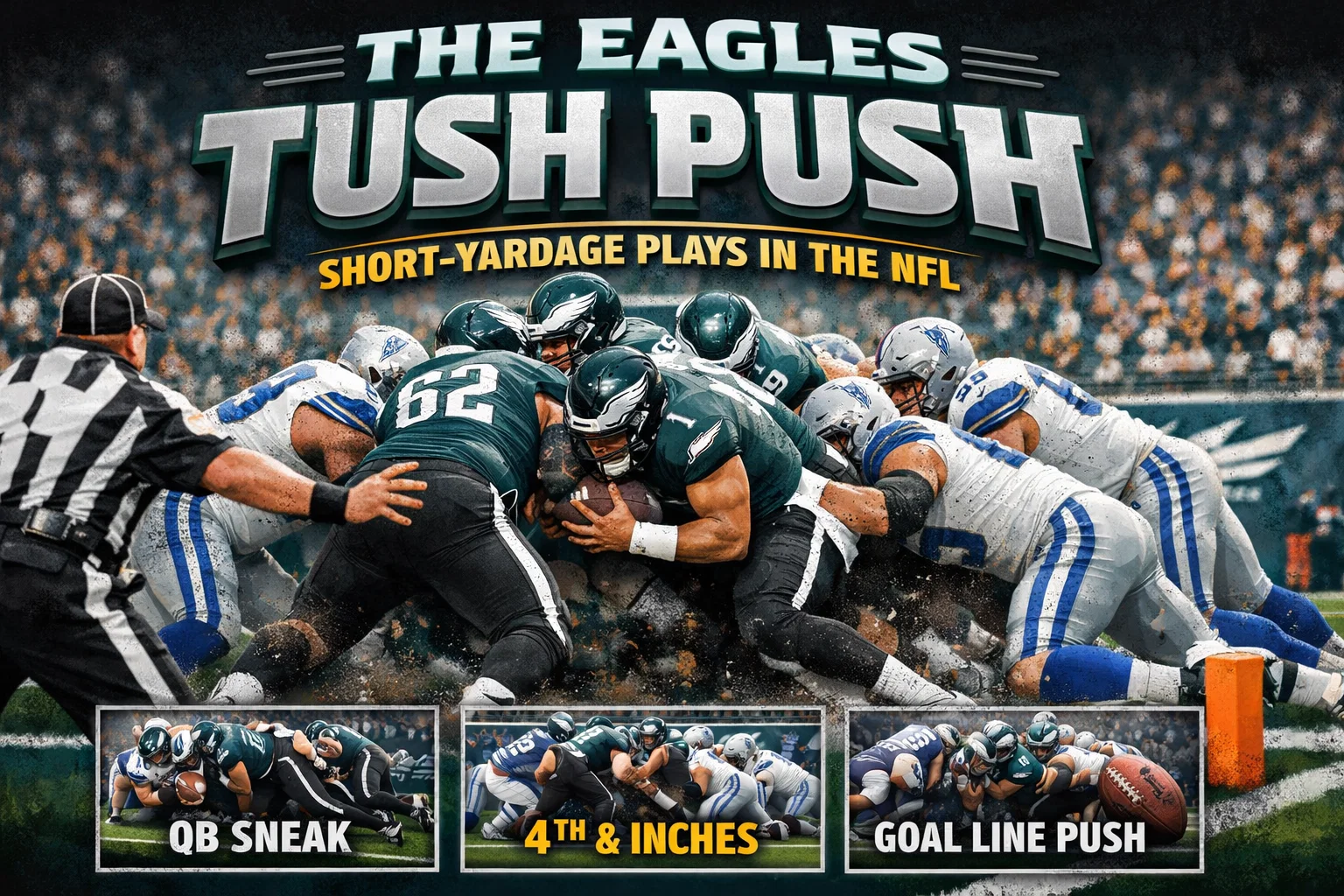
The eagles tush push has become one of the most talked-about strategies in modern football, captivating fans and frustrating opponents alike. If you’re a die-hard Philadelphia Eagles supporter or just someone who loves the intricacies of the game, you’ve probably seen this play in action. It’s that moment when the Eagles line up in a tight formation, the crowd roars, and everyone knows what’s coming—yet defenses still struggle to stop it. Also known as the brotherly shove, this quarterback sneak variation involves teammates literally pushing the ball carrier forward, turning what could be a risky short-yardage situation into a near-guaranteed gain. But what makes the eagles tush push so special? It’s not just brute force; it’s a blend of smart coaching, player strength, and precise execution that has redefined how teams approach goal-line stands and fourth-down conversions.
Over the years, the eagles tush push has evolved from a niche experiment into a staple of the Eagles’ offensive playbook. It draws inspiration from rugby scrums and college football innovations, but the Philadelphia Eagles have perfected it to the point where it’s synonymous with their identity. Whether it’s Jalen Hurts plunging forward with help from behind or the offensive line creating an impenetrable wall, this play embodies the grit and teamwork that Philly fans adore. In this article, we’ll dive deep into everything you need to know about the eagles tush push, from its humble beginnings to its current controversies, all while keeping things straightforward and fun. Let’s break it down like a well-executed huddle.
What is the Eagles Tush Push?
At its core, the eagles tush push is a clever twist on the classic quarterback sneak, designed for those nail-biting moments when you need just a yard or two. Picture this: the quarterback takes the snap under center, drives forward with all his might, and gets an extra boost from teammates pushing him from behind. It’s like a human battering ram, where the running back and tight end join the fray to shove the QB through the defensive line. This isn’t some wild improvisation—it’s a meticulously planned play that relies on timing, leverage, and sheer power. The brotherly shove nickname comes from that sense of camaraderie, as if the team is giving their QB a friendly nudge toward glory.
Why does it work so well for the Philadelphia Eagles? It starts with their personnel. Jalen Hurts, with his legendary leg strength—he’s known to squat over 500 pounds—is the perfect quarterback for this. Add in heavy hitters like the offensive line, including behemoths such as Jordan Mailata and Landon Dickerson, and you’ve got a recipe for success. The play isn’t just about pushing; it’s about the offensive line getting low and surging as one unit, creating gaps that the defense can’t fill fast enough. Variations keep things fresh, like faking a handoff or using a hard count to draw penalties. It’s simple in concept but genius in practice, making short-yardage plays less of a gamble and more of a certainty.
Of course, not every team can pull off the eagles tush push with the same flair. It requires a specific mix of athleticism and coordination that the Eagles have honed over seasons. When executed right, it’s poetry in motion—or rather, controlled chaos on the gridiron.
The Origins and History of the Eagles Tush Push
The story of the eagles tush push didn’t start in Philadelphia; its roots go back further, blending elements from college ball and even international sports. Back in 2005, college football fans witnessed the infamous “Bush push,” where USC’s Reggie Bush shoved quarterback Matt Leinart into the end zone against Notre Dame. That play sparked debates, but it also led to rule changes in the NFL the following year, allowing players to push the ball carrier forward—something previously banned to prevent injuries. This opened the door for innovations like the brotherly shove we see today.
Fast forward to the late 2000s, and coaches at Kansas State University were tinkering with assisted quarterback sneaks under Bill Snyder. Offensive coordinator Dana Dimel refined it between 2015 and 2018, drawing from rugby tactics where pushing in scrums is standard. The idea simmered until 2018 when Minnesota Vikings linebacker Anthony Barr, caught on a hot mic during an NFL Films segment, jokingly suggested pushing the quarterback in short-yardage situations. Little did he know, that offhand comment would plant the seed for what became a league-wide phenomenon. By 2020, the Indianapolis Colts, under then-offensive coordinator Nick Sirianni, experimented with a version using Jacoby Brissett, proving its viability in pro games.
When Sirianni became head coach of the Philadelphia Eagles in 2021, he brought the concept along. The eagles tush push made its debut in Week 5 against the Carolina Panthers, with fullback Jack Stoll providing the initial push to Jalen Hurts. It wasn’t an instant hit, but by 2022, after successes against teams like the Arizona Cardinals and Dallas Cowboys, it became a go-to strategy. Eagles offensive line coach Jeff Stoutland elevated it further by consulting Scottish rugby coach Richie Gray, incorporating techniques for better leverage and momentum. This collaboration turned the play into a well-oiled machine, helping the Eagles reach Super Bowl LVII where they scored their first touchdown with it—though they ultimately lost to the Chiefs.
The evolution continued into later seasons, with the eagles tush push adapting to defensive countermeasures. By 2024 and 2025, it had scored crucial points in playoff games, including a game-winner in Super Bowl LIX. Its history is a testament to how football strategies borrow from other sports and build on past ideas, creating something uniquely effective for the modern NFL.
How the Eagles Tush Push Works: A Breakdown
Breaking down the eagles tush push is like dissecting a perfectly timed dance—every step matters. It all begins with the formation: the Eagles pack in tight, often going to the left side behind massive linemen like Jordan Mailata (6-8, 365 pounds) and Landon Dickerson (6-6, 332 pounds). The quarterback, Jalen Hurts, lines up under center Cam Jurgens, who’s tasked with a clean snap and immediate low block. As the ball is snapped, Hurts drives forward with explosive power, keeping the ball secure high and tight to avoid fumbles.
The “push” part comes from behind, where the running back—say, Saquon Barkley—and a tight end like Dallas Goedert align directly in Hurts’ path. They time their shove perfectly, hitting low on his backside to propel him through the line. Meanwhile, the offensive line surges as a unit, using their combined weight (often over 1,000 pounds in the key blockers) to create forward momentum. It’s not just raw strength; leverage is key—getting under the defenders’ pads to lift and displace them. Hard counts add deception, drawing offside penalties that gift free yards.
Variations keep defenses guessing. Sometimes, it’s a fake where Hurts pitches to Barkley for a jet sweep, or an underhand toss to Goedert. These wrinkles prevent predictability. Execution demands practice; the Eagles drill this relentlessly to ensure synchronicity. If one player jumps early, it’s a false start; if the push is mistimed, the play stalls. That’s why their success stems from repetition and trust—it’s a team effort where everyone buys in.
In essence, the eagles tush push transforms a high-stakes gamble into a calculated shove, leveraging physics and teamwork to gain those critical inches.
Why the Eagles Are So Good at the Eagles Tush Push
The Philadelphia Eagles’ mastery of the eagles tush push boils down to a killer combination of personnel, preparation, and innovation. First off, their roster is built for it. Jalen Hurts isn’t just a dual-threat QB; his lower-body strength is elite, allowing him to absorb contact and keep driving. Pair that with pushers like Saquon Barkley, who can squat around 600 pounds, and you’ve got serious horsepower. The offensive line is the backbone—guys like Lane Johnson and Jordan Mailata provide the size and technique to dominate at the point of attack.
Preparation plays a huge role too. Under coaches Nick Sirianni and Jeff Stoutland, the team practices the brotherly shove obsessively, focusing on details like foot placement and timing. They even brought in rugby experts to teach scrum techniques, emphasizing low center of gravity and unified pushing. This isn’t a play you wing; it’s rehearsed to perfection, which explains why the Eagles attempt it more than anyone else and convert at such high rates.
What sets them apart from copycats? Adaptability. When defenses started stacking the line or using tricks like lying down to create logjams, the Eagles added fakes and misdirections. Their success isn’t luck—it’s the result of a culture that embraces physicality and innovation, making the eagles tush push a symbol of Philly toughness.
Statistics and Success Rates of the Eagles Tush Push
Diving into the numbers, the eagles tush push has been a statistical powerhouse for the Philadelphia Eagles, though recent seasons show some fluctuations. From 2022 onward, the play has converted at an impressive overall rate of around 86-87%, far surpassing the league average for similar short-yardage attempts. In 2022, the Eagles nailed 25 out of 27 tries for a 93% success rate, turning heads and sparking debates. That dipped slightly in 2023 to 83% (35 of 42), but still led the NFL in efficiency.
By 2024, they maintained strong form with an 81.3% rate (39 of 48 conversions for first downs or touchdowns), including playoffs. However, 2025 saw a noticeable decline to about 60-61.3%, below the league’s 68.4% average for quarterback runs in 1-yard situations. Despite this, the Eagles led in attempts, running it nearly twice as often as any other team early in the season. Penalties, like five false starts (more than any other squad), contributed to the drop, but they still scored key touchdowns, including in red-zone scenarios where they converted 70.5% overall.
To put it in perspective, here’s a table comparing the Eagles’ success rates by year with select other teams’ quarterback sneaks (including tush push variations):
| Year/Team | Attempts | Conversions | Success Rate (%) |
|---|---|---|---|
| Eagles 2022 | 27 | 25 | 93 |
| Eagles 2023 | 42 | 35 | 83 |
| Eagles 2024 | 48 | 39 | 81.3 |
| Eagles 2025 | ~31 (estimated) | ~19 | 61.3 |
| Buffalo Bills (2022-2025) | 37 | 29 | 78.4 |
| Cleveland Browns (2022-2025) | 12 | 11 | 91.7 |
| Dallas Cowboys (2022-2025) | 10 | 9 | 90 |
| League Average (2025) | Varies | Varies | 68.4 |
These stats highlight how the eagles tush push remains a dominant force, even with adaptations needed. The dip in 2025 underscores defensive evolution, but the Eagles’ volume of use keeps it relevant.
The numbers also reveal the play’s impact on games: 27 touchdowns for the Eagles alone since 2022, contributing to multiple Super Bowl appearances and a win in LIX.
Controversies Surrounding the Eagles Tush Push
No play as dominant as the eagles tush push escapes controversy, and this one has stirred up plenty. Critics argue it’s unfair, giving the Eagles an almost automatic edge in short-yardage spots, which some say diminishes the skill element of football. Pundits like Sally Jenkins have called it “boring and brutish,” comparing it to rugby rather than the finesse of NFL plays. Safety is another hot button—opponents worry about pile-ups leading to injuries, though NFL data shows no reported injuries from the play in 2024.
Officiating adds fuel to the fire. Defenses complain about missed false starts, while the Eagles face heightened scrutiny, leading to more penalties in recent years. For instance, in 2025, tricks like defenders lying down or stripping the ball mid-push created chaos, and refs struggled to spot the ball accurately. This has led to accusations of bias, with some fans claiming the league is subtly trying to nerf the brotherly shove without banning it outright.
Despite the backlash, supporters point out it’s legal under 2006 rules and available to everyone—other teams just can’t execute it as well. The controversies keep the eagles tush push in headlines, boosting its notoriety.
Attempts to Ban the Eagles Tush Push
The push to ban the eagles tush push gained traction in early 2025, when the Green Bay Packers proposed outlawing it at the NFL’s Annual League Meeting. Their argument? Safety risks and difficulty in officiating, echoing concerns from coaches like Matt LaFleur, who said it belongs in rugby. An informal poll showed division, but it fell short of the three-quarters majority needed for a vote. By May, a resubmitted proposal failed by two votes (22-24), with nine teams, including the Eagles’ NFC East rivals and the Detroit Lions, opposing it.
Eagles owner Jeffrey Lurie passionately defended the play, calling it safe and innovative, with no injury history to back bans. Coach Nick Sirianni echoed this, saying he’s “protective” of their hard-earned edge. Even retired center Jason Kelce predicted an eventual ban but noted the team would adapt. Critics like Packers CEO Mark Murphy (who stepped down shortly after) cited injury fears, but data contradicted them.
The failed attempts highlight the NFL’s reluctance to change rules targeting one team’s success, keeping the brotherly shove alive—for now.
How Other Teams Have Tried the Tush Push
While the eagles tush push is Philly’s claim to fame, other teams have dipped their toes in with mixed results. The Buffalo Bills come closest, using Josh Allen’s strength for a 78.4% success rate on 37 attempts from 2022-2025. They’ve even turned it into longer gains, like a 10-yard scamper in a 2025 playoff win. The Pittsburgh Steelers added flair with a 55-yard trick variation in 2025, using fullback Connor Heyward as the pusher.
Teams like the Cleveland Browns boast a 91.7% rate but on fewer tries (12), showing it’s doable with the right QB like Deshaun Watson. The Dallas Cowboys hit 90% on 10 attempts, proving NFC East rivals can mimic it. However, most squads falter due to lacking the Eagles’ size or reps—think aborted snaps or stalled pushes.
What lessons do they take? Size matters, but so does practice. The eagles tush push inspires, but few match Philly’s mastery.
Player and Coach Quotes on the Eagles Tush Push
Players and coaches have plenty to say about the eagles tush push, offering insights into its impact. Eagles QB Jalen Hurts keeps it humble: “It’s about execution and trust in the guys up front. We work on it every day to make sure we’re on the same page.”
Retired center Jason Kelce, now an analyst, reflects: “I don’t know that I am the determining factor… The more reps these guys get at it, the more it’s going to get back to that 90-plus percent success rate.” His successor, Cam Jurgens, adds: “They can’t stop it and they can’t do it,” highlighting the play’s exclusivity.
Running back Saquon Barkley boasts: “It definitely helps how strong Jalen is and how strong I am… That play is going to be talked about for a very long time, and it’s hard to stop.”
Coach Nick Sirianni defends fiercely: “I’m protective of it,” while owner Jeffrey Lurie states: “It is a safe play and he can’t remember the NFL banning something just because one team does it well.”
Opponents chime in too. Lions coach Dan Campbell opposes bans: “I’m a purist. You take something out of the game, then we’re taking the next thing out.” Steelers coach Mike Tomlin cites concerns: “It’s about safety here.” Chiefs coach Andy Reid notes: “They were in the neutral zone a lot,” after a game.
Offensive coordinator Kellen Moore credits: “Give credit to Jalen and all those guys for creating a play that someone decided we’re just going to make a rule up to stop it.”
These quotes capture the pride, debate, and respect surrounding the eagles tush push.
The Future of the Eagles Tush Push in the NFL
Looking ahead, the eagles tush push faces an uncertain but exciting future. With defenses adapting—using ball strips, logjams, and penalty-drawing tactics—the Eagles have dialed back usage, opting for handoffs or passes in short-yardage spots. In late 2025, they ran it only four times in three games, adding wrinkles like a 52-yard Saquon Barkley rush off a fake.
Success rates may stabilize with more reps for the post-Jason Kelce line, but increased officiating scrutiny could limit it. Lineman Jordan Mailata mused: “The play might not be around next year,” if penalties persist. Yet, coach Nick Sirianni insists: “It’s still our bread and butter,” emphasizing evolution.
League-wide, a ban seems unlikely soon, as failed 2025 votes show. If rules change—like the 2025 1-yard pusher separation—it could alter dynamics. For the Philadelphia Eagles, innovation will keep the brotherly shove relevant, perhaps inspiring new short-yardage revolutions.
Conclusion
In wrapping up, the eagles tush push stands as a testament to the Philadelphia Eagles’ ingenuity and physical prowess, transforming short-yardage dilemmas into triumphs. From its origins in college pushes to its current status as a debated NFL staple, this play has left an indelible mark on football. While challenges like declining success rates and ban talks loom, its legacy of teamwork and grit endures. Whether it evolves or fades, the brotherly shove reminds us why we love the game—it’s about pushing limits, literally and figuratively. Philly fans, keep shoving on.
FAQ
What exactly is the eagles tush push?
The eagles tush push is a specialized quarterback sneak where teammates push the QB forward in short-yardage situations. It relies on precise timing and strength, making it highly effective for the Philadelphia Eagles. Also called the brotherly shove, it’s used near the goal line or on fourth downs to secure crucial gains.
This play’s uniqueness comes from the coordinated effort, with the offensive line creating space and pushers adding momentum. It’s not just power; strategy plays a big role in its success.
Why has the success rate of the eagles tush push declined recently?
Recent dips in the eagles tush push success rate, down to around 60% in 2025, stem from defensive adjustments and stricter officiating. Teams now use tactics like ball stripping or creating pile-ups, while refs call more false starts.
The Philadelphia Eagles are adapting with variations, but the increased scrutiny has made execution trickier. Still, it’s more effective than many alternatives.
Should the NFL ban the eagles tush push?
Debates rage on banning the eagles tush push, with some citing safety and fairness. However, no injuries have been linked to it, and supporters argue it’s innovative and legal.
Failed ban attempts in 2025 show the league’s split opinion. For now, it stays, allowing teams like the Eagles to shine.
How do other teams perform with their own versions of the eagles tush push?
Other teams like the Buffalo Bills achieve solid rates around 78%, but with fewer attempts than the Eagles. Squads such as the Browns hit 91% on limited tries, showing potential.
The key difference? The Philadelphia Eagles’ reps and personnel give them an edge few can match.
What role does Jalen Hurts play in the success of the eagles tush push?
Jalen Hurts is central to the eagles tush push, using his strength and ball security to drive forward. His ability to squat heavy weights helps him power through contact.
Combined with team pushes, his athleticism makes the play unstoppable in many cases.
Can the eagles tush push be stopped by defenses?
Defenses have found ways to challenge the eagles tush push, like using logjams or drawing penalties. Success depends on disrupting timing.
While not foolproof, it’s still tough to halt completely, thanks to the Eagles’ execution.

