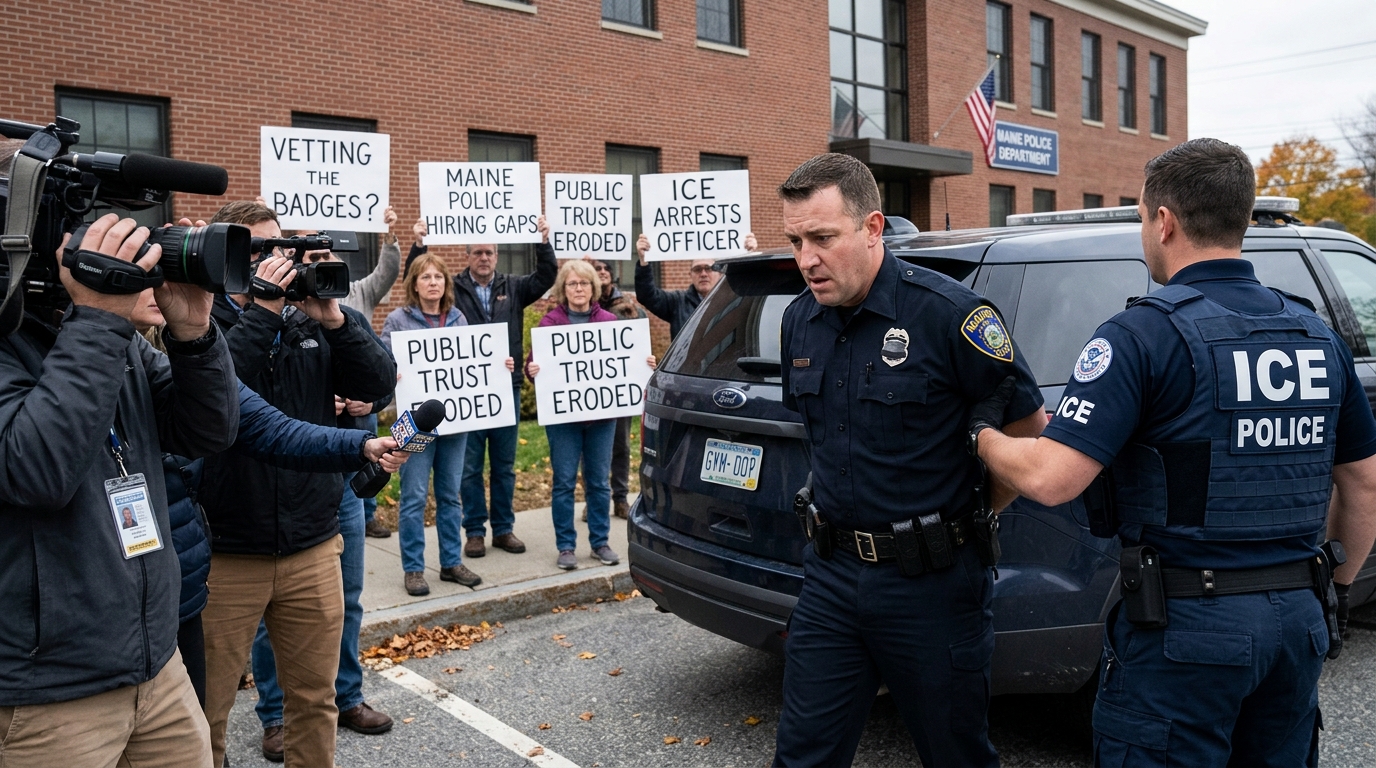
The news of an ICE arrest Maine police officer sent ripples through communities across the state and beyond. In a story that blends immigration enforcement, local policing, and questions about background checks, a reserve officer found himself at the center of national attention. This incident wasn’t just about one individual—it highlighted deeper issues in how agencies verify employment eligibility and the challenges of balancing public safety with federal immigration rules.
People in Maine and across the country were surprised to learn that someone serving in law enforcement could face such an arrest. The case raised eyebrows about trust in the system, the effectiveness of verification tools like E-Verify, and what it means for small-town departments. As details emerged, it became clear this wasn’t an isolated oversight but a moment that exposed vulnerabilities many had overlooked.
What Exactly Happened in the ICE Arrest of the Maine Police Officer
In late July 2025, federal agents from U.S. Immigration and Customs Enforcement, working alongside the Bureau of Alcohol, Tobacco, Firearms and Explosives, took action in Biddeford, Maine. The target was Jon Luke Evans, a Jamaican national working as a reserve police officer with the Old Orchard Beach Police Department. Evans allegedly attempted to purchase a firearm unlawfully, which triggered the investigation leading to his detention.
At the time of the ICE arrest, Evans was employed in a role that many in the community viewed as a pillar of local safety. Reserve officers often support full-time staff during events, community patrols, and other duties. The revelation that he was present in the country illegally after overstaying a visa shocked department leaders and residents alike. This Maine police officer case quickly became a talking point about how someone could slip through hiring processes designed to prevent exactly this scenario.
The arrest unfolded without major incident, but the aftermath involved significant scrutiny. Evans was taken into custody, and federal officials emphasized that the action stemmed from immigration violations combined with the attempted firearm purchase. For many, the story underscored the complexities of immigration status when it intersects with positions of authority. Law enforcement roles require absolute compliance with the law, making this development particularly noteworthy.
Discussions in local forums and national media highlighted how the event unfolded in a relatively quiet coastal area known more for tourism than high-profile federal operations. Old Orchard Beach, with its sandy shores and seasonal crowds, suddenly found itself in the spotlight for reasons far removed from summer vacations.
Background on Jon Luke Evans and His Role in Maine Law Enforcement
Jon Luke Evans arrived in the United States on a visa that eventually expired, leading to his unlawful presence. Despite this, he secured a position as a reserve officer, a role that, while not always full-time, still carries the weight of public trust and legal responsibilities. His background as a Jamaican national wasn’t immediately flagged in ways that prevented hiring, which later fueled debates about screening protocols.
Reserve police officers in small Maine departments like Old Orchard Beach play vital supporting roles. They might handle traffic control at beach events, assist with crowd management during festivals, or provide backup during routine calls. Evans reportedly fit into this framework until the firearm purchase attempt brought everything to light. The fact that he sought a gun for work-related purposes added another layer, as federal law prohibits certain non-citizens from possessing firearms.
This situation prompted many to wonder about his daily interactions with the public. Did community members sense anything unusual? Were there signs missed during training or onboarding? These questions lingered as more details surfaced about how he integrated into the department.
Maine’s law enforcement community is generally tight-knit, with departments often relying on local networks and standard state certifications. The presence of an individual with unresolved immigration issues challenged assumptions about how thoroughly these checks are performed, especially in resource-limited rural or seasonal areas.
The Role of E-Verify in the Hiring Process and What Went Wrong
E-Verify is a federal system designed to help employers confirm that new hires are eligible to work in the United States. Many public agencies, including police departments, use it as a safeguard. In the case of this Maine police officer, the system apparently cleared Evans, yet ICE later determined his status was unlawful. This discrepancy raised serious questions about the reliability of electronic verification tools.
Critics pointed out that E-Verify isn’t foolproof. It relies on data from government databases, which can sometimes lag or contain inaccuracies. Supporters of stronger enforcement argued that departments should go beyond basic checks, perhaps incorporating additional layers like manual reviews or direct immigration status inquiries where permissible. The Old Orchard Beach department faced accusations of “reckless reliance” on the program, according to federal officials.
For small-town Maine police forces, implementing robust vetting can be challenging due to budget constraints and limited HR expertise. This incident served as a wake-up call, prompting reviews of hiring practices not just in Maine but potentially nationwide. How many other agencies might have similar blind spots?
Experts in immigration policy noted that while E-Verify has improved over the years, it doesn’t catch every case of visa overstays or more complex status issues. The Maine case illustrated a gap between what technology promises and real-world outcomes, especially when someone attempts a regulated activity like buying a firearm.
ICE’s Perspective: Enforcing Immigration Laws in Sensitive Roles
U.S. Immigration and Customs Enforcement maintains that its actions protect national security and uphold the rule of law. In statements following the arrest, officials highlighted the risks of having unauthorized individuals in positions that involve access to sensitive information or weapons. The partnership with ATF in this Maine police officer arrest underscored a multi-agency approach to prevent potential violations.
ICE has ramped up efforts in recent years to target those who exploit loopholes or enter sensitive professions while lacking proper authorization. From their viewpoint, allowing someone to serve as a sworn or reserve officer without legal status undermines the integrity of law enforcement as a whole. The agency stressed that Evans’s case was identified through standard processes triggered by the firearm attempt.
This enforcement philosophy often clashes with local sentiments, particularly in areas with labor shortages or diverse communities. In Maine, where some towns pride themselves on welcoming attitudes, federal actions can feel heavy-handed. Yet proponents argue that consistent application of immigration rules prevents bigger problems down the line.
The arrest also aligned with broader priorities of removing individuals with immigration violations, especially those attempting activities reserved for citizens or lawfully present persons. Officials pointed to the voluntary departure agreement as a resolution that avoided prolonged legal battles while achieving compliance.
Local Reactions in Maine: Shock, Support, and Criticism
Communities in Old Orchard Beach and surrounding areas reacted with a mix of surprise and concern. Some residents worried about the implications for public safety and department morale. Others supported ICE’s intervention, viewing it as necessary accountability. The story of the Maine police officer arrest quickly spread through local news outlets, coffee shop conversations, and social media groups.
Police department leaders had to address the situation transparently while reassuring the public that core services remained unaffected. In small towns, where officers often know residents personally, such an event can erode trust if not handled carefully. Maine’s law enforcement culture emphasizes community policing, making this a particularly sensitive issue.
Elected officials weighed in, with some calling for better coordination between federal and local agencies. Others focused on the human element, noting that Evans had apparently performed his duties without major complaints until the arrest. This duality fueled ongoing debates about immigration enforcement priorities.
Broader Maine reactions included discussions on tourism impacts—Old Orchard Beach relies heavily on visitors, and negative headlines could affect perceptions. At the same time, many appreciated the spotlight on systemic improvements rather than individual blame alone.
Broader Implications for Law Enforcement Immigration Vetting Nationwide
The Maine case didn’t exist in isolation. It prompted reviews of hiring standards across various states, especially for roles involving public authority. Departments began re-examining their use of E-Verify and considering supplementary checks, such as deeper background investigations or legal consultations.
Immigration experts highlighted how visa overstays represent a significant portion of unauthorized presence, distinct from border crossings. This nuance matters because systems like E-Verify may handle initial work authorization differently from long-term status monitoring. The incident illustrated the need for ongoing verification, not just at hiring.
For reserve officers specifically, the rules can sometimes be less stringent than for full-time positions, creating potential entry points. This raised policy questions: Should reserve roles require the same rigorous federal clearances? How can smaller agencies afford enhanced screening without straining budgets?
Nationally, advocacy groups on both sides of the immigration debate used the story to advance their positions. One side called for stricter enforcement and penalties for employers who fail to verify properly. The other emphasized due process and the contributions of immigrants in essential services.
Related Incidents: ICE Actions Involving Maine Law Enforcement Personnel
While the Jon Luke Evans case drew the most attention, other situations in Maine involved ICE interactions with corrections or law enforcement affiliates. For instance, reports emerged of a corrections officer recruit detained in Portland, prompting criticism from local sheriffs about the manner of enforcement. These events contributed to a narrative of heightened federal activity in the state.
In one case, a sheriff publicly described an arrest as overly aggressive, questioning the tactics used on an individual with a clean record. Such incidents fueled discussions about balancing enforcement with respect for local processes. They also highlighted tensions between federal mandates and community-oriented policing models prevalent in Maine.
These related events amplified the original Maine police officer story, showing it as part of a larger pattern rather than a singular anomaly. Media coverage connected the dots, exploring how immigration enforcement intersects with recruitment challenges in public safety fields.
Analysts noted that Maine’s demographics and geography—rural areas mixed with seasonal economies—create unique pressures on staffing. Attracting qualified candidates while maintaining strict compliance adds complexity that many other states also face.
Quote from ICE Official: “This arrest demonstrates our commitment to ensuring that individuals in positions of public trust comply with immigration laws, particularly when attempting to access firearms.”
This perspective encapsulated the federal stance, emphasizing prevention over reaction.
Challenges Faced by Small-Town Police Departments in Maine
Small departments like Old Orchard Beach operate with limited resources compared to big-city forces. Hiring reserve officers helps stretch thin budgets, especially during peak tourist seasons when calls for service increase. However, this reliance can sometimes lead to shortcuts in vetting if not carefully managed.
Training, certification, and background checks all cost time and money. In Maine’s coastal communities, where populations swell in summer, the pressure to staff quickly can conflict with thorough due diligence. The ICE arrest case brought these operational realities into public view.
Leaders in such departments often wear multiple hats, juggling administrative duties with on-the-ground policing. Implementing advanced verification systems requires training staff and possibly external partnerships, which isn’t always straightforward.
Despite these challenges, most Maine law enforcement professionals strive for excellence and integrity. The incident served as a catalyst for sharing best practices among agencies, fostering a culture of continuous improvement in hiring protocols.
Immigration Law Basics Relevant to Law Enforcement Roles
U.S. immigration law prohibits most non-citizens without specific authorization from possessing firearms, a key factor in triggering scrutiny for Evans. Visa overstays automatically change legal status, creating violations even if initial entry was lawful. These rules apply universally, including to those in uniform.
Understanding categories like lawful permanent residents versus temporary visa holders helps clarify boundaries. Law enforcement positions typically demand U.S. citizenship or specific eligibility, varying by jurisdiction and role type. Reserve officers may fall into gray areas that require careful legal navigation.
Federal agencies like ICE focus on removal proceedings for those unlawfully present, with options like voluntary departure offered in some cases to resolve matters efficiently. This approach was used following the Maine police officer arrest, avoiding lengthy court processes.
Public awareness of these laws has grown as high-profile cases emerge. Educational efforts could help potential applicants and employers navigate requirements more effectively, reducing future incidents.
Quote from a Local Resident: “We expect our police to uphold every law, including immigration ones. It’s disappointing but important that these issues come to light.”
Such sentiments reflected widespread community values around accountability.
The Firearm Purchase Attempt: A Critical Turning Point
The decision to attempt purchasing a firearm proved pivotal. Under federal regulations, buyers must certify eligibility, and discrepancies can prompt immediate investigation. For Evans, this step, intended perhaps to equip him for reserve duties, instead exposed his status.
ATF’s involvement ensured proper handling of the potential violation. Firearm laws intersect with immigration enforcement in ways designed to prevent risks, a framework reinforced by this case. The incident reminded everyone that background checks for gun purchases serve multiple protective purposes.
In Maine, where outdoor sports and self-defense are culturally significant, firearm regulations receive careful attention. The contrast with someone in law enforcement attempting a purchase while ineligible added irony and concern.
This element of the story often featured prominently in coverage, illustrating how one action can unravel prior oversights.
Aftermath and Voluntary Departure Agreement
Following detention, Jon Luke Evans agreed to voluntary departure, allowing him to leave the United States without a formal removal order in some contexts. This resolution wrapped up the federal side relatively quickly while permitting certain future options, though re-entry would face restrictions.
For the Old Orchard Beach Police Department, the aftermath involved internal reviews, potential policy updates, and rebuilding public confidence. Departments in similar situations often conduct audits to strengthen procedures against repeat occurrences.
State-level responses included discussions on enhancing coordination with federal databases or adjusting certification requirements. The case prompted reflection on how Maine balances its needs with national immigration frameworks.
Nationally, it contributed to ongoing legislative and administrative conversations about E-Verify improvements and employer accountability.
Public Safety and Community Trust in the Wake of the Arrest
Trust forms the foundation of effective policing. When stories like the ICE arrest of a Maine police officer emerge, they test that foundation. Residents want assurance that those protecting them meet all legal standards. Reassurances from authorities helped mitigate some concerns, but lingering questions remained.
Community forums provided spaces for dialogue, with many expressing support for transparent investigations. In Maine’s close-knit towns, personal connections amplify the impact of such news. Positive policing outcomes in the area helped contextualize the incident as exceptional rather than systemic.
Longer-term, the event may encourage greater community involvement in oversight and support for law enforcement improvements.
Comparing Maine’s Situation to Other States
Similar cases have appeared elsewhere, where local hires faced federal immigration scrutiny. Maine’s version stood out due to the law enforcement angle and the E-Verify angle. States with larger immigrant populations often have more established protocols, while smaller or rural states like Maine navigate unique dynamics.
Lessons from this incident could inform policies in New England and beyond. Collaborative models between federal, state, and local entities might reduce surprises while respecting jurisdictional roles.
Expert Opinions on Improving Hiring and Verification Systems
Immigration attorneys and law enforcement consultants offered varied insights. Some advocated for real-time database linkages and mandatory secondary checks for public safety roles. Others cautioned against overreach that could deter qualified candidates or create legal liabilities for agencies.
Technology experts discussed potential AI enhancements to E-Verify, though privacy concerns persist. Policy analysts emphasized training for HR personnel in government agencies on nuanced immigration matters.
The consensus leaned toward layered defenses: technology plus human oversight plus clear guidelines. This balanced approach could minimize risks without paralyzing recruitment.
Table: Key Differences in Verification Processes
| Aspect | Standard E-Verify | Enhanced Recommended Checks | Benefits |
|---|---|---|---|
| Initial Screening | Database match | Database + manual document review | Catches basic errors |
| Ongoing Monitoring | One-time at hire | Periodic re-verification | Addresses status changes |
| Firearm/Weapon | Self-certification | Direct cross-check with federal records | Prevents violations |
| Law Enforcement | Basic eligibility | Citizenship/status confirmation | Ensures full compliance |
| Cost/Complexity | Low | Higher but targeted | Improved security |
This comparison illustrates practical steps departments could consider.
The Human Side: Stories Behind the Headlines
Behind statistics and policies are real people. Evans reportedly sought to contribute through police work, yet legal barriers intervened. Department colleagues faced the difficult task of processing the news while continuing duties. Families and community members experienced a range of emotions from confusion to frustration.
Humanizing these narratives helps readers connect beyond headlines. It also underscores the importance of clear pathways for legal participation in society while enforcing boundaries.
Maine’s compassionate yet rule-abiding culture shaped responses, favoring solutions that uphold laws without unnecessary harshness where possible.
Future Outlook for Immigration Enforcement in Local Policing
As federal priorities evolve, local departments anticipate more coordination. Training programs on immigration-related compliance could become standard. Technology upgrades might make verification more seamless and accurate.
For aspiring officers, understanding eligibility upfront will save complications. Public education campaigns could clarify roles and requirements, fostering informed communities.
The Maine police officer case may ultimately drive positive changes, strengthening systems for everyone involved.
Why This Case Matters for Everyday Americans
Even if you don’t live in Maine, this story touches on universal themes: accountability, security, and fair application of laws. It prompts reflection on how we staff essential services and maintain integrity in government functions.
Tourists planning Maine trips, residents concerned about safety, and policymakers all found relevance. The incident bridged local events with national debates, encouraging informed civic engagement.
Expanding on E-Verify Limitations and Potential Reforms
Delving deeper, E-Verify’s strengths include quick initial checks, but limitations arise with name variations, data errors, or temporary statuses. Reforms might include better integration with visa tracking systems or mandatory updates for certain professions.
Pilot programs in various states test advanced features. Maine’s experience could accelerate adoption of best practices tailored to smaller agencies.
Challenges like false positives or negatives require careful calibration to avoid discrimination while maximizing effectiveness.
Training and Cultural Considerations in Diverse Law Enforcement Teams
Maine’s population includes growing diversity, enriching communities but requiring adaptive training. Cultural competency programs help officers serve varied populations effectively. In this context, clear legal status guidelines ensure fairness and compliance.
Departments investing in inclusive yet compliant recruitment stand to benefit from broader talent pools while mitigating risks.
Economic Impacts on Small Maine Communities
Tourism-dependent areas like Old Orchard Beach feel ripple effects from negative publicity. However, proactive responses can turn challenges into demonstrations of resilience and commitment to standards.
Local economies rely on safe environments; robust law enforcement bolsters confidence for visitors and residents.
Legal Precedents and Court Considerations
While many such cases resolve administratively, potential litigation around hiring liability or enforcement tactics can arise. Legal experts monitor outcomes for guidance on employer responsibilities.
Voluntary departure offers a pragmatic exit, preserving some options compared to formal deportation.
Media Coverage and Public Discourse Analysis
News outlets provided factual reporting alongside opinion pieces. Social media amplified voices from all perspectives, sometimes sensationalizing elements. Balanced coverage helped contextualize facts amid emotions.
This case exemplified how modern media shapes perceptions of law enforcement and immigration issues.
Preventative Measures for Other Departments
Agencies nationwide reviewed protocols post-incident. Recommendations included:
- Multi-source verification
- Regular status audits for sensitive roles
- Legal consultations during onboarding
- Clear policies on reserve officer eligibility
Implementing these fosters proactive compliance.
Community Policing in the Age of Heightened Scrutiny
Maine excels in community-oriented approaches. Maintaining this while addressing federal requirements demands communication and transparency. Building bridges between locals, officers, and agencies supports effective governance.
Conclusion
The ICE arrest of the Maine police officer involving Jon Luke Evans stands as a pivotal moment exposing cracks in hiring and verification systems. It sparked necessary conversations about accountability, technology limitations, and the intersection of local service with federal law. While unsettling, the case offers opportunities for meaningful improvements that strengthen public safety and trust across Maine and the nation.
As communities reflect, the focus should remain on solutions: better tools, clearer policies, and unwavering commitment to the rule of law. This incident reminds us that even in quiet corners like coastal Maine, vigilance matters. By learning from it, we move toward systems that better serve everyone, upholding the values that define effective law enforcement. The story isn’t just about one arrest—it’s about evolving practices to meet complex realities while keeping communities secure and informed.
FAQ
What led to the ICE arrest of the Maine police officer?
The arrest occurred after Jon Luke Evans, a reserve officer, attempted to purchase a firearm while unlawfully present in the U.S. following a visa overstay. ICE and ATF collaborated on the case in Biddeford.
Was the Maine police officer a U.S. citizen?
No, Jon Luke Evans was a Jamaican national whose visa had expired, making his presence and certain actions, like the firearm attempt, violations of federal law.
How did the police department hire someone who faced an ICE arrest?
The department used E-Verify, which initially cleared the hire. However, the system did not fully catch the overstay status, leading to questions about its limitations and the need for additional checks.
What happened after the ICE arrests Maine police officer case?
Evans agreed to voluntary departure from the U.S. The department conducted reviews, and the incident prompted broader discussions on vetting practices in law enforcement.
Could similar ICE arrests happen in other states?
Yes, as enforcement increases and awareness grows, other departments are reviewing procedures to prevent unauthorized individuals from serving in law enforcement roles.
Did the E-Verify system fail in this Maine case?
It provided initial approval but missed deeper status issues. Experts recommend combining it with other verification methods for high-responsibility positions.