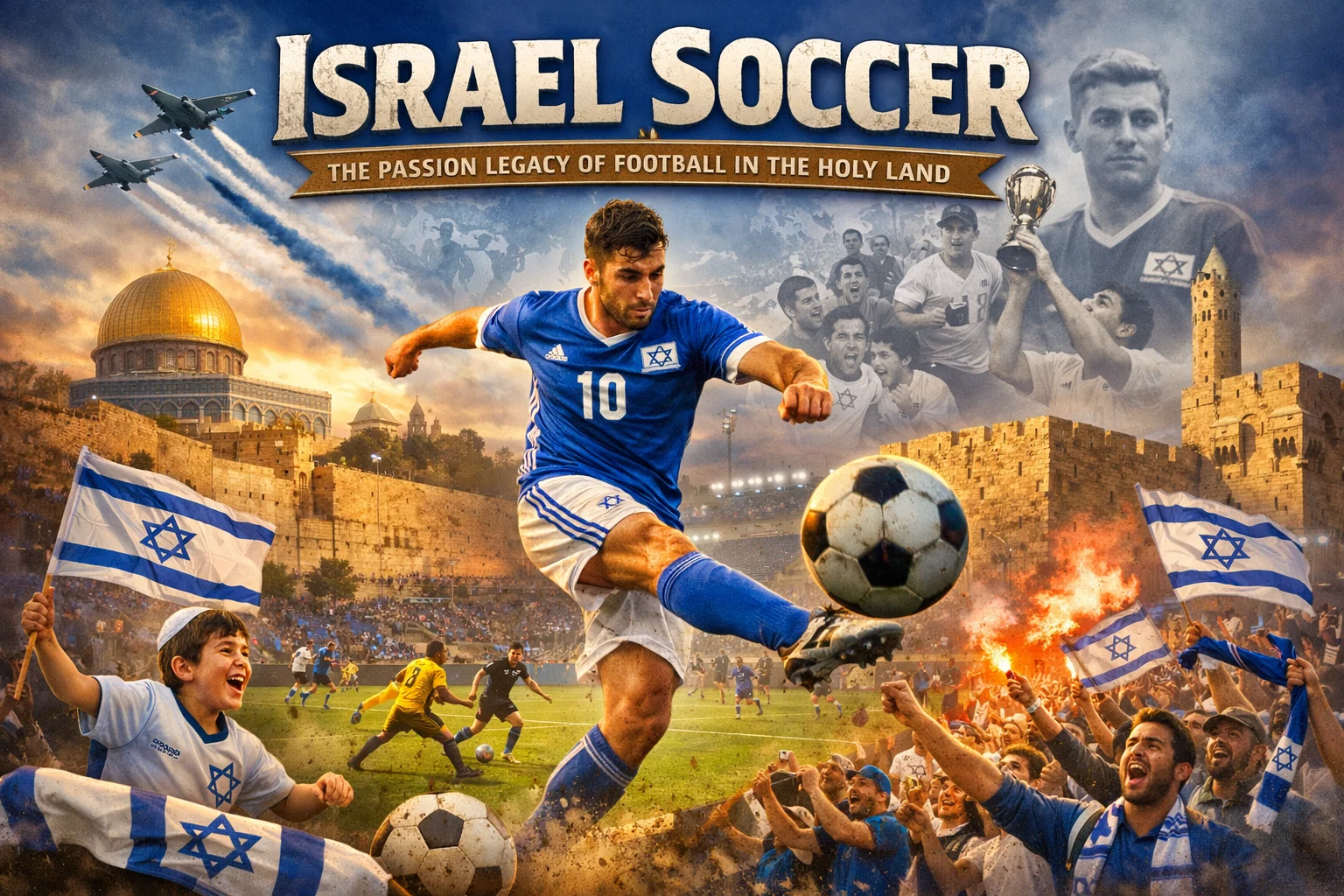
When you think of Israel soccer, images of fervent crowds chanting in packed stadiums, dramatic goals under floodlights, and a nation united by the beautiful game come to mind. Israel soccer isn’t just a sport—it’s a cultural phenomenon that weaves together history, identity, and sheer passion. From dusty pitches in Jerusalem to sleek arenas in Tel Aviv, football has been a staple in Israeli life for over a century, evolving from humble beginnings into a competitive force on both domestic and international stages. Whether you’re a die-hard fan or a curious newcomer, diving into Israel soccer reveals a story of resilience, talent, and unyielding spirit.
At its core, Israel soccer reflects the country’s diverse society. Players from Jewish, Arab, and immigrant backgrounds share the field, creating moments of unity amid broader challenges. The sport has grown exponentially, with professional leagues drawing international attention and youth academies nurturing the next generation. As we explore the ins and outs of Israel soccer, you’ll see how it mirrors the nation’s grit—overcoming obstacles like geopolitical tensions to produce memorable triumphs. Let’s kick off this journey by tracing its roots and celebrating what makes Israeli football so captivating.
The Rich History of Israel Soccer
The story of Israel soccer begins long before the state’s founding in 1948, rooted in the early 20th century during the Ottoman Empire and British Mandate periods. Football arrived via British soldiers and European immigrants, quickly gaining traction among local communities. By the 1920s, clubs like Maccabi Tel Aviv and Hapoel Tel Aviv were forming, often tied to political movements—Maccabi linked to Zionist ideals and Hapoel to labor unions. These early teams played in makeshift leagues, fostering a sense of community and competition. The Palestine Football Association, established in 1928, joined FIFA in 1929, marking Israel soccer’s entry onto the global map.
Post-independence, Israel soccer faced isolation. Initially part of the Asian Football Confederation (AFC) in 1954, the national team achieved early successes, like winning the 1964 AFC Asian Cup as hosts. They beat South Korea 2-1 in the final, a highlight that put Israel soccer on the continental pedestal. However, political boycotts from Arab nations led to exclusion from AFC events by 1974. This forced a nomadic period—brief stints in Oceania before settling in UEFA in 1994. The shift opened doors to European competitions, though it meant tougher qualifiers against powerhouses like Germany and Spain.
Through it all, Israel soccer has produced iconic moments. The 1970 World Cup qualification stands out—the only time Israel reached the finals, drawing with Sweden and Italy but losing to Uruguay. Domestically, the league system solidified in the 1950s, with Hapoel Petah Tikva dominating early titles. The 1980s and 1990s saw Maccabi Haifa and Beitar Jerusalem rise, adding flair and rivalry. Today, Israel soccer honors this legacy while pushing forward, blending tradition with modern tactics influenced by global coaches.
The Israeli Premier League: Heart of Domestic Israel Soccer
No discussion of Israel soccer is complete without the Israeli Premier League, or Ligat Ha’Al, the pulsating core of the nation’s football scene. Launched in 1999 to elevate standards, it features 14 teams battling from August to May in a format that includes a regular season and playoffs. The top six vie for the championship in a round-robin, while the bottom eight fight relegation. This setup keeps every match intense, with European spots on the line—champions enter the UEFA Champions League qualifiers, and cup winners head to the Europa Conference League.
What makes the Israeli Premier League unique in Israel soccer is its blend of local talent and international flair. Clubs scout globally, bringing in players from Africa, Europe, and South America to complement homegrown stars. Attendance averages around 8,000 per game, but derbies like Maccabi Tel Aviv vs. Hapoel Tel Aviv pack over 40,000 fans into Bloomfield Stadium. The league’s competitiveness shines through in recent seasons, where underdogs like Ironi Kiryat Shmona have claimed titles, proving that Israel soccer rewards smart strategy over big budgets.
As of February 2026, the standings reflect a thrilling race. Hapoel Be’er Sheva leads with 54 points from 23 matches, boasting a +31 goal difference thanks to a stingy defense and prolific attack. Beitar Jerusalem follows closely at 47 points, their 48 goals scored highlighting an offensive powerhouse. Hapoel Tel Aviv sits third with 44 points, edging out Maccabi Tel Aviv on goal difference. Maccabi Haifa, perennial contenders, are fifth with 39 points, while at the bottom, Ironi Tiberias and Hapoel Jerusalem scrap to avoid the drop. Here’s a quick look at the current table:
| Position | Team | Played | Wins | Draws | Losses | Goals For | Goals Against | Goal Difference | Points |
|---|---|---|---|---|---|---|---|---|---|
| 1 | Hapoel Be’er Sheva | 23 | 17 | 3 | 3 | 53 | 22 | +31 | 54 |
| 2 | Beitar Jerusalem | 22 | 14 | 5 | 3 | 48 | 25 | +23 | 47 |
| 3 | Hapoel Tel Aviv | 23 | 14 | 4 | 5 | 44 | 26 | +18 | 44 |
| 4 | Maccabi Tel Aviv | 22 | 13 | 5 | 4 | 42 | 24 | +18 | 44 |
| 5 | Maccabi Haifa | 23 | 12 | 3 | 8 | 40 | 30 | +10 | 39 |
| 6 | Maccabi Netanya | 23 | 10 | 6 | 7 | 35 | 32 | +3 | 36 |
| 7 | Bnei Sakhnin | 22 | 9 | 5 | 8 | 30 | 28 | +2 | 32 |
| 8 | Hapoel Haifa | 23 | 8 | 4 | 11 | 28 | 35 | -7 | 28 |
| 9 | FC Ashdod | 23 | 7 | 6 | 10 | 25 | 33 | -8 | 27 |
| 10 | Ironi Kiryat Shmona | 22 | 6 | 7 | 9 | 27 | 34 | -7 | 25 |
| 11 | Maccabi Bnei Reineh | 23 | 5 | 8 | 10 | 22 | 36 | -14 | 23 |
| 12 | Hapoel Petah Tikva | 23 | 4 | 9 | 10 | 20 | 38 | -18 | 21 |
| 13 | Ironi Tiberias | 22 | 3 | 6 | 13 | 18 | 42 | -24 | 15 |
| 14 | Hapoel Jerusalem | 23 | 2 | 7 | 14 | 15 | 45 | -30 | 13 |
This table underscores the unpredictability of Israel soccer, where mid-table teams can surge with a hot streak.
Top Teams Dominating Israel Soccer
In Israel soccer, a handful of clubs stand as giants, each with a storied legacy and fanatical support. Maccabi Tel Aviv, nicknamed the Yellows, tops the list with 26 titles, including the 2024-25 crown. Founded in 1906, they’ve never been relegated and boast a modern academy producing talents like Oscar Gloukh. Their rivalry with Hapoel Tel Aviv, the Tel Aviv Derby, is Israel soccer’s fiercest, often drawing massive crowds and heated atmospheres.
Maccabi Haifa, the Greens from the north, have 15 titles and a reputation for European exploits. They were the first Israeli club to reach the Champions League group stage in 2002, famously beating Manchester United. Hapoel Be’er Sheva, southern stalwarts, have surged with five titles since 2016, their passionate fans filling Turner Stadium. Beitar Jerusalem, known for their right-wing ultras, have six titles and a controversial history but remain a powerhouse with stars like Yarden Shua.
These teams embody Israel soccer’s diversity—Maccabi Tel Aviv’s urban polish, Haifa’s northern pride, Be’er Sheva’s desert grit. Quotes from legends highlight their impact: Yossi Benayoun, a Maccabi Haifa product, once said, “Football in Israel taught me resilience—it’s more than a game; it’s survival.” Such sentiments fuel the dominance of these clubs.
The Israel National Football Team: Pride on the International Stage
The Israel national football team, dubbed the Blue and Whites, carries the hopes of a nation in every match. Governed by the Israel Football Association, they’ve been UEFA members since 1994, competing in European qualifiers despite geographical isolation. Their sole World Cup appearance was in 1970, where they held Italy and Sweden to draws, showcasing defensive tenacity. Ranked 77th in FIFA as of early 2026, they’ve hovered between 15th (2008 high) and 99th (2018 low).
Recent years under coach Ran Ben Shimon have shown promise. In 2026 World Cup qualifiers, they finished third in their group, missing playoffs but beating teams like Estonia 3-1. Security concerns force “home” games abroad, like in Hungary, yet the team persists. Eran Zahavi, with 35 goals in 74 caps, leads the scoring charts, while captain Eli Dasa anchors the defense with 75 appearances.
Israel soccer on the international front includes AFC triumphs like the 1964 Asian Cup win. Mordechai Spiegler, all-time top scorer with 33 goals, reflected: “We played for more than wins—we played for identity.” The team’s resilience amid boycotts and conflicts makes them a symbol of perseverance in Israel soccer.
Famous Players Who Shaped Israel Soccer
Israel soccer has birthed legends whose skills transcended borders. Yossi Benayoun, “The Diamond from Dimona,” holds the caps record at 101, scoring 23 goals from 1998-2017. He starred for Liverpool, Chelsea, and Arsenal, famously hat-tricking against Chelsea in 2006. Benayoun said, “Israel soccer gave me wings—I carried my country’s pride on every pitch.”
Eran Zahavi, current top scorer with 35 goals, dazzled at PSV Eindhoven and now Maccabi Tel Aviv. His bicycle kicks and leadership define modern Israel soccer. Mordechai Spiegler, 1960s-70s icon, netted 33 goals in 83 caps, leading the 1970 World Cup squad. He quipped, “In Israel soccer, every goal is a statement.”
Other greats include Eyal Berkovic, a midfield maestro at Manchester City, and Haim Revivo, who shone in Spain. Bibras Natcho, a Circassian-Israeli with 88 caps, bridges cultures. Eli Ohana, Beitar Jerusalem legend, scored a famous goal against Australia in 1989 qualifiers, saying, “Football unites us—it’s our common language.” These players elevated Israel soccer globally.
Youth Development: The Future of Israel Soccer
Youth development is the bedrock of thriving Israel soccer, with academies like Maccabi Tel Aviv’s churning out prospects. The IFA’s national academy, founded in 2018, trains under-21s with cutting-edge facilities, emphasizing technical skills and mental toughness. Clubs invest heavily—Maccabi Haifa’s setup has produced talents like Manor Solomon, now at Tottenham.
Programs extend to grassroots, with over 100,000 kids playing in leagues. Initiatives like the Maccabim Association use football for social good, aiding disadvantaged youth. Challenges include funding and access in peripheral areas, but successes abound: The U-20 team reached the 2023 World Cup semifinals, beating Brazil. Coach Ofir Haim noted, “Our youth are hungry—they’re the heartbeat of future Israel soccer.”
Women’s youth pathways are growing, with under-19 teams competing in UEFA qualifiers. Overall, Israel soccer’s focus on early talent promises brighter days ahead.
Women’s Israel Soccer: Rising Stars and Achievements
Women’s Israel soccer is on an upward swing, gaining momentum in a male-dominated landscape. The national team, established in 1997, competes in UEFA, recently promoting to Nations League B after topping League C. Ranked around 60th in FIFA, they’ve shown grit in Euro qualifiers, drawing with powerhouses like Scotland.
The domestic Ligat Al Nashim features eight teams, with ASA Tel Aviv and Kiryat Gat dominating titles. Attendance is rising, and players like Karin Sendel shine abroad. Youth programs are key, with under-17 squads building foundations. Challenges include limited funding, but stars like Noa Selimhodzic inspire. Coach Gili Landau said, “Women’s Israel soccer is about breaking barriers—we’re just getting started.”
Challenges Facing Israel Soccer Today
Israel soccer grapples with unique hurdles. Geopolitical tensions force neutral-venue games, disrupting home advantage. Racism incidents, like chants against Arab players, mar matches—the IFA’s “Kick It Out” fights this. Infrastructure lags in some areas, and funding disparities favor big clubs.
Boycotts loom, with calls to suspend Israel from UEFA over settlements, echoing past AFC expulsion. Yet, as Victor Montagliani noted, “UEFA must handle it.” Amid these, Israel soccer endures, fostering unity.
The Bright Future of Israel Soccer
Looking ahead, Israel soccer brims with potential. Investments in tech like AI scouting and improved stadiums signal growth. The national team’s young core, like Oscar Gloukh, eyes Euro 2028 qualification. Clubs aim deeper European runs, building on Maccabi Tel Aviv’s Conference League exploits.
Grassroots expansion and inclusivity will drive progress. As fans rally, Israel soccer’s resilience promises exciting chapters.
Conclusion
In wrapping up, Israel soccer stands as a testament to passion and perseverance. From historic roots to modern triumphs, it’s more than sport—it’s a unifying force. As challenges persist, the future glows with talent and determination. Whether cheering for Maccabi or the national side, Israel soccer captivates hearts worldwide.
FAQ
What is the history behind Israel soccer’s shift to UEFA?
Israel soccer joined UEFA in 1994 after expulsion from the AFC in 1974 due to political boycotts. This move allowed participation in European qualifiers, boosting competition levels despite geographical challenges.
Who are the top teams in Israel soccer right now?
In Israel soccer, Maccabi Tel Aviv, Maccabi Haifa, and Hapoel Be’er Sheva dominate, with multiple titles and strong European showings. Beitar Jerusalem also remains a fan favorite for its intense rivalries.
How has the Israel national team performed in major tournaments?
The Israel national team reached the 1970 World Cup group stage and won the 1964 AFC Asian Cup. In UEFA, they’ve had near-misses in Euro and World Cup qualifiers, showing growing potential.
What role does youth development play in Israel soccer?
Youth academies are vital in Israel soccer, producing stars like Manor Solomon. The IFA’s programs focus on technical skills, ensuring a steady talent pipeline for clubs and the national team.
Are there challenges unique to women’s Israel soccer?
Women’s Israel soccer faces funding and visibility issues but is advancing, with promotion to Nations League B and growing domestic leagues highlighting emerging talent and dedication.
How does Israel soccer handle international boycotts?
Israel soccer navigates boycotts through UEFA affiliation, playing neutral-site games when needed. Despite calls for suspension, the focus remains on fostering unity and competitive play.

