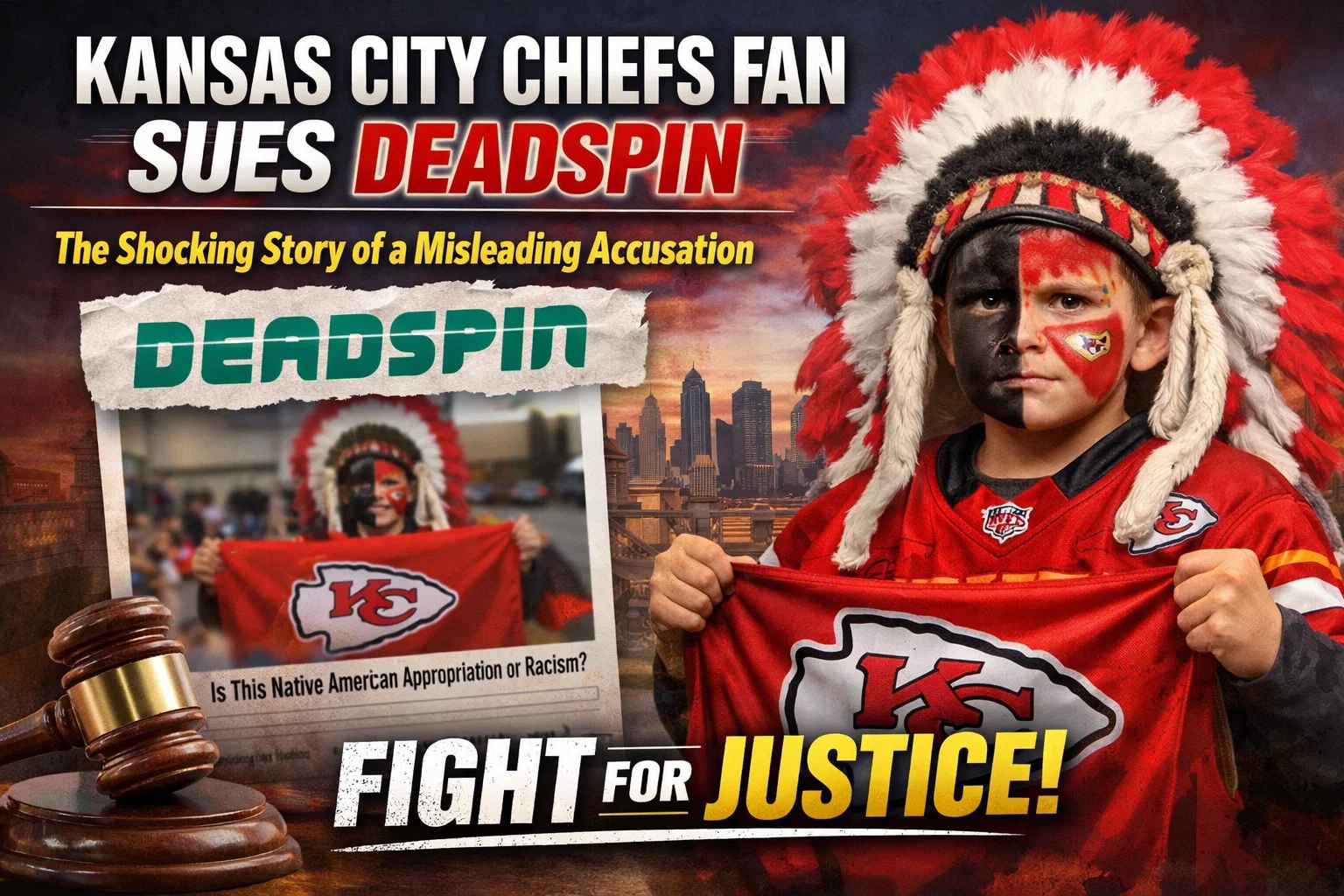
Imagine showing up to an NFL game dressed in your team’s colors, celebrating your heritage, and posing for photos with cheerleaders only to wake up the next day accused of being a racist kid who hates two entire groups of people. That nightmare became reality for one passionate young supporter and his family when a sports website twisted an innocent moment into something ugly. The case where a Kansas City Chiefs fan sues Deadspin has captured attention from die-hard football lovers to free speech advocates because it highlights how quickly online media can spin facts and the real human cost behind viral headlines.
This story starts with a boy’s love for the Kansas City Chiefs and ends with a courtroom victory followed by a confidential settlement years later. It involves cropped photos, heated social media storms, death threats, and a judge who drew a clear line between opinion and outright false claims. What makes it so compelling is how it touches on bigger issues like fan expression, cultural sensitivity in sports, and the responsibility of digital outlets to get the story right before hitting publish. Fans across the league have followed every twist because it could happen to anyone cheering from the stands.
The family never set out to make headlines. They just wanted their son to enjoy a memorable game day. Instead, they found themselves battling one of the internet’s most notorious sports blogs in court. The entire ordeal shows how passion for the game can collide with hasty journalism in the worst ways. As we dive deeper, you’ll see why this Kansas City Chiefs fan sues Deadspin saga stands out as a cautionary tale for everyone involved in sports media today.
The Game Day Outfit That Sparked Everything
Back in late November 2023, nine-year-old Holden Armenta headed to a Kansas City Chiefs versus Las Vegas Raiders matchup in Las Vegas with his parents. Like countless kids at NFL games, he wanted to stand out and show his team spirit in a fun, creative way. He slipped on a Chiefs jersey, painted his face half red and half black to match the team’s iconic colors, and topped it off with a colorful Native American-style headdress that honored his family’s Chumash Indian roots.
The half-and-half face paint was a clever nod to the Chiefs’ red and black branding, while the headdress connected to Holden’s pride in his heritage through his father’s side of the family from the Santa Ynez Band of Chumash Indians. He even got the chance to snap photos with Raiders cheerleaders and appeared briefly on the television broadcast for just a few seconds. An Associated Press photographer captured the full look, showing both sides of the painted face clearly. Everything seemed like classic game-day magic until the next day when things took a bizarre turn.
What no one expected was how a single screenshot from the broadcast would be cropped and shared online. Only the black-painted side of Holden’s face made it into certain posts, completely hiding the red half and the context of team colors. This selective framing set the stage for a massive misunderstanding that would ripple far beyond one football Sunday. Families everywhere who love dressing up for games started paying closer attention because this showed just how easily enthusiasm could be misinterpreted in our hyper-connected world.
Holden’s outfit wasn’t about making any statement beyond cheering for his favorite squad and embracing his background. The Chumash heritage runs deep in the family, and elements like the headdress were personal expressions of identity mixed with NFL excitement. Many fans do similar things every weekend across stadiums, blending traditions with team loyalty in ways that bring joy and community together. Yet in this instance, that blend became the center of a firestorm no one saw coming.
Deadspin’s Article: Selective Editing Meets Viral Outrage
The following day, sports blog Deadspin ran a piece by writer Carron Phillips with a headline that pulled no punches: “The NFL needs to speak out against the Kansas City Chiefs fan in Black face, Native headdress.” A subhead doubled down, claiming the fan was “doubling up on the racism” and directly calling out NFL Commissioner Roger Goodell. The article used that cropped screenshot showing only the black side of the paint, framing the entire look as intentional mockery rather than team spirit.
Inside the story, Phillips went further, writing that the young fan had “found a way to hate black people and the Native American at the same time.” Suggestions followed that the boy’s parents had taught him this supposed hatred, comparing the situation to past NFL scandals involving emails full of prejudice. The post exploded on social media, racking up thousands of comments before a community note corrected the record and pointed out the full photo showing the red paint too. But by then, the damage was underway.
Deadspin shared the article widely on X, where Phillips defended it against critics with analogies that only fueled more anger. The piece got edited multiple times afterward. First, it kept the core accusations while the image stayed up. Later, the photo came down, the headline shifted to call for banning headdresses and insensitive face paint, and a note was added expressing regret for any suggestion of attacking the fan or family. Still, no full retraction or apology came, which left the Armentas feeling the original harm lingered online.
This handling of the story highlights how quickly a sports outlet can turn a feel-good fan moment into national outrage through editing choices alone. Many readers only saw the initial version and formed opinions based on incomplete information. The rush to publish without checking the full context or reaching out to the family turned what should have been ignored or celebrated into a defamation battle that would drag on for years.
The Immediate Backlash and Family Harassment
Almost immediately after the article dropped, the Armenta family inbox and social feeds filled with hateful messages. Strangers sent death threats, with one particularly disturbing note threatening to harm young Holden using a wood chipper. The boy started receiving bullying at school, lost friends, and saw his grades slip as the stress mounted. Google searches of his name kept pulling up the story, making everyday life feel like a constant reminder of the false claims.
Parents Raul Jr. and Shannon reached out to Deadspin multiple times asking for a proper retraction and apology to clear their son’s name. They explained the full context of the face paint and heritage, but the responses involved only those partial edits rather than a complete correction. The family described feeling like their child had been turned into a political football for clicks and engagement, with no regard for the emotional toll on a nine-year-old.
This wave of online harassment shows the dark side of viral sports controversies. What starts as a blog post can snowball into real-world pain when millions see the headline without the facts. Families dealing with similar situations often talk about the isolation and fear that follows, especially when kids are involved. The Armentas’ experience became a rallying point for discussions about protecting young fans from media overreach and the need for outlets to verify before accusing.
The harassment didn’t stop at words either. The family worried about safety at home and during future games, changing routines to shield Holden from potential confrontations. It was a stark reminder that behind every controversial sports story are real people whose lives get disrupted long after the comments section moves on to the next topic.
Understanding the Family’s Heritage: Chumash Roots and NFL Fandom Traditions
Holden’s connection to his Chumash Indian heritage added beautiful layers to his game-day look rather than any intent to offend. The Santa Ynez Band of Chumash Indians has a rich history in California, and the family has always celebrated those traditions alongside their love for the Kansas City Chiefs. The headdress and face paint blended personal identity with team pride in a way many Native fans do across sports without issue.
For generations, NFL supporters from diverse backgrounds have incorporated cultural elements into tailgating and stadium outfits. Think face paint for team colors, hats with feathers, or jerseys mixed with family symbols. It’s part of what makes game days vibrant and personal. The Armentas saw Holden’s choice as a perfect fusion of those worlds, especially since the red and black honored the Chiefs while nodding to heritage.
Critics sometimes overlook how Native communities themselves view these expressions when they’re respectful and self-chosen. The family pushed back hard against any narrative of cultural appropriation because this came from within their own background. Discussions around NFL imagery like team mascots have evolved over the years, but this case stood apart because it involved a child proudly representing both his team and roots.
Exploring Chumash traditions reveals deep values around community, nature, and celebration that align surprisingly well with the communal spirit of NFL Sundays. Families like the Armentas show how sports can bridge cultures rather than divide them when approached with genuine enthusiasm. This perspective helps explain why the false accusations felt especially hurtful beyond just the racism claims.
Why the Kansas City Chiefs Fan Sues Deadspin – The Legal Battle Begins
After repeated unsuccessful attempts to get a meaningful correction from the website, the family decided enough was enough. In February 2024, Raul Armenta Jr. and Shannon Armenta filed a defamation lawsuit in Delaware Superior Court on behalf of themselves and their son against Deadspin’s then-parent company G/O Media. The suit centered on how the article and its updates falsely portrayed Holden as engaging in racist conduct and accused the parents of teaching hatred.
Delaware was chosen because that’s where G/O Media was incorporated, making it the proper venue despite the family living in California. The complaint laid out five counts of defamation tied to the original post and subsequent edits, arguing the claims were provably false and caused serious reputational and emotional harm. They highlighted how the cropped image misled readers into believing the entire face was painted black as a deliberate act of mockery.
This step marked the moment where a Kansas City Chiefs fan sues Deadspin became official court business. The family sought accountability not just for the initial story but for how Deadspin handled follow-ups without fully owning the mistake. Legal experts following the case noted it tested important boundaries around what counts as protected opinion versus actionable false statements in online sports journalism.
Filing the suit took courage because going up against a media outlet brings its own spotlight and costs. The Armentas hoped it would send a message that kids deserve protection from rushed accusations that stick around forever online. Their attorney team from Clare Locke LLP emphasized the lack of remorse shown throughout the process as a key reason to pursue justice through the courts.
Courtroom Showdown: Judge Denies Dismissal and Sets the Tone
Deadspin moved to dismiss the case early on, arguing the article was protected opinion and the suit belonged in California instead. But in October 2024, Superior Court Judge Sean Lugg delivered a detailed ruling that kept everything alive. He found that statements accusing the boy of wearing “black face” and a headdress “to hate black people and the Native American at the same time,” plus claims the parents taught this hatred, crossed into provably false assertions of fact rather than mere opinion.
The judge wrote that Deadspin “published an image of a child displaying his passionate fandom as a backdrop for its critique of the NFL’s diversity efforts and, in its description of the child, crossed the fine line protecting its speech from defamation claims.” He also rejected the venue change, noting the company wouldn’t face overwhelming hardship defending the case in its home state. This decision sent the matter into discovery, where evidence like editing histories and internal communications could come out.
Many legal observers called this a landmark moment for distinguishing between calling someone racist in a general sense versus accusing specific hateful conduct with misleading visuals. The ruling gave the family momentum and forced the defense to produce documents. It also highlighted how courts are increasingly scrutinizing digital media for how images and words combine to create false impressions.
The courtroom developments kept sports fans glued because they touched on broader free speech questions while protecting a child’s reputation. Judge Lugg’s careful analysis showed the justice system could balance robust debate with accountability when facts get twisted. This phase alone stretched into 2025 with motions flying back and forth before resolution came.
The Path to Settlement: How the Case Resolved in 2026
Discovery dragged on through much of 2025 with motions over withheld documents and financial records. By late summer, things quieted down on the public docket as negotiations heated up behind the scenes. In December 2025, a confidential petition for approval went through, leading to a settlement reached on undisclosed terms. The case was officially dismissed with prejudice on January 6, 2026, with final paperwork filed shortly after.
This quiet resolution meant no public trial or jury verdict, but it closed the book on years of legal stress for the family. Settlements like this often include financial compensation, removal of content, and agreements not to discuss details, giving both sides a way to move forward without further fighting. For the Armentas, it represented validation after standing up for their son against powerful media interests.
The timing came after the Chiefs wrapped another season, allowing fans to reflect on how the whole saga started with one game. The dismissal with prejudice means the claims can’t be refiled, providing finality. Observers noted it avoided what could have been a messy public trial while still holding the outlet accountable in private.
Many in the sports world saw the outcome as a win for common sense and careful reporting. The Kansas City Chiefs fan sues Deadspin journey ended not with fireworks but with a practical close that let everyone heal. It left behind important lessons about verifying stories before they harm innocent people.
Media Ethics and the Dangers of Clickbait Journalism
The entire episode sparked widespread talks about ethics in sports blogging. Outlets chasing clicks sometimes prioritize shocking angles over full context, especially with viral images that spread faster than corrections. Deadspin’s approach here became a textbook example of how selective cropping and loaded language can mislead audiences and cause lasting damage.
Journalists have a duty to seek truth and minimize harm, particularly when minors are involved. Rushing a story without basic fact-checking or family comment violates core principles many news organizations swear by. In the age of instant sharing, that responsibility grows even heavier because one post can reach millions before anyone double-checks.
Experts in media ethics point out that sports coverage should celebrate fan passion rather than police it through guilt-by-association. The danger of clickbait isn’t just lost credibility; it’s the human toll on families who never asked for fame. Cases like this push publications to adopt stricter guidelines around image use and accusation-heavy headlines.
Broader conversations emerged about training writers to recognize when a story risks crossing into defamation territory. Responsible outlets now review visuals more carefully and add context up front to prevent similar misfires. The field as a whole benefits when accountability stories like this one lead to better practices industry-wide.
Social Media’s Role in Spreading the Controversy
X (formerly Twitter) played a starring role in amplifying the original article and the corrections that followed. The post generated over 18,000 comments before community notes clarified the full picture, showing how platforms can both spread misinformation and self-correct in real time. Still, the initial damage often outlives any note or edit.
Users from all sides weighed in, with some defending the piece as commentary on cultural issues and others calling it reckless targeting of a child. The back-and-forth turned into its own spectacle, complete with memes and counter-threads. This frenzy demonstrates why social media demands extra caution from professional accounts before sharing potentially harmful content.
For the family, the platform became a source of both support and threats. Positive voices eventually drowned out some negativity, but the volume of messages overwhelmed their ability to respond. Many fans now advocate for better moderation tools and verification processes to protect everyday people caught in viral storms.
The power of social media to shape narratives around sports events means creators must think twice about what they boost. In this instance, it helped expose the misleading aspects quickly but also prolonged the family’s ordeal through endless shares and debates.
Defamation Law Explained for Everyday Readers
Defamation basics boil down to false statements presented as fact that harm someone’s reputation. In this case, the key distinction was between calling someone “racist” as loose opinion versus claiming specific hateful actions and motivations that could be proven false. Courts look at whether a reasonable reader would take the words as verifiable assertions rather than pure commentary.
Delaware law, like many states, requires plaintiffs to show the statements were false, published to third parties, and caused damages. When kids are involved, the bar for protection rises because society values shielding minors from unwarranted attacks. The judge here carefully analyzed how the article’s wording and image created a factual impression of racism that simply wasn’t true.
Everyday folks often wonder where opinion ends and liability begins online. Protected speech covers strong criticism and hyperbole, but not fabricated facts that damage lives. This ruling reinforced that misleading visuals combined with accusatory text can tip the scale toward actionable claims.
Understanding these rules helps readers spot when media crosses lines and why families sometimes turn to courts for relief. It empowers fans to support ethical journalism while holding outlets accountable when needed.
Similar Cases in Sports Media and What They Teach Us
Other high-profile sports defamation disputes have involved athletes or fans wrongly accused in articles or broadcasts. From coaches facing false misconduct claims to players targeted over social posts, the pattern often involves rushed reporting followed by lawsuits or settlements. Each one adds to the body of law around online speech and sports coverage.
One parallel involves public figures battling tabloid-style blogs over edited videos or quotes taken out of context. Courts consistently emphasize context and intent when deciding if harm was done. The Chiefs-related case stands out because of the young age of the central figure and the cultural elements at play.
These precedents show that even big media companies face consequences for sloppy work. They also encourage better fact-checking protocols across the industry. Fans benefit when such cases raise standards so future game-day moments stay about fun rather than legal fights.
Learning from past examples helps predict how new controversies might unfold and why quick corrections matter more than ever.
Lessons for Fans and Journalists Alike
For everyday NFL supporters, the biggest takeaway is documenting your own experiences and speaking up when media gets it wrong. Families can protect themselves by saving full photos, timestamps, and context for potential disputes. Engaging positively on social media also helps counter negative narratives early.
Journalists gain from this by remembering human impact over engagement metrics. Double-checking visuals, seeking comment from all sides, and issuing prompt retractions when errors occur build long-term trust. Sports coverage thrives when it amplifies voices rather than manufacturing outrage.
Both groups share an interest in keeping game days joyful spaces. The lesson resonates across leagues: enthusiasm should be celebrated, not weaponized. Moving forward, more transparent practices can prevent similar heartaches.
Fans and writers alike can use this story as a blueprint for handling viral moments with care and facts first.
The Broader Impact on NFL Fandom and Cultural Representation
The saga influenced how leagues and teams discuss fan expressions involving heritage. NFL discussions around cultural imagery continue evolving, with this case reminding everyone that personal stories deserve nuance over blanket judgments. Supporters from diverse backgrounds felt seen when the family highlighted respectful blending of traditions.
Chiefs Kingdom in particular rallied around the idea that fandom unites people. Tailgating culture grew more mindful of context in photos and posts. Broader representation efforts gained steam as stories like this one showed both challenges and beauty in mixing identities at games.
The impact extends to youth sports too, where parents now think twice about sharing kids’ moments online. It sparked positive conversations about inclusivity without erasing personal pride. Overall, NFL fandom emerged stronger for confronting these issues head-on.
Cultural representation in stands benefits when media approaches it thoughtfully rather than sensationally. This chapter added depth to ongoing talks about what true respect looks like in sports communities.
Timeline of Key Events
| Date | Event |
|---|---|
| November 26, 2023 | Holden attends Chiefs-Raiders game in full fan attire; photos and TV appearance occur |
| November 27, 2023 | Deadspin publishes original article with cropped image and accusatory headline |
| Late November 2023 | Family demands retraction; article edited multiple times with partial changes |
| February 2024 | Defamation lawsuit filed in Delaware Superior Court |
| October 2024 | Judge denies motion to dismiss; case proceeds to discovery |
| 2025 | Discovery and motions continue through summer |
| December 2025 | Confidential settlement approved |
| January 2026 | Case dismissed with prejudice; final order entered |
This table captures the major milestones that turned a single game into a multi-year legal journey.
“Deadspin and Carron Phillips have never shown a morsel of remorse for using a 9-year-old boy as their political football. The Armenta family is looking forward to taking depositions and presenting this case to a jury at trial.” – Elizabeth Locke, attorney for the Armentas
“Having reviewed the complaint, the court concludes that Deadspin’s statements accusing H.A. of wearing black face and Native headdress ‘to hate black people and the Native American at the same time,’ and that he was taught this hatred by his parents, are provable false assertions of fact and are therefore actionable.” – Judge Sean Lugg
“It takes a lot to disrespect two groups of people at once. But on Sunday afternoon in Las Vegas, a Kansas City Chiefs fan found a way to hate Black people and the Native American at the same time.” – Excerpt from the original Deadspin article
These quotes capture the emotional stakes, legal turning point, and initial framing that defined the controversy.
FAQ
What exactly happened in the Kansas City Chiefs fan sues Deadspin case?
The story centers on nine-year-old Holden Armenta attending a 2023 Chiefs game dressed in team colors with a nod to his Chumash heritage. A sports site published a misleading article using a cropped photo to accuse him of racism, leading his family to file a defamation suit. After a judge allowed the case to proceed and years of legal steps, it settled quietly in late 2025 with dismissal in early 2026. The ordeal highlighted media accountability while protecting a young fan’s reputation.
Why did the judge rule against Deadspin in the initial motion to dismiss?
The court determined the article’s claims went beyond protected opinion into provable false facts by accusing specific hateful intent and parental teaching of racism based on incomplete evidence. The selective image use created a misleading impression that reasonable readers could take as factual, crossing the line into defamation territory. This decision emphasized that context and full visuals matter in journalism, especially involving children.
How did the false accusations affect the young Chiefs fan and his family?
The boy faced school bullying, lost friendships, academic struggles, and ongoing online exposure through search results. Death threats poured in, forcing safety changes and emotional strain on the entire household. Parents dealt with repeated harassment while fighting for a proper correction that never fully came until legal pressure mounted. The experience underscored the human cost of viral media mistakes.
What role did social media play in the Kansas City Chiefs fan sues Deadspin controversy?
Platforms amplified the original post rapidly, generating massive engagement before corrections surfaced via community notes. It spread the misleading narrative far and wide while also enabling pushback and support for the family. Threats emerged through the same channels, complicating the situation further. Overall, social media turned a local game moment into a national debate almost overnight.
Has the Kansas City Chiefs fan sues Deadspin case been fully resolved, and what does it mean moving forward?
Yes, the matter reached a confidential settlement approved in December 2025, with formal dismissal in January 2026. It provides closure without public trial details but reinforces lessons about careful reporting and fan protections. The outcome encourages better practices across sports media and reminds everyone that standing up for truth can lead to accountability even against big outlets.
Conclusion
The saga where a Kansas City Chiefs fan sues Deadspin ultimately resolved through settlement, but its lessons endure far beyond court files. It reminds us all that behind viral sports stories are real families whose joy in the game shouldn’t come at the price of their reputation or peace. From the initial misleading post to the final quiet close, this case pushed boundaries on media responsibility, free speech limits, and protecting young fans in an always-online world.
Football thrives on passion, creativity, and community, values the Armentas embodied that November day in Las Vegas. Their willingness to fight back set an example for others facing similar unfair attacks. As NFL seasons roll on and new controversies arise, remembering this story can help everyone approach fan moments with more understanding and care.
In the end, the Kansas City Chiefs fan sues Deadspin episode wasn’t just about one blog or one game—it was about fairness, facts, and the power of standing up for what’s right. Here’s hoping future game days stay focused on cheers, touchdowns, and shared excitement rather than courtroom drama. The sports world is better for the conversations this sparked, and the family can finally move forward knowing their voice mattered.

