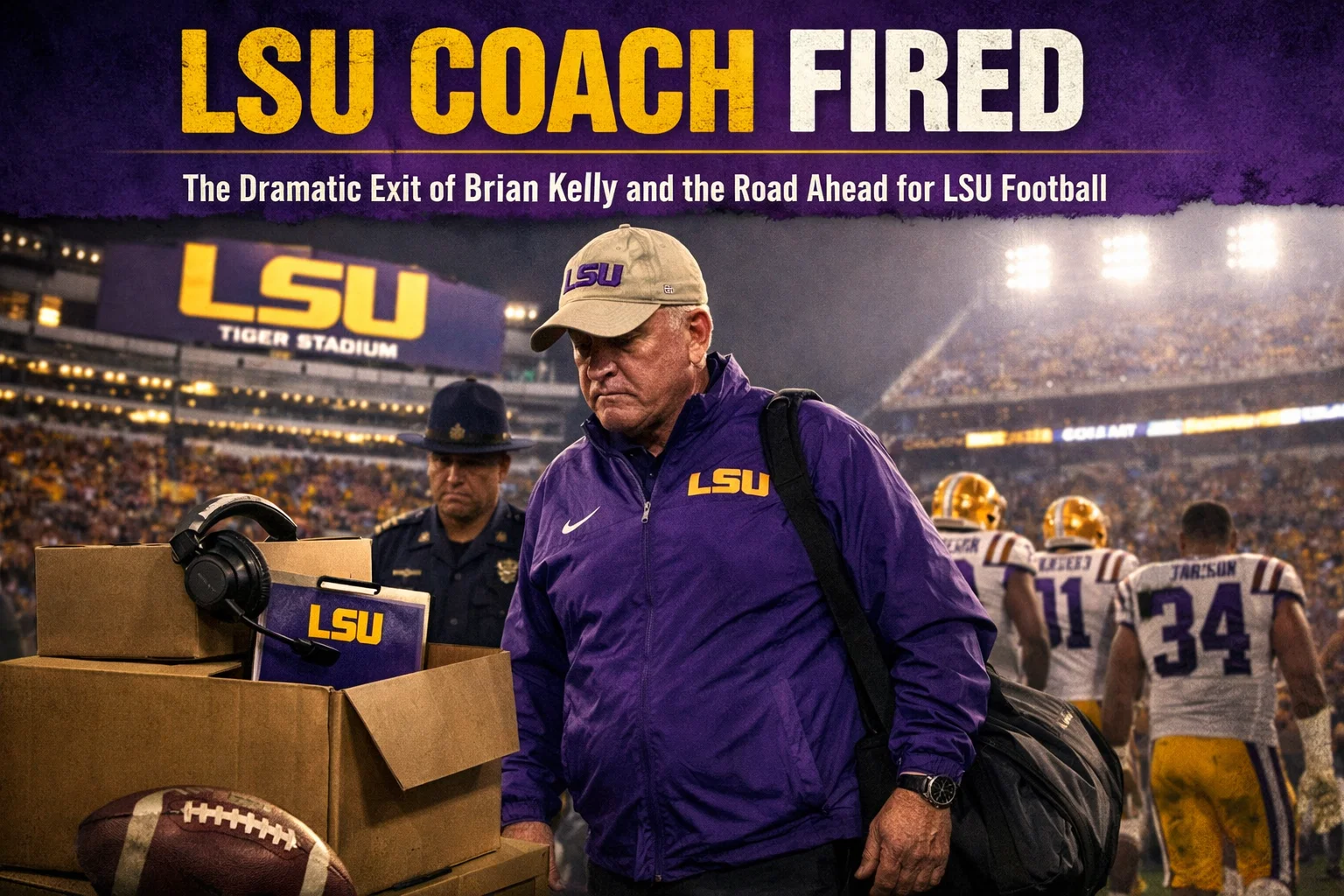
When the news broke that the LSU coach fired was none other than Brian Kelly, the college football world stopped in its tracks. On October 26, 2025, just one day after a humiliating home loss to Texas A&M, Louisiana State University pulled the trigger on one of the most anticipated yet still surprising coaching changes in recent SEC history. Kelly had arrived in Baton Rouge with massive expectations, fresh off a successful run at Notre Dame, promising to turn the Tigers into perennial national title contenders. Instead, after four seasons and a 34-14 overall record, the program hit a wall in 2025, leading to his abrupt departure.
Fans in Death Valley had watched the stands empty during that 49-25 thrashing by the Aggies, a game where LSU was outscored 35-7 in the second half alone. It wasn’t just one bad night—it was the culmination of mounting frustrations over recruiting misses, offensive struggles, and a perceived disconnect with the high-energy culture LSU demands. The decision to make the change wasn’t taken lightly, but it reflected the brutal reality of big-time college football: results matter more than almost anything else. Athletic Director Scott Woodward stepped up that Sunday and announced the separation, leaving associate head coach Frank Wilson to steer the ship as interim leader.
This wasn’t some quiet reshuffling either. The LSU coach fired story quickly spiraled into a full-blown drama involving contract negotiations, a high-stakes lawsuit, and even political involvement from Louisiana Governor Jeff Landry. Over the following weeks, what started as a performance-based move turned into a legal chess match over Kelly’s hefty buyout. Yet through it all, one thing remained clear: LSU wasn’t willing to settle for anything less than championship-caliber football, and Kelly’s tenure, while featuring some bright moments like an SEC Championship Game appearance in 2022 and the rise of Heisman winner Jayden Daniels, ultimately fell short of those lofty goals.
The ripple effects are still being felt across the SEC and beyond. Supporters are already buzzing about who might replace him, while critics point to the financial hit LSU faces. But for Tigers faithful, the focus is forward—rebuilding momentum in a conference where standing still means falling behind. Let’s dive deep into how we got here, what it all means, and where the program goes next.
The Timeline of Events That Led to the LSU Coach Fired Decision
The path to the LSU coach fired announcement didn’t happen overnight, even if it felt that way to outsiders. Brian Kelly’s fourth season started with promise but quickly unraveled. LSU opened 2025 with high hopes after a strong transfer portal haul, yet inconsistencies on both sides of the ball plagued the team from the jump. By mid-October, the Tigers sat at 5-3 overall and 2-3 in SEC play, with losses that raised serious questions about offensive identity and defensive consistency.
The breaking point came on October 25 against No. 3 Texas A&M. What began as a competitive matchup turned ugly fast, with the Aggies exploding for points in the second half while LSU’s offense stalled. Fans streamed out early, signaling the frustration that had been building. The very next day, Woodward called a press conference and confirmed the change, stating that the success LSU demanded simply hadn’t materialized. Kelly was relieved of duties effective immediately, and Wilson took over interim duties for the remainder of the year.
Just days later, the drama intensified when Woodward himself stepped down amid external pressure, including pointed comments from Governor Landry about avoiding massive financial liabilities. Landry had publicly trolled the program on social media right after the Texas A&M game, joking about ticket prices in a way that underscored the political heat surrounding the program. Then, in early November, things got even messier. LSU representatives reached out to Kelly’s team claiming he had never been “formally terminated,” opening the door to explore a for-cause firing that could wipe out the buyout.
Kelly didn’t take it sitting down. On November 10, he filed a lawsuit seeking a declaratory judgment to confirm the termination was without cause and that he was owed the full amount. The back-and-forth dragged on for weeks, with settlement offers flying back and forth. Finally, on November 26, LSU sent the formal letter confirming termination without cause, clearing the path for the full payout. It was a whirlwind few weeks that turned a simple coaching change into national headline fodder.
Throughout this timeline, the LSU coach fired moment highlighted how quickly things can shift in modern college athletics. One bad stretch, combined with sky-high expectations fueled by NIL deals and portal activity, and suddenly a decorated coach is out. Wilson stepped in smoothly, keeping the locker room focused, but the search for a permanent replacement began almost immediately. This sequence of events wasn’t just about one game—it exposed deeper cracks in how the program was being run behind the scenes.
Brian Kelly’s Arrival and Early Success at LSU
Brian Kelly didn’t sneak into Baton Rouge quietly. Hired away from Notre Dame in late 2021, he brought a resume stacked with wins and a reputation as one of the game’s sharpest minds. His introductory presser had that classic Kelly flair, complete with a memorable “fam-u-lee” moment that instantly became meme material but also showed his willingness to embrace the LSU vibe. Fans were pumped—here was a guy with over 300 career victories who had taken the Fighting Irish to the playoff multiple times.
Early results backed up the hype. In his first full season, Kelly guided LSU to a 10-win campaign and a Citrus Bowl victory. The offense clicked, especially once Jayden Daniels took the reins and turned into a Heisman frontrunner. By 2023, the Tigers were back in the SEC title game conversation, posting another 10-win year. Kelly’s recruiting classes were solid, blending high school talent with smart portal additions, and Tiger Stadium felt electric again on Saturday nights.
Those first couple of years painted a picture of a program on the rise. Kelly leaned on his experience, delegating to strong coordinators like Mike Denbrock on offense, and the results showed. Players bought in, alumni rallied, and the narrative was all positive. It looked like LSU had finally found the coach to sustain the success of legends like Nick Saban and Les Miles. Bowl wins piled up—three straight under Kelly—and the program felt stable for the first time in a while.
Yet even in those successful seasons, subtle warning signs lurked. Kelly’s hands-off, CEO-style approach worked in the Midwest but started clashing with the relentless, in-your-face demands of SEC recruiting and culture. He tried adapting, working with image consultants and dialing up the Southern charm, but some fans never fully bought the fit. Still, the wins kept doubts at bay, and for a stretch, the LSU coach fired talk felt like distant noise. Kelly himself spoke confidently about building toward multiple titles, aligning with the program’s massive investment in facilities and resources.
The 2025 Season Struggles That Triggered the Change
Entering 2025, optimism was sky-high again. LSU had reloaded through the portal, landing blue-chip transfers and banking on seven-figure donor support to fill gaps left by departures like quarterback Bryce Underwood. Expectations called for a College Football Playoff push, maybe even a deep run. Instead, the season became a slow-motion collapse.
Offensive production dipped noticeably. The running game, once a strength, averaged under 110 yards per game in several contests. Quarterback play was inconsistent, and the offensive line—despite key additions—struggled to create lanes. Defensively, things weren’t much better; missed tackles and big plays allowed piled up against quality opponents. By the time Texas A&M rolled into town, the Tigers had dropped three of four recent games, sitting on the playoff bubble’s wrong side.
That 49-25 home defeat was the final straw. LSU led early but collapsed spectacularly, allowing the Aggies to score at will in the second half. The crowd’s exodus told the story louder than any stat sheet. Postgame, players looked shell-shocked, and the coaching staff faced immediate scrutiny. Kelly addressed the team briefly before departing, but the writing was on the wall.
Analysts later pointed to systemic issues: poor coordinator hires after losing key assistants, failure to adapt schemes to modern spread offenses, and a roster that underperformed relative to talent. The portal class, billed as potentially the nation’s best, delivered solid contributors but no game-changers at critical spots. It was a perfect storm—high expectations colliding with on-field mediocrity—that made the LSU coach fired decision inevitable. Wilson’s interim stint gave the program breathing room, but the damage to momentum was real heading into the final stretch.
Five Critical Reasons Behind the LSU Coach Fired Move
Diving into the specifics, ESPN’s breakdown of why Kelly ultimately didn’t work out at LSU nailed several core issues. First, his CEO-style leadership didn’t translate well in the hyper-competitive SEC. While it allowed him to focus on big-picture items at Notre Dame, LSU required constant hands-on recruiting and staff management that Kelly’s approach sometimes overlooked.
Second, coordinator turnover hurt badly. Losing Mike Denbrock was a massive blow, and replacements like Blake Baker and Joe Sloan couldn’t replicate that magic. The offense ranked near the bottom in rushing, and defensive lapses in key games proved costly. Without stable play-calling, talent alone couldn’t carry the day.
Third, cultural fit remained elusive. Kelly’s attempts to blend in—complete with that infamous drawl—came across as forced to some. In a program where authenticity rules, he never quite captured the hearts of the die-hards the way predecessors had. Combined with on-field results slipping, it created distance.
Fourth, the massive portal investment raised the bar too high too fast. LSU went all-in on transfers expecting immediate impact, but many additions were good—not great. When the team started 5-3 instead of dominating, disappointment turned to demands for change.
Fifth, whispers about pursuing bigger names like Lane Kiffin played a role in the timing. Decision-makers saw an opportunity to reset and chase a coach who could maximize LSU’s resources in the NIL era. These five factors weren’t isolated—they fed off each other, creating the perfect conditions for the LSU coach fired announcement.
Kelly’s own reflection later captured the essence: “This journey began with great expectations with my own vision of how to get there. Sometimes the journey does not end the way we hope.” It was gracious, but it underscored how external pressures and internal mismatches sealed the deal.
Immediate Aftermath and Frank Wilson’s Interim Role
Right after the LSU coach fired news dropped, Frank Wilson stepped into the spotlight with poise. As a longtime LSU assistant and proud alum, he knew the program inside out. Players rallied around him, appreciating the continuity during a chaotic time. Wilson’s focus stayed laser-sharp on finishing the season strong, emphasizing effort and pride in the Tiger stripes.
The transition wasn’t seamless—losing a head coach midseason always disrupts routines—but Wilson handled pressers calmly and kept practices intense. The team responded with solid efforts in subsequent games, showing the culture hadn’t completely eroded. Meanwhile, the national search kicked off quietly, with Woodward’s successor and the board vetting candidates who could handle LSU’s unique mix of talent, passion, and pressure.
Off the field, the athletic department stabilized. Despite Woodward’s exit, operations continued smoothly, and donors stayed engaged. The LSU coach fired episode actually energized some fans who felt a fresh start was overdue. Wilson’s interim tenure bought time, proving that internal promotions can sometimes steady a rocking ship better than outsiders.
The Buyout Battle, Lawsuit, and Final Resolution
No LSU coach fired story would be complete without the money talk. Kelly’s contract carried a staggering $54 million buyout, payable over six years if terminated without cause. Initially, LSU positioned the move as performance-based, but then tried flipping to for-cause claims to dodge the payout—citing alleged misconduct that had never been mentioned before.
Kelly fired back with a detailed lawsuit on November 10, arguing the termination was clearly without cause and that the school couldn’t retroactively change terms. The filing laid out timelines, phone calls, and contradictions in LSU’s stance. Settlement offers of $25 million and then $30 million were floated and rejected. Governor Landry’s comments about avoiding the liability added public pressure.
The saga resolved on November 26 when LSU formally confirmed without-cause termination. Kelly gets the full buyout, provided he makes good-faith efforts to find new employment. It was a costly but clean break, allowing both sides to move on. The episode highlighted how ironclad contracts can complicate even clear-cut firings in college sports.
Quote from Athletic Director Scott Woodward: “When Coach Kelly arrived at LSU four years ago, we had high hopes that he would lead us to multiple SEC and national championships during his time in Baton Rouge. Ultimately, the success at the level that LSU demands simply did not materialize.”
Kelly’s Statement: “This journey began with great expectations with my own vision of how to get there. Sometimes the journey does not end the way we hope.”
Fan Reactions and Media Spotlight on the LSU Coach Fired Story
Tigers fans were split at first—some relieved, others saddened by the end of an era. Social media lit up with memes about the “fam-u-lee” speech and debates over whether Kelly got a fair shot. Message boards overflowed with calls for a big-name hire, while tailgate talk shifted from game recaps to coaching carousel speculation.
National media feasted on the drama. ESPN, The Athletic, and Yahoo Sports ran deep dives into the buyout twist and political angles. Podcasts dissected every angle, from portal strategy to cultural fit. The LSU coach fired topic trended for days, pulling in casual fans who normally skip college football chatter.
Locally, Baton Rouge embraced the reset. Booster clubs hosted meet-and-greets with Wilson, and ticket sales for remaining games held steady. The narrative evolved from disappointment to excitement about potential new leadership. Overall, reactions underscored LSU’s passionate base—one that demands excellence and won’t tolerate mediocrity for long.
LSU Football’s History of Coaching Changes and Firings
LSU has a long tradition of bold moves when results lag. Les Miles was shown the door in 2016 after a slow start, paving the way for Ed Orgeron’s interim rise and eventual national title in 2019. Orgeron himself was let go after the 2021 season despite that championship, as the program slipped back to .500 ball.
Earlier eras saw Gerry DiNardo fired in 1999, and even legends like Charlie McClendon faced pressure in their later years. The pattern is clear: LSU invests heavily and expects titles. Brian Kelly joined a list of coaches who started strong but couldn’t sustain the peak. Each firing brought short-term pain but often long-term gains when the right replacement clicked.
This historical lens puts the recent LSU coach fired decision in context. It’s not personal—it’s about maintaining the program’s elite status in a cutthroat conference. Past successes after changes give current fans hope that lightning can strike again.
Table: Brian Kelly’s Year-by-Year Record at LSU
| Year | Overall Record | SEC Record | Notable Achievement |
|---|---|---|---|
| 2022 | 10-3 | 6-2 | SEC Championship Game appearance |
| 2023 | 10-3 | 6-2 | Heisman Winner Jayden Daniels |
| 2024 | 9-4 | 5-3 | Texas Bowl victory |
| 2025 | 5-3 (partial) | 2-3 | Fired after Texas A&M loss |
| Total | 34-14 | 19-10 | Three straight bowl wins |
This table illustrates the early promise followed by the 2025 slide that prompted action.
Potential Candidates and the Search for the Next Leader
With the LSU coach fired chapter closing, speculation turned to who could fill the massive shoes. Names like Lane Kiffin from Ole Miss topped many lists, given his portal mastery and offensive creativity. Other strong contenders included established SEC assistants and rising stars from Power conferences who could recruit Louisiana talent effectively.
The ideal hire needs cultural fit, recruiting prowess, and modern scheme knowledge to thrive in the NIL/portal world. LSU’s resources—facilities, fan support, and financial backing—make the job attractive, but the pressure is immense. Early rumors suggested the search would prioritize proven winners who embrace the Tigers’ high-octane style.
Wilson’s interim performance could even keep him in the mix, though most expect an external hire. Whoever lands it will inherit a talented roster and immediate expectations to compete for the SEC West. The process promises to be thorough, reflecting LSU’s commitment to excellence.
Long-Term Impact on the Program and Players
The LSU coach fired move sent a clear message: no one is untouchable. Players adapted quickly under Wilson, focusing on bowl eligibility and pride. Recruits already committed stayed the course, but future classes will watch how the new staff builds momentum.
Program-wide, the change could spark renewed energy. Facilities upgrades continue, NIL collectives remain active, and the brand stays strong. Yet the financial commitment to Kelly’s buyout means careful budgeting ahead. On the field, the Tigers have the pieces for a rebound—depth at skill positions and defensive talent—if the next coach maximizes them.
Broader implications stretch across college football. It reinforces how volatile the coaching carousel has become, especially in the SEC where expectations never sleep. For LSU specifically, this reset offers a chance to realign with the championship DNA that defined past glory eras.
Brian Kelly’s Future After Leaving Baton Rouge
Kelly, with his vast experience and 300-plus wins, isn’t done with football. Whispers suggest interest from NFL assistant roles or Power conference programs seeking veteran leadership. His lawsuit resolution freed him to pursue opportunities without lingering ties.
In interviews post-firing, Kelly reflected philosophically on the business, noting only two losing seasons in 33 years. He expressed support for Wilson and the players, showing class amid the chaos. Whether he returns to the sidelines soon or takes time to recharge, his legacy includes elevating LSU’s profile during his tenure.
The LSU coach fired saga ultimately became a learning chapter for everyone involved. Kelly moves forward with his reputation intact as a winner, while LSU refocuses on its next chapter.
Conclusion
The LSU coach fired decision marked a pivotal turning point for one of college football’s most storied programs. Brian Kelly brought vision, experience, and early success to Baton Rouge, but the unrelenting demands of the SEC and evolving realities of the transfer portal era exposed limits that couldn’t be overcome. From the dramatic timeline and buyout battle to the deeper cultural and strategic misalignments, this story encapsulated the high-stakes nature of modern athletics.
Yet LSU emerges stronger for making the tough call. With Frank Wilson providing stability and a national search underway, the Tigers have every tool needed to reclaim dominance—elite facilities, passionate fans, and a recruiting hotbed in Louisiana. The lessons from Kelly’s tenure will inform the next hire, ensuring alignment between leadership style, scheme, and program identity.
For fans, this isn’t the end—it’s a new beginning. The excitement around potential candidates and renewed hope for playoff runs keeps the energy alive. College football thrives on change, and LSU just reminded everyone why it remains one of the game’s crown jewels. Here’s to the next era in Tiger football: one built on the same relentless pursuit of excellence that defines the program.
FAQ
What exactly led to the LSU coach fired announcement in 2025?
The primary trigger was LSU’s disappointing 5-3 start and the embarrassing 49-25 home loss to Texas A&M. Performance shortfalls combined with unmet expectations after a big portal class made the change necessary. Athletic Director Scott Woodward cited the lack of championship-level success as the key factor.
How much was Brian Kelly owed after the LSU coach fired decision?
The full buyout came in at nearly $54 million, paid over six years since the termination was confirmed without cause. Early attempts to classify it as for-cause were dropped after Kelly’s lawsuit, leading to the agreed payout with conditions for Kelly to seek new employment.
Who is serving as interim coach following the LSU coach fired move?
Frank Wilson, the associate head coach and running backs coach, stepped in immediately. As a program alum, he provided continuity and kept the team competitive through the season’s remainder.
Will the LSU coach fired situation affect future recruiting?
Short-term uncertainty exists, but LSU’s resources and brand strength should minimize long-term damage. The national search for a high-profile replacement is expected to reassure prospects that the program remains committed to winning big.
What are the chances of LSU hiring a big-name coach after this LSU coach fired event?
Very high. The job’s prestige, combined with strong financial backing and Louisiana talent pipeline, positions LSU to attract top candidates like Lane Kiffin or other proven SEC performers. The process is already drawing serious interest.

