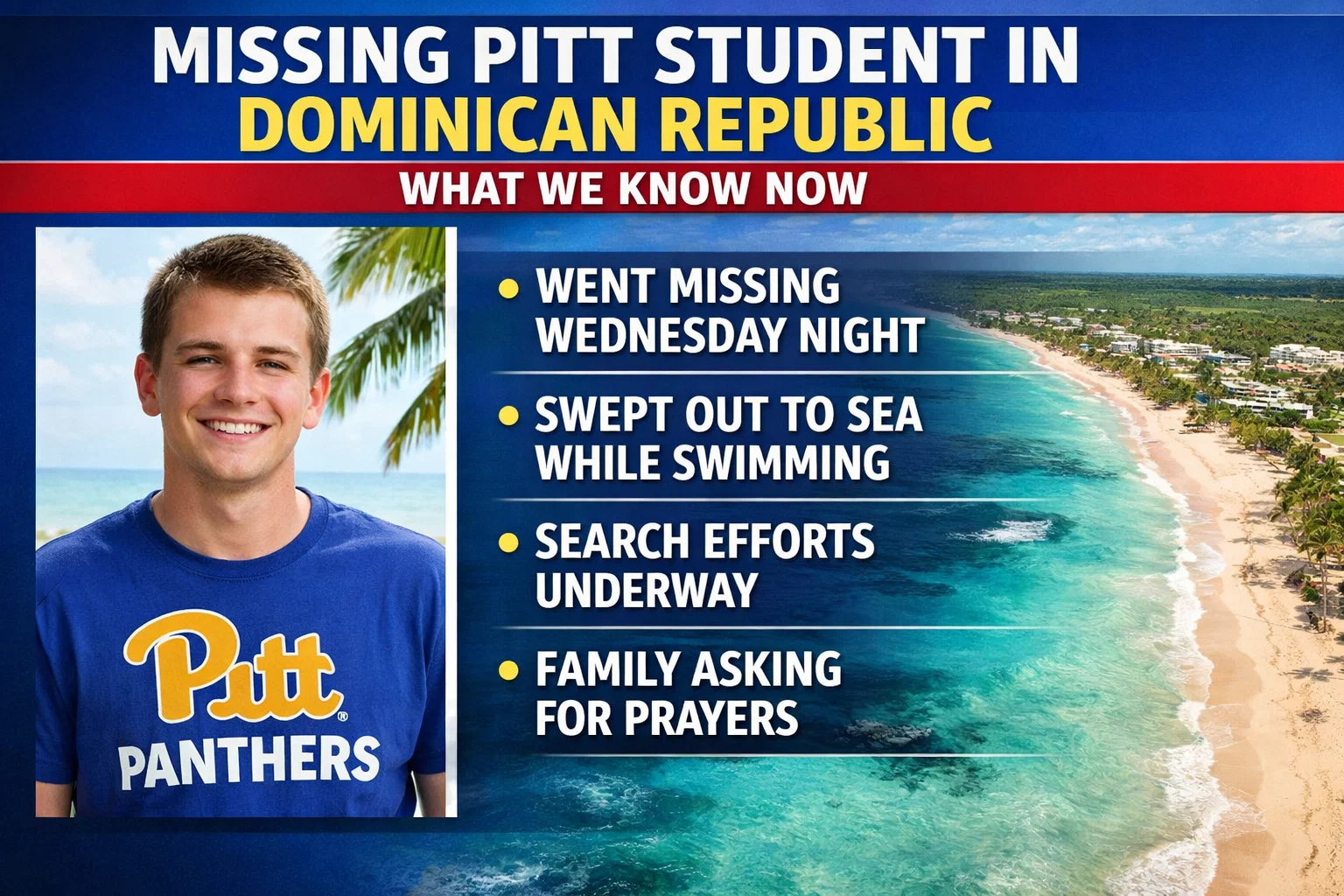
The missing Pitt student case that captured national attention involves Sudiksha Konanki, a 20-year-old pre-med junior at the University of Pittsburgh. In early March 2025, she vanished during a spring break trip to Punta Cana in the Dominican Republic. What began as a fun getaway with friends turned into a heartbreaking search that highlighted the risks of travel, the power of ocean currents, and the emotional toll on families facing uncertainty.
Sudiksha, often referred to in headlines as the missing Pitt student, was last seen in the early morning hours of March 6, 2025, near the beach at the Riu República Hotel. Authorities concluded she likely drowned after being caught in a powerful wave, a belief her parents eventually accepted despite no body being recovered. The incident sparked widespread media coverage, discussions on campus safety, and reminders about personal responsibility during vacations.
This article dives deep into the details of the missing Pitt student disappearance, exploring the timeline, investigation, broader implications for college students traveling abroad, and lessons that can help prevent similar tragedies.
Who Was the Missing Pitt Student?
Sudiksha Konanki was a dedicated biology and chemistry major on the pre-med track at the University of Pittsburgh. Hailing from Chantilly, Virginia—a suburb near Washington, D.C.—she was known for her ambition, kindness, and strong family ties. As an Indian-origin permanent U.S. resident, she balanced rigorous academics with a vibrant social life, making her spring break trip a much-needed break from studies.
Friends described her as responsible and excited about the getaway. The missing Pitt student had traveled with five female companions to unwind at the popular resort destination. Her disappearance shocked those who knew her, as she didn’t fit the profile of someone who might wander off recklessly. The University of Pittsburgh community rallied in support, with students and faculty expressing grief and calling for awareness about travel dangers.
Her story as the missing Pitt student resonated because it could happen to any hardworking student seeking relaxation after intense semesters. Pre-med life at Pitt is demanding, with long hours in labs and libraries, so vacations often become cherished escapes.
The Spring Break Trip That Turned Tragic
Spring break in Punta Cana promised sun, sand, and relaxation for Sudiksha and her group. They arrived on March 3, 2025, at the all-inclusive Riu República Hotel, a hotspot for college travelers. The resort’s beachfront location offered easy access to ocean activities, nightlife, and group outings. For many American students, including the missing Pitt student, these trips represent freedom and fun after months of academic pressure.
The group spent days lounging, exploring, and enjoying the vibrant atmosphere. On the night of March 5 into March 6, they ventured to the beach around 4:15 a.m. Surveillance footage captured the missing Pitt student walking with friends and briefly interacting with others. What happened next remains partially unclear, but powerful waves played a central role. Ocean conditions that night were rough, with strong currents common in the area during that season.
Tragically, the fun outing ended in confusion and panic when Sudiksha couldn’t be located. Her friends alerted hotel staff and local authorities, kicking off an urgent search. The missing Pitt student case quickly escalated as details emerged about her last moments near the water’s edge.
Timeline of Events in the Missing Pitt Student Case
March 3: Sudiksha Konanki and five friends arrive in Punta Cana for spring break at the Riu República Hotel.
March 5-6 (early morning): Group heads to the beach around 4:15 a.m. Surveillance shows the missing Pitt student entering the beach area.
March 6: Sudiksha is reported missing after failing to return. Initial searches begin along the shoreline and hotel grounds.
March 7-9: Dominican authorities expand efforts with boats, helicopters, drones, and canine units. Her clothes are found on the beach, supporting drowning theories.
March 10 onward: A witness, Joshua Riibe (a 22-year-old American student), is interviewed as the last person seen with her. He claims he rescued her from a wave but she vanished afterward. His passport is temporarily seized.
Mid-March: Officials publicly state belief in accidental drowning. The missing Pitt student’s parents speak out, expressing heartbreak while cooperating with investigators.
Late March: Riibe is cleared by a judge and returns to the U.S. No criminal charges emerge, closing that aspect of the probe.
This timeline underscores how quickly a carefree night shifted to a prolonged mystery in the missing Pitt student story.
The Investigation and Key Witnesses
Dominican Republic police, alongside civil defense teams, led the search for the missing Pitt student. They used advanced tools like aerial drones and underwater equipment to scour the coastline. The focus remained on natural causes rather than foul play, though early interviews explored all angles.
Joshua Riibe became central as a witness. He told authorities he helped Sudiksha after a wave knocked her over, ensuring she was breathing before she disappeared from sight. Riibe cooperated fully but faced temporary restrictions. A judge later cleared him, affirming no evidence of wrongdoing.
The missing Pitt student investigation highlighted challenges in international cases, including language barriers, jurisdiction issues, and reliance on witness accounts. Her parents urged thoroughness while accepting the drowning conclusion.
“We have come to terms with the fact that our daughter is no longer with us. We believe she drowned that night.” — Parents of Sudiksha Konanki (paraphrased from public statements)
This quote reflects the family’s grace amid unimaginable pain.
Why Drowning Was the Leading Theory
Powerful rip currents and unpredictable waves in Punta Cana contributed to the missing Pitt student tragedy. Experts note that even strong swimmers can struggle in such conditions, especially at night with alcohol or fatigue involved. Sudiksha’s clothes left on the beach aligned with drowning scenarios where victims shed items while in distress.
No evidence suggested criminal intent, and her background as a responsible student supported an accidental mishap. The missing Pitt student case serves as a stark reminder that beautiful beaches hide dangers, particularly during off-hours.
Authorities and her family leaned toward this explanation, bringing some closure despite the absence of definitive recovery.
Impact on the University of Pittsburgh Community
The disappearance of the missing Pitt student sent shockwaves through campus. Students organized vigils, shared memories, and discussed safety protocols for future trips. Pitt’s administration issued statements offering counseling and resources.
Many peers reflected on how the missing Pitt student could have been anyone— a driven pre-med juggling classes, volunteering, and friendships. The incident prompted conversations about group accountability during travel and recognizing environmental risks.
University officials emphasized support for international students and awareness campaigns. The missing Pitt student story became a catalyst for change in how campuses address off-campus adventures.
Broader Lessons for College Students Traveling Abroad
Spring break trips offer excitement but carry risks. The missing Pitt student highlights the need for precautions like staying in groups, avoiding isolated areas at night, and understanding local conditions.
Travel insurance, emergency contacts, and basic water safety knowledge can make a difference. Students should monitor weather, heed warnings, and communicate plans clearly.
Related concerns include beach safety tips, rip current awareness, and alcohol’s role in judgment. The missing Pitt student case encourages proactive steps to enjoy vacations responsibly.
| Safety Tip | Why It Matters | Practical Action |
|---|---|---|
| Stay with your group | Prevents isolation in unfamiliar places | Buddy system for late-night outings |
| Check ocean conditions | Rip currents cause many drownings | Ask locals or check flags/warnings |
| Avoid swimming alone/at night | Visibility and help are limited | Stick to daytime, supervised areas |
| Share itinerary | Aids quick response if issues arise | Text plans to family/friends |
| Carry emergency contacts | Speeds international assistance | Save embassy numbers and insurance info |
This table outlines key preventives drawn from common travel advisories.
Campus Safety and Pre-Med Stress Factors
University of Pittsburgh pre-med programs are intense, contributing to burnout. The missing Pitt student sought relief through travel, a common coping mechanism.
Balancing academics with self-care is crucial. Institutions offer mental health resources, but students must prioritize rest and boundaries.
The case reminds us that even high-achieving individuals face vulnerabilities. Supporting peers and reducing stigma around breaks can foster healthier environments.
Media Coverage and Public Reaction
News outlets extensively covered the missing Pitt student, from initial alerts to resolution. Outlets like NBC, ABC, CNN, and Fox detailed developments, amplifying awareness.
Public sympathy poured in via social media, with hashtags and prayers for the family. Some debated privacy versus transparency in such cases.
The coverage helped highlight drowning risks but also showed media’s role in pressuring swift investigations.
Preventing Future Tragedies: What Can Be Done?
Resorts could enhance nighttime beach monitoring and lighting. Governments might strengthen warnings for tourists.
Individuals bear responsibility too—education on hazards saves lives. The missing Pitt student tragedy pushes for collective action.
Schools can integrate travel safety into orientations, emphasizing real-world risks.
Conclusion
The story of the missing Pitt student, Sudiksha Konanki, is a poignant reminder of life’s fragility. A promising young woman vanished in a moment of joy, leaving a community in mourning and broader lessons on vigilance.
While her family found some peace in accepting the drowning explanation, the pain lingers. Sudiksha’s legacy lives through calls for safer travel and appreciation for every moment.
May her memory inspire caution, compassion, and care for one another.
FAQ
What happened to the missing Pitt student Sudiksha Konanki?
Sudiksha Konanki, the missing Pitt student, disappeared on March 6, 2025, during spring break in Punta Cana, Dominican Republic. Authorities believe she drowned after being caught in a strong wave while on the beach. Her clothes were found, but no body was recovered, leading her parents to accept this tragic outcome.
Who was last seen with the missing Pitt student?
Joshua Riibe, a 22-year-old American college student, was the last person seen with the missing Pitt student. He stated he rescued her from a wave but she vanished shortly after. He was interviewed extensively but cleared of any wrongdoing by Dominican authorities.
Was foul play involved in the missing Pitt student case?
No evidence of foul play emerged in the missing Pitt student investigation. Dominican officials and the family leaned toward accidental drowning due to ocean conditions, with no criminal charges filed.
How did the University of Pittsburgh respond to the missing Pitt student disappearance?
The University of Pittsburgh offered counseling, held vigils, and issued supportive statements for the community affected by the missing Pitt student case. It sparked discussions on travel safety among students.
What safety tips can prevent incidents like the missing Pitt student tragedy?
Key tips include staying in groups, avoiding night swims, checking water conditions, sharing plans, and carrying emergency info. These measures could help avoid situations similar to the missing Pitt student experience.
Has the missing Pitt student case been officially closed?
Aspects involving witnesses were resolved, with authorities concluding accidental drowning. The family requested declaration of death to move forward, though the overall case remains a tragic unresolved loss without full physical closure.

