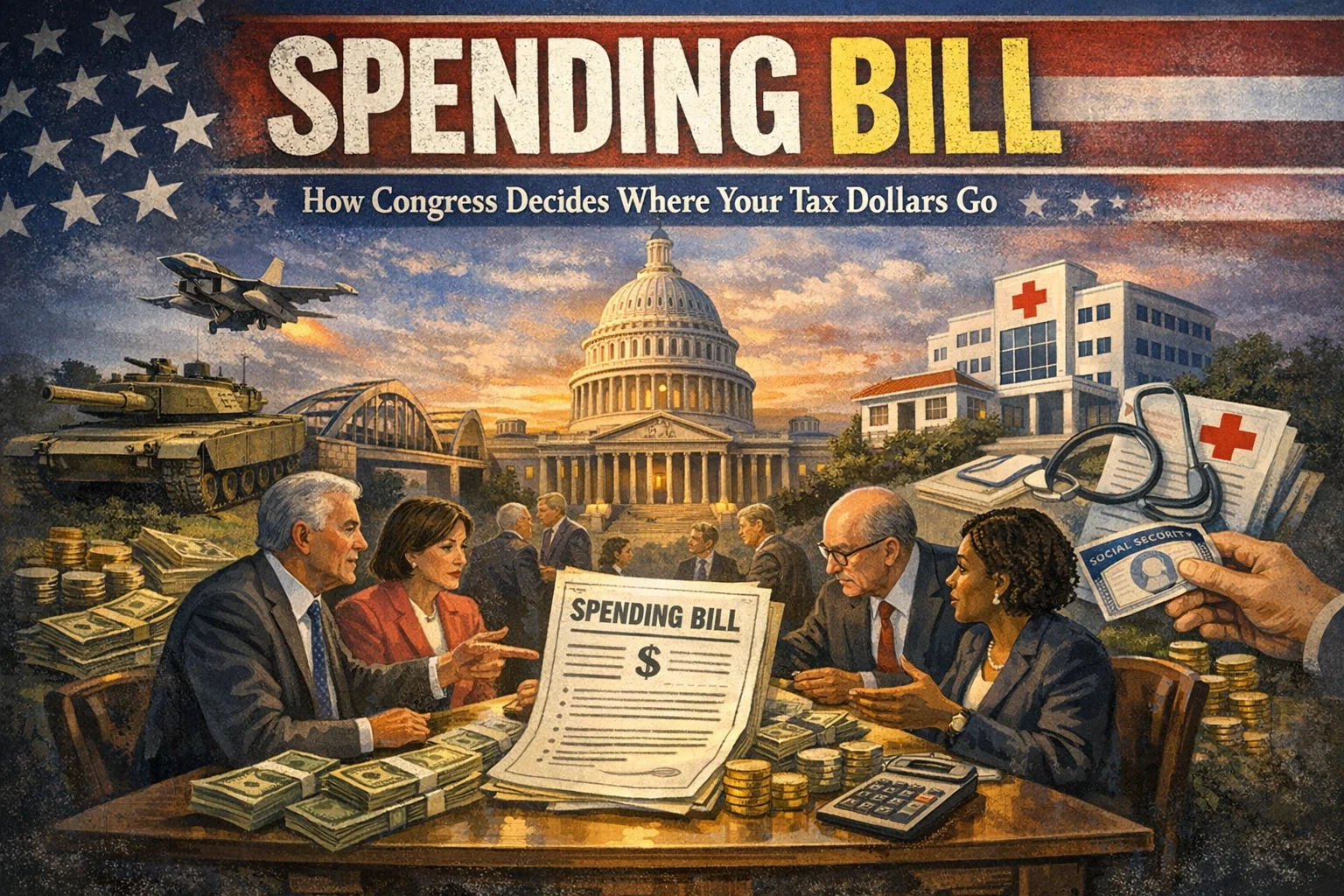
Hey, have you ever scrolled through the news and spotted headlines screaming about yet another deadline for government funding? Or maybe you’ve wondered why certain programs seem to get cash while others struggle? That’s where the spending bill comes into play. It’s basically Congress’s big checklist for handing out money to keep the federal government humming along. Think of it as the ultimate shopping list for everything from roads and schools to defense and disaster relief. Without these approvals, agencies can’t spend a dime legally, and things can get messy fast.
These pieces of legislation shape so much of daily life in ways we often don’t notice right away. They decide how much goes toward fixing bridges in your state, funding research at universities, or paying soldiers and veterans. In a country as vast as the United States, getting everyone to agree on priorities is no small feat. That’s why talks around the spending bill often turn into marathon negotiations filled with compromises, last-minute tweaks, and plenty of political drama. But once signed, they set the tone for an entire fiscal year, influencing jobs, services, and even the broader economy.
The beauty of diving into this topic is realizing it’s not just for policy wonks. Everyday folks like you and me feel the ripple effects through better schools for our kids, safer travel on highways, or support during tough times like natural disasters. Over the pages ahead, we’ll break it all down in plain English, with real examples and a touch of insider know-how. Whether you’re curious about the latest developments or just want to understand why shutdown scares pop up every few years, this guide has you covered. Let’s get started on making sense of one of Washington’s most important rituals.
What Is a Spending Bill and Why Should You Care?
At its core, a spending bill is the legal green light that lets federal agencies pull money from the Treasury for specific jobs. Officially called appropriations legislation, these measures spell out exactly how much each department or program can spend during the fiscal year, which runs from October 1 to September 30. It’s not the same as the president’s big-picture budget proposal—that’s more of a wish list. The spending bill turns wishes into actual dollars with strings attached.
Why does this matter to regular people? Because it directly touches nearly every aspect of public life. Funding for transportation projects might mean smoother commutes or new public transit in your city. Health programs could expand access to care at community clinics. Even something like national park upkeep relies on these allocations so families can enjoy hikes without trails falling apart. When Congress debates these bills, they’re essentially voting on national priorities, and those choices echo through local economies and household budgets alike.
Imagine your family budget but on a massive scale. You have fixed costs like rent and groceries, which are like mandatory spending on Social Security or Medicare that runs automatically. Then you have the flexible part for new clothes or vacations—that’s the discretionary slice covered by spending bills, roughly one-third of the total federal pie. The rest goes to interest on the national debt or those locked-in entitlements. Getting this flexible part right is crucial because it funds innovation, security, and quality-of-life improvements that make the country run smoother.
People often mix up the spending bill with broader budget talks, but the difference is huge. The budget resolution sets overall targets without the force of law, while the actual spending bill carries the weight of enforceable numbers. Committees pore over every line item, holding hearings where experts testify about needs in defense, education, or environmental protection. It’s a painstaking process designed to reflect what Americans want their government to tackle, even if the final product sometimes feels like a patchwork quilt of compromises.
A Brief History of Spending Bills in American Politics
The story of the spending bill stretches all the way back to the founding fathers who wanted to keep power close to the people. The Constitution clearly states that no money can leave the Treasury without approval from lawmakers, giving Congress the famous “power of the purse.” This idea came straight from hard lessons learned under British rule, where kings spent freely without much oversight. Early leaders made sure elected representatives would hold the strings.
Back in the 1800s, things were simpler. Congress handled spending through a handful of bills, often specifying tiny details like how much a department could spend on firewood. As the nation grew and responsibilities ballooned after wars and economic crises, the system evolved. The Appropriations Committee split off in the mid-1860s to focus solely on funding matters, separating it from other legislative work. That move helped bring more order to what had become a chaotic free-for-all.
Fast forward to the 20th century, and two world wars plus the Great Depression supercharged federal involvement in everything from highways to social safety nets. Presidents started submitting formal budget proposals, but lawmakers kept the final say on actual dollars. The 1974 Budget Act tried to streamline things further by adding budget resolutions as guideposts, yet delays and fights persisted. Only a handful of years since then have seen every spending bill cross the finish line on schedule—talk about a tough record to beat.
Throughout history, these bills have mirrored the nation’s biggest challenges. During the Cold War, defense-heavy packages dominated. In the 1980s and beyond, lawmakers began bundling multiple bills into giant omnibus packages to dodge repeated votes and shutdown risks. Critics argued this trend concentrated power in a few hands and reduced transparency, but supporters pointed out it kept government open when partisan gridlock threatened to shut doors. Today’s spending bill debates still echo those old tensions between fiscal restraint and bold investments in the future.
One classic quip that captures the scale comes from longtime Senator Everett Dirksen: “A billion here, a billion there, and pretty soon you’re talking real money.” It’s a lighthearted reminder that these numbers add up fast, shaping everything from local job markets to global standing. Understanding this timeline helps explain why modern negotiations feel so intense—there’s centuries of precedent riding on each decision.
Navigating the Process: From Presidential Proposal to Signed Law
Picture the spending bill journey like a relay race with many handoffs. It kicks off when federal agencies send their wish lists to the White House Office of Management and Budget months ahead of time. The president then rolls those into a formal proposal sent to Congress early in the calendar year. That document outlines big goals but doesn’t lock in final figures.
Next, the House and Senate Appropriations Committees divide the work among 12 subcommittees, each tackling a slice of government operations. They hold public hearings, grill department heads, and mark up drafts with their own tweaks. These subcommittee versions head to the full committees for more debate and votes before reaching the House or Senate floor. Amendments fly, speeches drag on, and deals get cut behind the scenes.
Once both chambers pass their versions, a conference committee irons out differences. The reconciled package returns for final approval votes. Finally, it lands on the president’s desk for a signature or veto. If vetoed, Congress can try to override with a two-thirds majority, though that rarely happens. The whole dance is supposed to wrap before October 1, but real life often intervenes with extensions or temporary patches.
Delays are so common that lawmakers routinely turn to continuing resolutions—short-term bills that keep funding at current levels while talks continue. These prevent immediate chaos but create uncertainty for agencies planning long-term projects. In some years, the process stretches into spring or even later, forcing rushed decisions and occasional government shutdowns when no agreement materializes. Non-essential offices close, workers go without paychecks temporarily, and public frustration spikes.
What makes the process engaging is how personal it gets. A representative from a rural district might fight hard for agriculture funding, while urban lawmakers push for housing or transit money. Lobbyists, constituents, and experts all weigh in, turning the spending bill into a living snapshot of national priorities at that moment. Mastering these steps reveals why patience and compromise are Washington’s unspoken requirements.
The Different Types of Spending Bills Explained
Not every spending bill looks the same. The most common are the regular appropriations bills—usually 12 separate packages covering distinct areas like defense or transportation. Each stands alone so lawmakers can focus debates narrowly before combining or voting individually. This setup allows for targeted attention but risks missing deadlines when one stubborn bill holds everything up.
When time runs short or politics heat up, Congress often rolls several into an omnibus spending bill. This giant package lets everything pass with a single vote, saving time and reducing shutdown threats. It’s been popular since the 1980s because leaders can tuck in extra provisions or protect controversial items inside the larger whole. The downside? Massive documents exceeding a thousand pages sometimes get rushed through with limited review time.
Then there are continuing resolutions, or CRs, which act like temporary Band-Aids. They extend previous-year funding levels for weeks or months while full negotiations proceed. These keep the lights on but freeze new initiatives and create planning headaches for agencies. Supplemental spending bills pop up too for unexpected needs like disaster relief or military emergencies, adding extra cash outside the regular cycle.
Each type serves a purpose in the grand scheme. Regular bills promote detailed scrutiny. Omnibus versions prioritize speed and stability. CRs buy breathing room. Together they form a flexible toolkit that adapts to the unpredictable rhythm of politics and crises. Understanding these varieties helps explain why news coverage shifts from “separate bills stalled” to “omnibus deal reached” depending on the calendar and mood in Capitol Hill hallways.
The 12 Key Areas Covered in Typical Spending Bills
Congress breaks discretionary funding into 12 standard categories, each handled by a dedicated subcommittee. This division keeps the massive task manageable while letting experts zoom in on specific needs. Here’s a clear overview:
| Subcommittee | Key Areas Funded |
|---|---|
| Agriculture, Rural Development, Food and Drug Administration | Farming programs, nutrition assistance, FDA oversight |
| Commerce, Justice, Science | Census, NASA, NOAA, Department of Justice |
| Defense | Military operations, weapons, personnel pay |
| Energy and Water Development | Energy projects, Army Corps of Engineers, nuclear |
| Financial Services and General Government | Treasury, IRS, federal buildings |
| Homeland Security | Border security, FEMA, TSA |
| Interior, Environment | National parks, EPA, Bureau of Land Management |
| Labor, Health and Human Services, Education | Schools, NIH, CDC, job training |
| Legislative Branch | Congress operations, Library of Congress |
| Military Construction, Veterans Affairs | Bases, VA hospitals |
| State, Foreign Operations | Diplomacy, foreign aid |
| Transportation, Housing and Urban Development | Highways, airports, HUD housing programs |
Each column represents billions in real-world impact. The defense slice often takes the largest share, ensuring military readiness. Education and health funding can transform communities by supporting teachers, researchers, and hospitals. Transportation money builds infrastructure that moves goods and people efficiently. Environment and interior allocations protect natural treasures while balancing development.
These categories aren’t set in stone forever—lawmakers occasionally shift programs between bills—but the framework has held steady for decades. It forces tough choices because total discretionary dollars have limits. When one area grows, others might shrink unless overall spending rises. Watching how allocations change year to year reveals shifting national priorities, from pandemic response boosts in health to infrastructure surges for economic recovery.
How Recent Spending Bills Have Shaped the Nation
In recent years, spending bills have navigated everything from pandemic recovery to geopolitical tensions and domestic priorities. The Consolidated Appropriations Act for fiscal year 2026, for instance, bundled several key measures after earlier delays and brief disruptions. It restored stability by providing targeted funding across defense, health, transportation, and more, totaling around 1.2 trillion dollars in discretionary pieces while avoiding deeper cuts some had feared.
These packages often include boosts for emerging needs like cybersecurity, clean energy projects, or veteran mental health services. One year might emphasize border security enhancements; another could pour resources into semiconductor manufacturing to strengthen domestic supply chains. Such choices ripple outward—more construction jobs in one region, expanded research grants in another.
The 2025 “One Big Beautiful Bill Act” earlier in the cycle mixed tax adjustments with spending adjustments, illustrating how modern legislation sometimes blends tools for bigger fiscal overhauls. While focused partly on reconciliation pathways, it showed how spending decisions increasingly intertwine with revenue and policy goals. Critics debated the long-term debt effects, but supporters highlighted immediate economic lifts through targeted investments.
What stands out is the human element behind the numbers. A transportation spending bill might fund high-speed rail studies that eventually cut commute times for millions. Health allocations could expand telemedicine in rural areas, saving lives during emergencies. These aren’t abstract; they translate into real improvements or missed opportunities depending on how negotiations land.
The Economic Impact of Spending Bills on Everyday Americans
Spending bills pack a powerful economic punch that reaches far beyond Washington. Short-term, they inject money into local economies through contracts for builders, suppliers, and service providers. A big defense package, for example, supports factories in multiple states, creating thousands of well-paying jobs. Education funding keeps teachers employed and students equipped with modern tools, boosting future workforce productivity.
Longer term, the picture gets more nuanced. Smart infrastructure investments from transportation bills can lower business costs, speed goods movement, and attract new companies. Research dollars in science and health subcommittees spark innovations that drive entire industries forward, from medical breakthroughs to renewable energy tech. These multipliers often exceed initial outlays when measured over decades.
On the flip side, heavy reliance on borrowing to fund larger packages can push up national debt and interest rates. Higher rates mean costlier mortgages and car loans for families. Some economists argue excessive government spending crowds out private investment, slowing overall growth. Others counter that strategic outlays during downturns stabilize demand and prevent deeper recessions.
Inflation enters the chat too when spending surges without matching revenue. Prices for everything from groceries to housing can climb if too much money chases too few goods. Yet well-targeted bills addressing supply bottlenecks—like expanding ports or training programs—can actually ease inflationary pressures over time. It’s a balancing act that requires constant vigilance.
For individual households, the effects show up in subtle ways. Better-funded schools mean smaller class sizes and more extracurriculars for kids. Expanded health programs reduce out-of-pocket medical bills. Stronger disaster relief funding speeds recovery after storms, protecting property values. Even foreign aid components can stabilize global markets that influence domestic prices for oil or food. Tracking these connections turns abstract fiscal policy into something personal and actionable.
Political Battles and Controversies Surrounding Spending Bills
No discussion of the spending bill would be complete without acknowledging the fireworks. Partisan divides often center on spending levels versus deficit concerns. One side pushes for robust investments in social programs and green initiatives; the other emphasizes restraint, tax relief, and defense priorities. These clashes turn routine bills into high-stakes showdowns that dominate headlines for weeks.
Earmarks—those project-specific allocations tucked in for individual districts—spark endless debate. Supporters say they deliver tangible benefits back home; critics call them pork that inflates costs without oversight. Transparency rules have tightened over time, yet the temptation to slip in favored items remains strong inside large omnibus packages.
Shutdown threats add another layer of drama. When negotiations collapse, non-essential services halt, federal workers face delayed pay, and national parks close to visitors. Public pressure usually forces quick resolutions, but the uncertainty harms confidence and small businesses reliant on government contracts. Media coverage amplifies the chaos, sometimes making compromise harder as politicians play to their bases.
Power concentration worries surface too with omnibus approaches. A few key leaders hammer out massive deals with limited input from rank-and-file members. This efficiency comes at the cost of thorough debate, leading some to complain that important details get buried in thousand-page documents passed in the dead of night.
Yet these battles also showcase democracy in action. Vigorous arguments force trade-offs that ideally reflect broader public will. Compromises emerge that nobody loves entirely but everyone can live with. The process, messy as it is, prevents any single branch or party from dominating fiscal decisions unchecked.
How Spending Bills Affect Daily Life in Surprising Ways
Let’s bring this home with concrete examples of how the spending bill influences routines most people take for granted. Take a morning commute: funding from the transportation package might repave highways, install smart traffic signals, or expand public transit lines. Those improvements shave minutes off travel time, reduce frustration, and lower accident risks for millions.
Education gets a boost through labor and health bills that support everything from Pell Grants to school nutrition programs. Teachers receive training funds, classrooms get updated technology, and low-income families access after-school support. Kids in under-resourced areas gain tools that level the playing field, potentially changing entire family trajectories.
Healthcare feels the impact too. Allocations for medical research speed new treatments from labs to patients. Community health centers stay open longer, vaccination drives reach more people, and mental health services expand. During crises, these dollars enable rapid responses that save lives and ease hospital burdens.
Even leisure time connects back to spending decisions. Interior bills keep national parks maintained so weekend hikes remain possible. Arts and humanities funding supports museums and cultural events that enrich communities. Science investments power weather forecasting that helps families prepare for storms.
On the security front, defense and homeland security packages ensure military readiness and border protections that contribute to national stability. Veterans receive care through dedicated construction bills, honoring service while easing burdens on families. These threads weave together into a safety net that many rely on without realizing the legislative origins.
The surprising part is how interconnected everything becomes. A strong economy fueled by smart spending creates more tax revenue down the road, reducing future borrowing needs. Conversely, neglect in one area—like aging infrastructure—can lead to costly emergencies later. Paying attention to these bills empowers citizens to understand trade-offs and advocate for what matters locally.
The Future Outlook for Spending Bills in American Politics
Looking ahead, several trends are reshaping how spending bills get crafted and passed. Technology is speeding up data analysis, allowing committees to model economic effects more accurately before votes. Public pressure for transparency may push more real-time tracking of allocations through improved online portals.
Debt concerns will likely keep dominating conversations. With interest payments already claiming a growing slice of the budget, future packages might emphasize efficiency, public-private partnerships, and performance-based funding. Bipartisan efforts on infrastructure or pandemic preparedness could offer models for cooperation even in divided times.
Climate and technology shifts will influence priorities too. Bills may increasingly target renewable energy transitions, artificial intelligence research, or cybersecurity fortifications. Demographic changes—aging populations, urban growth—will demand adjustments in health, housing, and transportation funding.
Global events remain wild cards. Supply chain vulnerabilities or international conflicts could trigger supplemental packages on short notice. Meanwhile, calls for budget process reforms might gain traction, aiming to reduce reliance on last-minute omnibus deals or automatic continuing resolutions.
Citizen engagement tools are evolving as well. Social media, apps, and advocacy platforms make it easier for everyday voices to reach lawmakers before final votes. Grassroots campaigns have already swayed outcomes on specific line items, suggesting a more participatory future.
Ultimately, the spending bill will continue evolving as a mirror of national ambitions and constraints. Adapting to new realities while preserving constitutional checks will test lawmakers’ creativity. Staying informed positions regular Americans to contribute meaningfully to those conversations.
Conclusion
Wrapping up this deep dive, the spending bill stands as one of the most powerful yet underappreciated tools in American governance. It translates broad ideas about national priorities into concrete action that touches jobs, services, security, and opportunity across the country. From its constitutional roots to the intricate negotiations that shape modern versions, the process reflects both the genius and the messiness of democracy.
We’ve explored definitions, history, types, economic ripples, daily impacts, and future possibilities. Along the way, clear patterns emerge: timely passage prevents disruptions, smart allocations multiply benefits, and citizen awareness drives better outcomes. While debates will always rage over exact numbers and directions, the underlying goal remains keeping government accountable to the people it serves.
Next time headlines mention funding deadlines or big packages, you’ll see beyond the politics to the real stakes involved. Whether advocating for local projects, voting with fuller context, or simply appreciating how infrastructure or research funding improves life, knowledge about the spending bill empowers smarter engagement. The system isn’t perfect, but understanding its mechanics helps all of us push it toward better results. Keep watching, keep learning, and remember—those dollars are ultimately yours at work.
FAQ
What exactly is a spending bill?
A spending bill is legislation passed by Congress that authorizes federal agencies to use specific amounts of money for designated purposes during the fiscal year. It provides the legal authority to spend taxpayer dollars on everything from military readiness to park maintenance. Unlike the president’s initial budget proposal, which is advisory, the spending bill carries enforceable power and must be signed into law. These measures focus primarily on discretionary programs that require annual approval, distinguishing them from automatic mandatory spending like Social Security. In practice, they prevent government operations from grinding to a halt and allow lawmakers to set clear national priorities each year.
How does a spending bill get passed through Congress?
The journey begins with the president submitting a budget outline, after which House and Senate Appropriations Committees divide the work among 12 subcommittees. Each drafts detailed bills following hearings and markups. Full chambers debate and vote on their versions, then a conference reconciles differences. The final package heads to the president for approval. If deadlines slip, temporary continuing resolutions extend prior funding. The entire process involves amendments, lobbying, and compromise, often stretching months beyond the ideal October 1 start of the fiscal year. This structured yet flexible path ensures multiple perspectives shape the final spending decisions.
What happens if Congress fails to pass a spending bill on time?
Without timely approval, agencies risk running out of legal spending authority, triggering a government shutdown for non-essential functions. Workers get furloughed, national parks close to visitors, and many services pause. Critical operations like air traffic control or Social Security payments usually continue using other authorities. To avoid this, lawmakers frequently pass short-term continuing resolutions that maintain current funding levels temporarily. While shutdowns are rare and usually brief, they create uncertainty, delay projects, and erode public trust. The threat alone often forces last-minute deals, highlighting the high stakes involved in every spending bill negotiation.
How do spending bills influence the overall economy?
Spending bills inject funds that stimulate demand through contracts, wages, and grants, often creating immediate job growth in construction, research, or manufacturing. Infrastructure investments improve long-term productivity by reducing transportation costs and attracting businesses. Health and education allocations build human capital that pays dividends for decades. However, large deficits from unchecked packages can raise borrowing costs, potentially crowding out private investment and contributing to inflation. The net effect depends on timing, targeting, and economic conditions—well-designed bills can stabilize recoveries, while poorly calibrated ones risk fiscal imbalances. Economists continue debating the ideal balance between stimulus and restraint.
Can regular citizens influence what goes into a spending bill?
Absolutely—lawmakers pay close attention to constituent voices, especially during election cycles. Writing letters, attending town halls, or joining advocacy groups lets everyday people highlight local needs like road repairs or school upgrades. Petitions, social media campaigns, and direct calls to offices have swayed specific provisions in past negotiations. Tracking bills through public websites and contacting representatives before committee markups maximizes impact. While big interests lobby heavily, grassroots efforts have successfully protected popular programs or added funding for community priorities. Staying informed and engaged turns passive observers into active participants shaping the final spending bill outcomes.

