
Ah, the 80s – a decade bursting with neon lights, big hair, and unforgettable pop anthems that still get us grooving today. And right in the heart of that era’s musical explosion was Tiffany Darwish, the fiery redhead who captured teenage hearts worldwide with her infectious hits. But fast forward to 2002, and Tiffany made headlines for something entirely different: her daring appearance in Playboy magazine. The tiffany playboy moment wasn’t just a photoshoot; it was a statement, a rebellion against the squeaky-clean image that had defined her for so long. In this deep dive, we’ll unpack everything from her meteoric rise to that iconic tiffany playboy spread, and how it all ties into her enduring legacy.
You see, Tiffany’s journey is one of those classic tales of child stardom evolving into adult self-discovery. Born Tiffany Renee Darwish on October 2, 1971, in Norwalk, California, she grew up in a world where music was her escape. Her parents divorced when she was just a toddler, and she navigated a tricky family dynamic that included her father’s Lebanese roots and her mother’s German heritage. By age four, little Tiffany was already belting out country tunes like Tanya Tucker’s “Delta Dawn,” showing signs of the vocal powerhouse she’d become. This early passion set the stage for what would become a rollercoaster career, culminating in moments like the tiffany playboy feature that shocked and intrigued fans alike.
What makes the tiffany playboy story so fascinating is how it contrasts with her innocent beginnings. As a kid, Tiffany wasn’t chasing fame in Hollywood studios; she was discovered in honky-tonk bars and talent shows. Her big break came at age 10 when she performed with country singer Jack Reeves, earning her first paycheck. From there, it was a whirlwind of appearances on shows like “The Ralph Emery Show,” where she wowed audiences with covers of hits by Juice Newton and Tammy Wynette. These early experiences built her confidence, but they also highlighted the challenges of growing up in the spotlight – challenges that would later lead to her bold tiffany playboy decision as a way to reclaim her narrative.
Early Life and Musical Roots
Tiffany’s childhood wasn’t all glamour and spotlights; it was marked by personal hurdles that shaped her resilience. After her parents’ split, she lived with her father but attended schools like Norwalk High and later Leffingwell Christian High. Music became her sanctuary amid the chaos. Imagine a four-year-old mimicking country legends – that’s Tiffany, honing her craft before she even hit double digits. Her Lebanese and German ancestry added a unique flavor to her identity, influencing her eclectic musical tastes that blended pop with hints of country soul.
By the early 80s, Tiffany was making waves in local scenes. At 10, she gigged at Narods in Chino, California, pocketing $235 for her efforts – not bad for a pre-teen! Her talent caught the eye of legends like Hoyt Axton and his mother Mae, leading to a Nashville TV spot that put her on the map. These moments weren’t just performances; they were stepping stones to a contract with producer George Tobin in 1984. Tobin saw star potential, and after a second-place finish on “Star Search” in 1985, Tiffany was primed for takeoff. Little did she know, this path would intersect with the tiffany playboy chapter years later, as she sought to break free from her youthful persona.
Diving deeper, Tiffany’s early influences ranged from country icons to pop sensations, creating a versatile artist. She wasn’t just singing; she was storytelling through her voice, a skill that would serve her well in later ventures like acting and reality TV. Her family dynamics played a role too – the divorce and subsequent tensions fueled her drive to succeed independently. It’s this backstory that adds layers to the tiffany playboy narrative, showing how personal growth often comes with public risks.
The Rise to Fame: Debut Album and Breakthrough Hits
When Tiffany’s self-titled debut album dropped in 1987 under MCA Records, it was like a pop bomb exploded. The lead single “Danny” didn’t chart, but that didn’t deter her team. Instead, they innovated with “The Beautiful You: Celebrating The Good Life Shopping Mall Tour ’87,” kicking off at The Bergen Mall in New Jersey. Picture this: a 15-year-old Tiffany performing atop escalators and in food courts, drawing crowds of screaming teens. It was grassroots marketing at its finest, turning malls into concert venues and propelling her to stardom.
Then came the magic – her cover of Tommy James and the Shondells’ “I Think We’re Alone Now” rocketed to No. 1 on the Billboard Hot 100 for two weeks. The album itself topped the Billboard 200, making Tiffany the youngest female artist to achieve that with a debut. Follow-ups like “Could’ve Been” (another No. 1) and “I Saw Him Standing There” (a Beatles reimagining hitting No. 7) solidified her as a teen queen. These hits weren’t just songs; they were anthems of youthful rebellion and romance, resonating with a generation.
Reflecting on this era, it’s clear how the tiffany playboy move in 2002 was a deliberate pivot. Back then, she was the girl-next-door idol, but as tastes evolved, so did her need to evolve. The mall tour alone was a phenomenon, visiting dozens of locations and building a fanbase organically. It taught Tiffany the power of connection, a lesson she’d apply later in her career shifts.
Legal Battles and Emancipation Attempts
Fame came with strings attached for Tiffany. At 16, she filed for emancipation from her mother and stepfather amid custody disputes, but the court denied it. Her manager George Tobin held significant control, leading to tensions. In 1988, during her peak, Tiffany moved in with her grandmother as a guardian, seeking autonomy. These battles weren’t just legal; they were emotional, highlighting the dark side of child stardom.
The fallout with Tobin was messy – he controlled her music rights, prompting lawsuits that dragged on. Tiffany eventually parted ways after turning 18, teaming with new managers Dick Scott and Kim Glover. This period of upheaval shaped her resilience, influencing decisions like the tiffany playboy photoshoot, where she asserted her adult identity. It’s a reminder that behind the glitz, artists face real struggles for control.
Looking back, these challenges built character. Tiffany learned to navigate the industry, emerging stronger. Her story echoes many teen stars’, but her response – channeling it into creative outlets – sets her apart.
Shifting Sounds: The 90s and Genre Experiments
As the 90s dawned, pop shifted toward grunge and hip-hop, challenging Tiffany’s bubblegum style. Her second album, “Hold an Old Friend’s Hand” (1988), went platinum with hits like “All This Time” in the Top 10. But “New Inside” (1990) embraced urban influences, receiving mixed reviews and failing to chart big. It was a bold experiment, showing her willingness to evolve.
In 1993, the Asia-exclusive “Dreams Never Die” featured ballads like “If Love is Blind,” tied to regional tours. Though not released in the US, it kept her relevant abroad. By mid-90s, Tiffany eyed country, moving to Nashville for songwriting. Her 2000 album “The Color of Silence” earned critical acclaim, praised by Billboard as a “big surprise.” These shifts highlight her adaptability, paving the way for the tiffany playboy era where she fully embraced change.
The 90s were about reinvention for Tiffany. From urban beats to college tours, she explored new territories, keeping her career alive amid industry changes.
The Tiffany Playboy Decision: Breaking Free from the Past
By 2002, at age 30, Tiffany was tired of being pigeonholed as the “mall girl.” Enter the tiffany playboy photoshoot – a strategic move to shatter perceptions. In interviews, she explained it as a way to address her “image problem.” “I sat down and really thought about it. I thought, ‘Well, this will definitely take care of that image problem,’” she told Parade. Meeting Hugh Hefner personally, she outlined her vision, ensuring the shoot was empowering, not exploitative.
The April 2002 issue featured Tiffany on the cover with the tagline “Teen Queen Tiffany: All Grown Up and Totally Nude.” It was a 10-page spread that showcased her confidence. She even discussed it with her nine-year-old son, comparing it to Vogue or Elle, just “showing more.” No regrets, she said – it blew up stereotypes and got people talking about her music again.
This tiffany playboy chapter was about empowerment. In a Fox News chat, she shared, “People were like, ‘She’s a one-hit wonder. She’s that little mall girl.’ And that completely blew their perception of who I was.” It was an honor, and the Playboy team made her feel amazing.
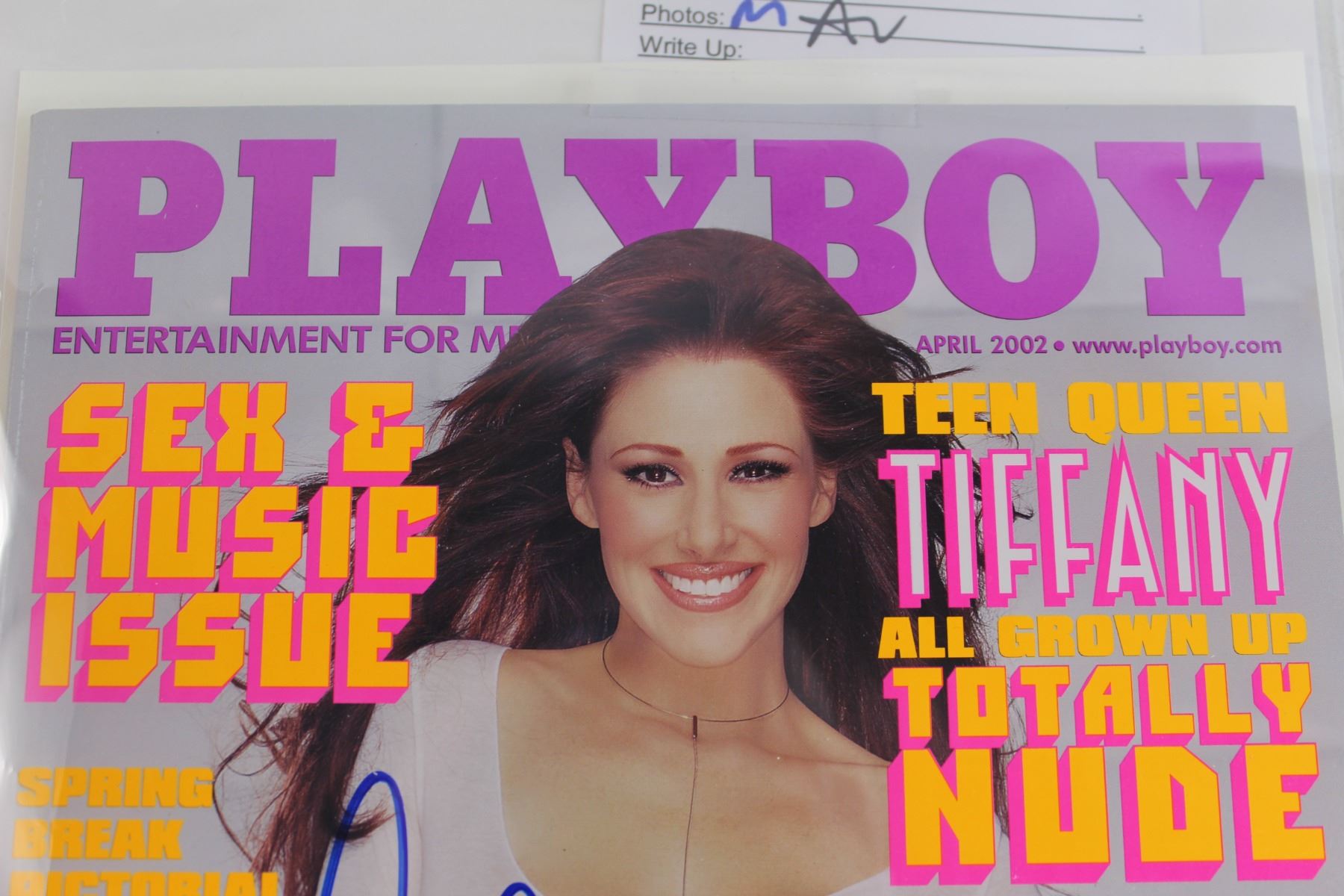
Playboy Tiffany Darwish Signed Magazine – Bodnarus Auctioneering
Behind the Scenes of the Tiffany Playboy Photoshoot
Peeling back the curtain on the tiffany playboy shoot reveals a professional, supportive environment. Tiffany dieted rigorously, preparing to present her best self. On set, there was no awkwardness – just a team focused on artistic expression. “They made me feel amazing,” she recalled, praising the Playboy family’s approach.
The photos were beautiful, blending sensuality with strength. Tiffany wanted control, specifying what she was comfortable with. Meeting Hefner was key; their conversation ensured alignment. This experience contrasted her teen years’ lack of agency, making tiffany playboy a milestone of self-ownership.
Fans reacted variably – some shocked, others supportive. But for Tiffany, it was liberating, proving she was more than her past.
Impact of Tiffany Playboy on Career and Public Image
The tiffany playboy appearance had ripple effects. It shattered the teen idol mold, allowing Tiffany to be seen as a mature artist. Media buzz led to more interviews, where she promoted her music. “I did it to break down those barriers,” she told ABC News, aiming to shift focus from her age to her talent.
Career-wise, it opened doors to edgier projects like reality TV and B-movies. Her image evolved from wholesome to multifaceted, attracting new fans. While some critics saw it as a gimmick, Tiffany stands by it: “I would do it again in a heartbeat.”
This move mirrored other stars’ reinventions, boosting her relevance in a changing industry.
Reality TV Stints and Screen Appearances
Post-tiffany playboy, Tiffany dove into reality TV. On “Celebrity Fit Club” (2007), she shed 28 pounds, showcasing determination. She joined Australia’s “I’m a Celebrity…Get Me Out of Here!” (2008, first eliminated) and “Hulk Hogan’s Celebrity Championship Wrestling” (2008). These shows humanized her, connecting with audiences beyond music.
Acting followed: Horror flicks like “Necrosis” (2009) as Karen, “Mega Piranha” (2010) as Sarah Monroe, and the campy “Mega Python vs. Gatoroid” (2011) with Debbie Gibson, featuring a memorable catfight. These roles added fun layers to her resume, blending her pop roots with screen presence.
Reality and acting kept Tiffany visible, building on the tiffany playboy momentum.
Personal Life: Marriages, Family, and Growth
Tiffany’s personal life has been as dynamic as her career. Married to makeup artist Bulmaro Garcia from 1992 to 2003, they had son Elijah in 1992 (Garcia passed in 2018). Her second marriage to Ben George (2004-2018) ended during her “Pieces of Me” album creation. These relationships influenced her music, with themes of love and loss.
Motherhood grounded her; explaining the tiffany playboy shoot to Elijah showed her thoughtful side. Today, she balances touring with family, embodying growth from turbulent beginnings.
Her journey reflects resilience, turning personal challenges into artistic fuel.
Discography and Musical Evolution
Tiffany’s music spans decades, evolving with her life. Here’s a table of her studio albums:
| Album Title | Release Year | Genre Highlights | Notable Tracks |
|---|---|---|---|
| Tiffany | 1987 | Pop | I Think We’re Alone Now, Could’ve Been |
| Hold an Old Friend’s Hand | 1988 | Pop | All This Time |
| New Inside | 1990 | Urban/Pop | New Inside |
| Dreams Never Die | 1993 | Pop/Ballads | If Love is Blind |
| The Color of Silence | 2000 | Alternative Pop | Open My Eyes |
| Dust Off and Dance | 2005 | Eurodance | Be With U Tonite |
| Just Me | 2007 | Singer-Songwriter | Feels Like Love |
| Rose Tattoo | 2011 | Country | Just Another Day |
| A Million Miles | 2016 | Pop/Rock | Worlds Away |
| Pieces of Me | 2018 | Rock | Worlds Away (remix) |
| Shadows | 2022 | Pop | I Like the Rain |
This discography shows her versatility, from 80s pop to country and rock. Post-tiffany playboy, albums like “Dust Off and Dance” embraced dance vibes, reflecting her liberated spirit.
Recent Projects and Enduring Legacy
In recent years, Tiffany’s kept busy touring, releasing “Shadows” in 2022 with tracks like “I Like the Rain.” Her lifestyle brand and continued performances keep her connected to fans. The “Stranger Things” revival of “I Think We’re Alone Now” introduced her to new generations.
Her legacy? A trailblazer who defied expectations, from mall stages to tiffany playboy pages. She’s inspired artists to own their narratives.
Quotes from Tiffany underscore this: “I’ve never looked back,” she said about leaving California for Tennessee, echoing her career mindset.
Conclusion
Wrapping up, the tiffany playboy story is more than a photoshoot; it’s a chapter in Tiffany’s epic tale of evolution. From a wide-eyed kid singing in malls to a confident woman gracing magazine covers, she’s navigated fame with grit and grace. Her music endures, her bold moves inspire, and her journey reminds us that reinvention is key to longevity. Whether belting hits or embracing new challenges, Tiffany remains an icon – all grown up and unapologetically herself.
FAQ
What Inspired Tiffany to Pose for Playboy?
Tiffany’s decision to appear in the tiffany playboy issue stemmed from a desire to break free from her teen idol image. At 30, she felt stuck as the “mall girl” and saw the photoshoot as a way to redefine perceptions. In interviews, she explained it helped her get booked on shows and talk about her music, shattering barriers that labeled her as forever young.
She met with Hugh Hefner to ensure the shoot aligned with her vision, making it an empowering experience. Tiffany has no regrets, viewing it as a positive step in her career evolution.
How Did the Tiffany Playboy Photoshoot Affect Her Career?
The tiffany playboy feature in 2002 significantly shifted public views, allowing Tiffany to be seen as a mature artist. It generated buzz, leading to more media opportunities where she promoted her work. While some saw it as controversial, it opened doors to reality TV and acting, diversifying her portfolio.
Ultimately, it reinforced her resilience, helping her transition from 80s pop star to multifaceted entertainer.
What Was Tiffany’s Family’s Reaction to Her Playboy Appearance?
Tiffany discussed the tiffany playboy shoot with her nine-year-old son, comparing it to high-fashion magazines like Vogue, just showing more. She faced some family disapproval due to his age, but stood by her choice. Her ex-husband and others in her circle understood it as a career move.
Overall, she prioritized her personal growth, using it to model confidence.
Has Tiffany Regretted Her Playboy Photoshoot?
No, Tiffany has expressed zero regrets about the tiffany playboy experience. In multiple interviews, she’s called it an honor and praised the professional team. “I would do it again in a heartbeat,” she said, noting it effectively changed how people perceived her.
It remains a proud moment of empowerment in her story.
How Does the Tiffany Playboy Moment Fit into Her Overall Legacy?
The tiffany playboy photoshoot is a pivotal part of Tiffany’s legacy, symbolizing her journey from teen sensation to independent woman. It highlights her willingness to take risks, much like her genre shifts and personal reinventions. Today, it adds depth to her narrative, showing authenticity in an industry often fixated on youth.
It inspires fans to embrace change and own their stories.

